

Rothesay Castle
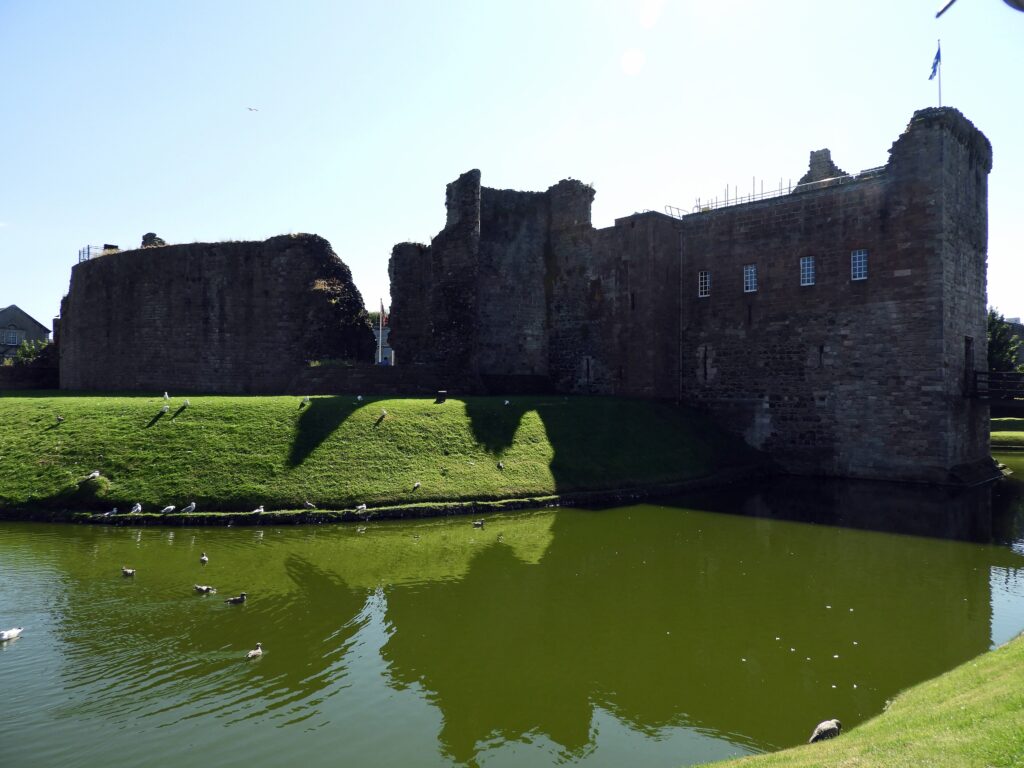
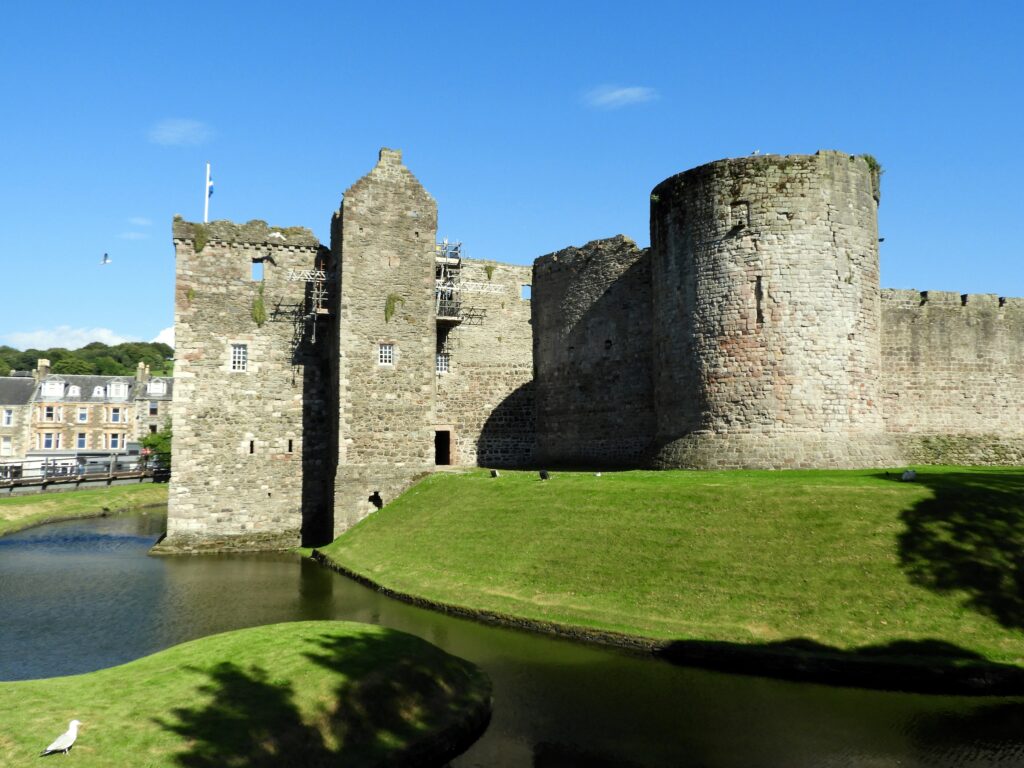
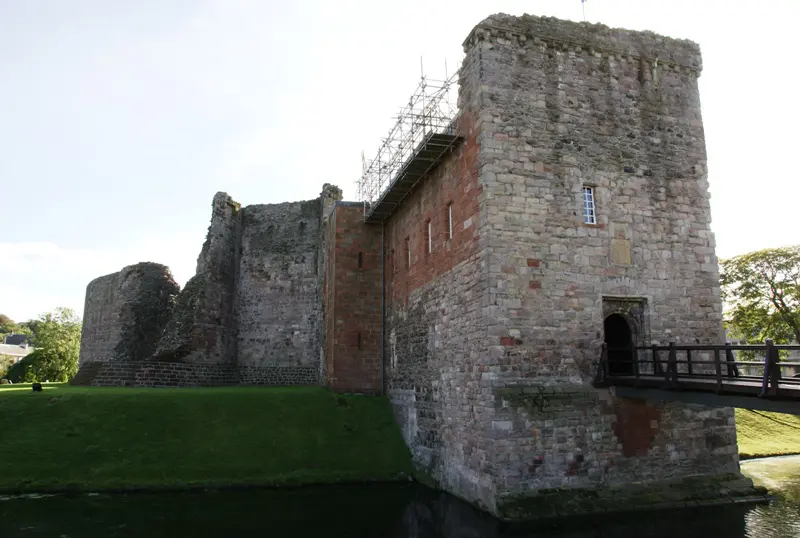
Rothesay Castle stands in the heart of Rothesay, the main town on the Isle of Bute, surrounded by a broad water-filled moat. With its huge circular curtain wall, round towers and fortified gatehouse, it has been described as one of the most remarkable castles in Scotland, both for its long history, reaching back to the early thirteenth century, and for its unusual circular plan.
Building the castle

The castle was built by the Stewart family, hereditary High Stewards of Scotland, either by Alan fitz Walter, who died in 1204, or by his son Walter. It was during Alan’s time that the family added Bute to their lands. The first castle was built of timber, but by the 1230s it had been replaced by a stone curtain wall, about 2.7 metres thick, 7.9 metres high and about 42 metres across, built on a low mound and surrounded by a moat connected to the sea.
Norse attacks
Around 1230 the castle was attacked by a Norwegian-backed fleet under Óspakr-Hákon, King of the Isles. According to the Norse saga of King Haakon, his men fought for three days and broke through part of the eastern wall by hacking at the stone with their axes, the earliest recorded account of an assault on a Scottish castle. In 1263 Rothesay was taken again by the forces of King Haakon of Norway before the Battle of Largs. Haakon’s campaign failed, and Norwegian rule in western Scotland soon came to an end.
A royal castle

In the later thirteenth century the castle was strengthened with four round towers, of which the north-west tower survives intact. When the Stewarts became the royal family, with Robert II in 1371, Rothesay became a royal castle, and kings stayed here often. Robert III is said to have died at Rothesay in 1406. In 1398 he created his son David the first Duke of Rothesay, a title still held by the heir to the throne. In the sixteenth century a great forework, or gatehouse, was added by James IV and James V, projecting from the curtain wall.
The castle was occupied by Cromwell’s troops in the 1650s and badly damaged by the Earl of Argyll’s men in 1685, after which it fell into ruin. In the nineteenth century it was repaired by the Marquesses of Bute, and in the twentieth century it passed into state care. It is now looked after by Historic Environment Scotland.
The castle today
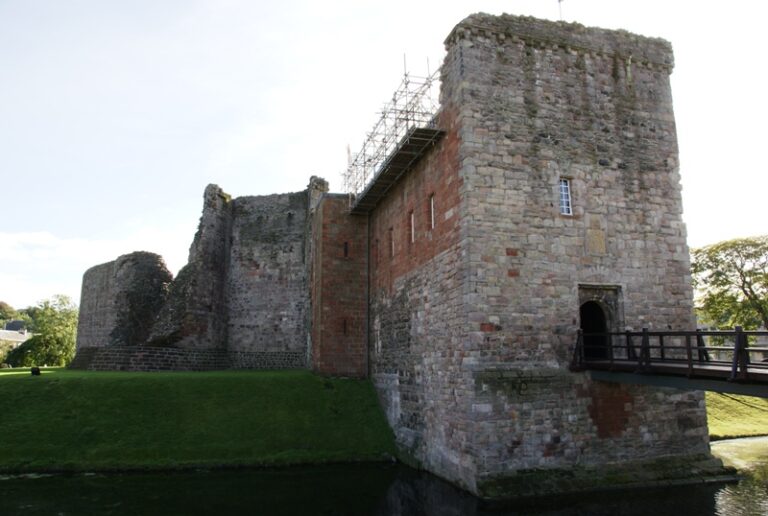
The moat that surrounds the castle is still filled with water, and ducks and swans swim beneath the walls in the middle of the busy town.
Visiting
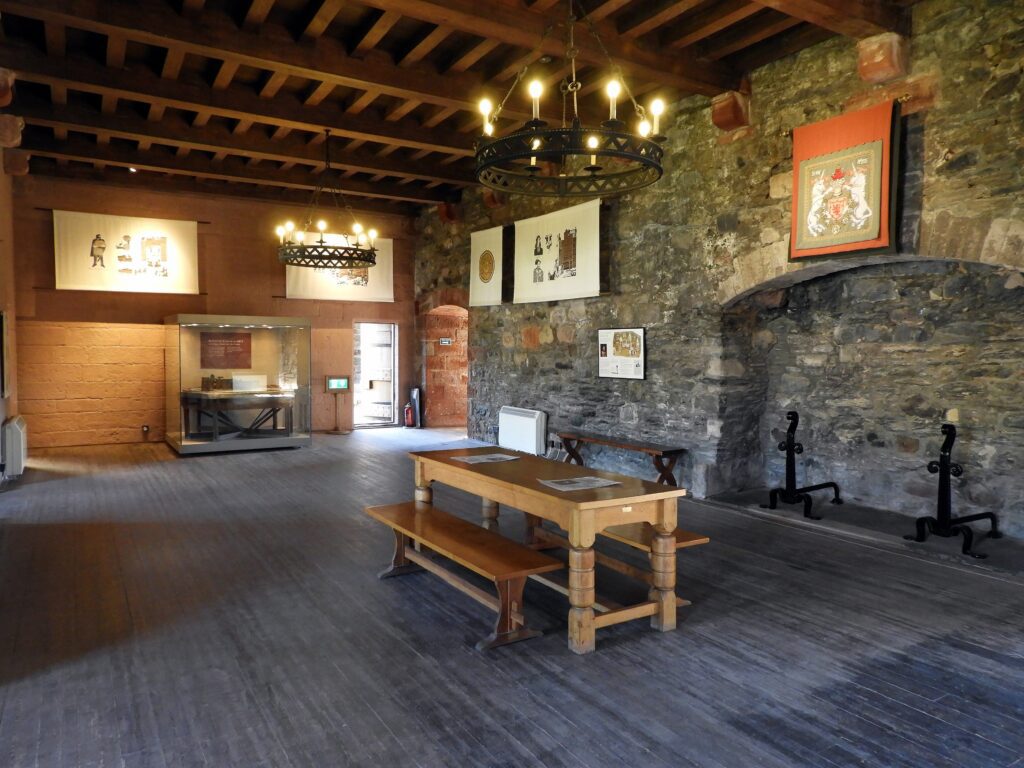
Rothesay Castle is in the centre of the town, a short walk from the ferry terminal, which has frequent sailings from Wemyss Bay. Visitors can walk around the curtain wall and moat, explore the great hall in the gatehouse, and see the chapel of St Michael within the courtyard. Nearby, the Bute Museum tells the story of the island, and the seafront, Winter Gardens and Victorian toilets recall Rothesay’s heyday as a holiday resort, when steamers brought thousands of Glasgow families ‘doon the watter’ every summer to the Firth of Clyde.
About island castles
All castles →For centuries islands were not remote but at the centre of things, on the sea roads that carried kings, clans and armies, and many were guarded by castles. Here you will find the castles on the islands we cover, from the strongholds of the Lords of the Isles and the tower houses of Highland clans…