Kilmory Castle
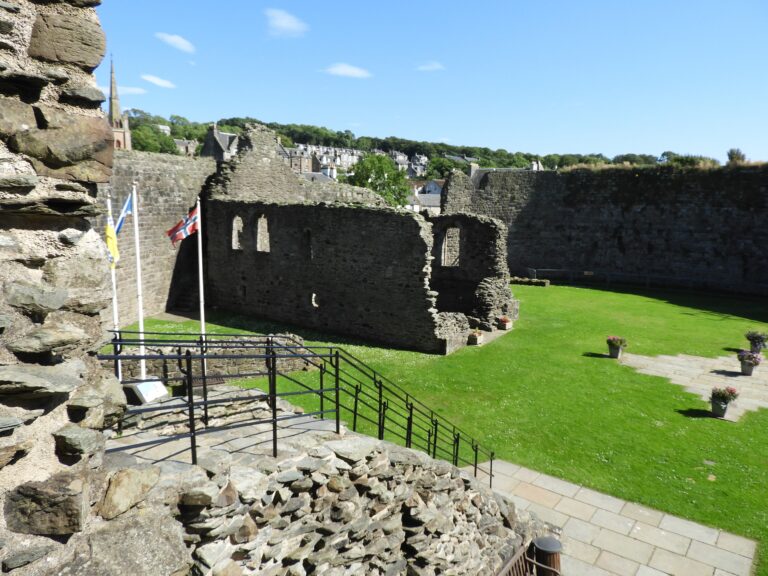
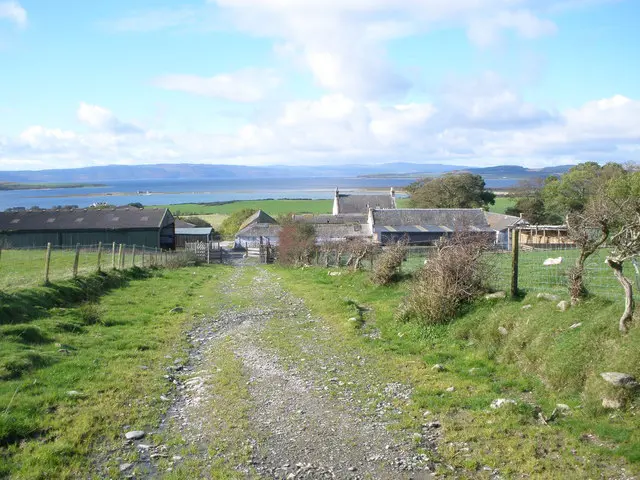
Kilmory Castle, also known as Kilmorie Castle or the Crowner’s Castle, stands at Meikle Kilmory on the Isle of Bute in the Firth of Clyde. The fragmentary remains of this fifteenth-century castle stand in farmland on the west side of the island, and they are protected as a listed building.
History
The castle was the residence of the Jamiesons of Kilmorie, a family who held one of the more unusual offices in medieval Scotland: they were the hereditary coroners of Bute. In Scotland a coroner, or crowner, was an officer of the Crown responsible for arresting people accused of serious crimes and bringing them before the royal courts, and for looking after the king’s interests in the area. The office passed down within the family from generation to generation, and it gave the castle its other name, the Crowner’s Castle.
By the eighteenth century the castle was already a ruin, and like many minor castles in the west of Scotland it was gradually robbed of its stone for use in farm buildings and walls. What survives today is only part of the original building, but enough remains to show the outline of a small fortified house of the kind built by local lairds across Scotland in the fifteenth and sixteenth centuries.
Bute and the Crown
Bute had a special relationship with the Scottish Crown. After it was ceded to Scotland by Norway in 1266, the island became closely linked with the Stewart family, the hereditary High Stewards of Scotland, who later became the royal house of Stewart. Their great castle at Rothesay, with its rare circular curtain wall, still stands in the island’s main town, and the heir to the throne still holds the title Duke of Rothesay. Royal officers such as the Jamieson coroners were part of the system through which the Crown kept order on its island estate.
The island
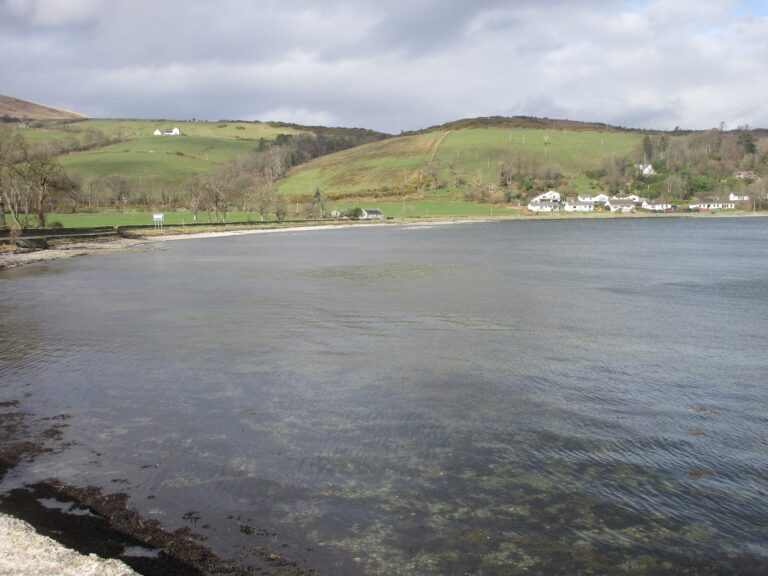
Bute covers more than 29,650 acres and is split by the Highland Boundary Fault into two contrasting halves: a rugged, heather-clad north and a gentler, more fertile south, with farmland running down to the sea. About 6,000 people live on the island, most of them in Rothesay, a Victorian resort town that was once one of the most popular holiday destinations on the Clyde. The west coast, where Kilmory lies, faces across the Sound of Bute to Arran and Inchmarnock, with some of the best sunsets in the Clyde.
Visiting
Bute is reached by ferry from Wemyss Bay to Rothesay, or from Colintraive to Rhubodach at the island’s northern tip. The castle lies on private farmland on the west of the island, so visitors should respect the farm and view the ruins from nearby where access allows. The nearby beaches at Ettrick Bay and Scalpsie Bay are popular for walking, and Scalpsie Bay is one of the best places on Bute to watch common and grey seals hauled out on the rocks. Back in Rothesay, the Bute Museum tells more of the island’s history, from its prehistoric settlers and early Christian sites to the families who held its castles.
About island castles
All castles →For centuries islands were not remote but at the centre of things, on the sea roads that carried kings, clans and armies, and many were guarded by castles. Here you will find the castles on the islands we cover, from the strongholds of the Lords of the Isles and the tower houses of Highland clans…