

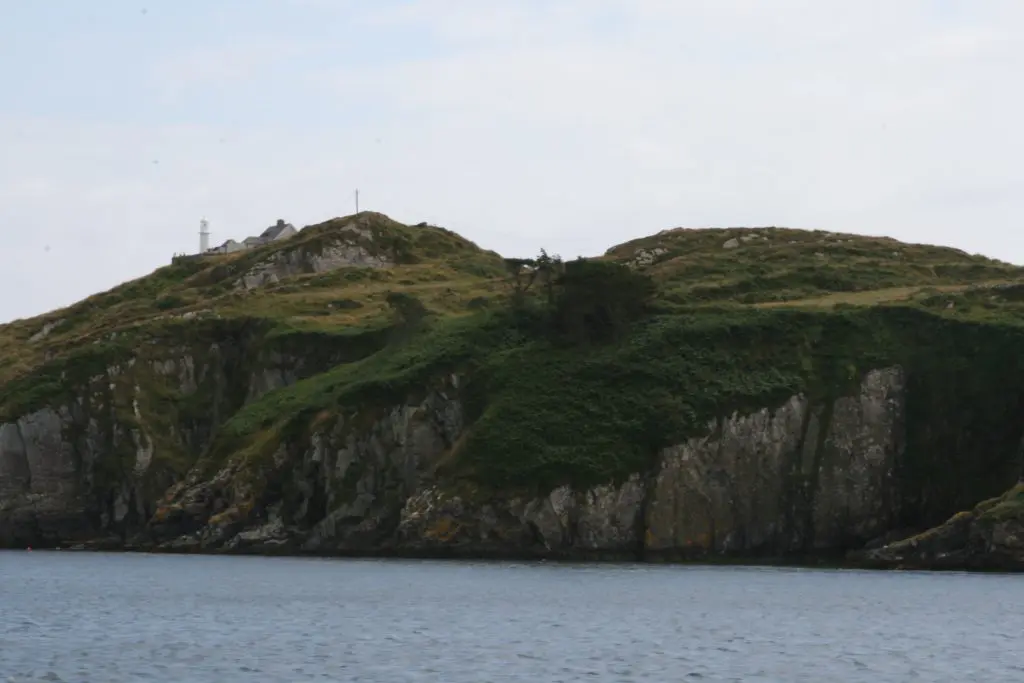


Carbery Islands
6 islands · Ireland
Island Passport
How many of the 6 islands in Carbery Islands can you collect?
0 of them collected by explorers so far
The Carbery Islands lie off the coast of West Cork, Ireland, a scattered group of small islands within Roaring Water Bay, one of the most island-rich stretches of coastline anywhere in Ireland, said locally to contain an island for every day of the year, though the true figure is somewhat more modest, generally reckoned at around 30 named islands and rocks scattered across the bay’s roughly ten-mile width.
History
The Carbery group takes its name from the historic barony of Carbery, or Carbury, in West Cork, whose lords, the MacCarthy Reagh dynasty, once controlled much of this stretch of coastline from their seat at Kilbrittain Castle, their influence extending across both the mainland and its scattered offshore islands for several centuries during the medieval and early modern periods.

More about Carbery Islands
The islands share the characteristic mild, Gulf Stream-tempered climate and rugged granite geology found throughout this part of Munster, conditions that have historically supported small-scale farming even on quite modest and exposed islets, a resilience born of centuries of adaptation to genuinely difficult growing conditions softened only by the region’s unusually temperate winters. Roaring Water Bay’s islands, including the larger Cape Clear and Sherkin Island alongside numerous smaller and often uninhabited islets, have long supported small farming and fishing communities, though many have seen significant depopulation over the past century as island life became increasingly difficult to sustain economically, a pattern repeated across much of Ireland’s western and southern coastline throughout the 20th century.

Cape Clear in particular retains a strong Irish-speaking Gaeltacht community and hosts Ireland’s oldest bird observatory, established in 1959 to monitor the exceptional numbers of migrating seabirds and rare vagrants that pass along this stretch of the Atlantic coast each year, drawing serious birdwatchers from across Europe hoping to spot rarities blown off course during autumn migration. Sherkin Island, connected to Baltimore on the mainland by a short ferry crossing, preserves the ruins of a 15th-century Franciscan friary alongside a marine research station that has monitored the surrounding waters’ rich biodiversity for decades.
Wildlife
The bay’s remarkable concentration of islands, headlands, and inlets makes it a haven for sailors, kayakers, and wildlife-watchers, with important seabird colonies and a rich marine environment supporting seals, dolphins, and even occasional visits from basking sharks and, in recent warming waters, increasingly frequent sightings of minke and humpback whales feeding on the bay’s abundant fish stocks. The town of Baltimore, the main gateway to the islands, retains a strong sailing and fishing tradition, its harbour bustling each summer with yachts and pleasure craft exploring the wider bay.
The Carbery Islands, though individually modest in size, together form one of the most scenic and ecologically significant island groups anywhere along Ireland’s southern coast, a landscape where resilient Gaeltacht communities, pioneering bird conservation, and some of the country’s richest marine wildlife continue to coexist within a single, remarkably compact and island-studded bay.
Baltimore itself carries a dramatic and well-documented history: in June 1631, Barbary corsairs from North Africa raided the village in a surprise night attack, capturing around a hundred men, women, and children and carrying them off into slavery in Algiers, an event still commemorated locally as the Sack of Baltimore and remembered as one of the most significant slave raids ever carried out on the Irish or British coastline. The white-painted Baltimore Beacon, known locally as Lot’s Wife, still stands guard above the harbour entrance today, a navigation mark dating from the nineteenth century that has become one of the most recognisable landmarks of the wider bay.
Island life
Among the smaller Carbery islands, Heir Island has developed a particular reputation for sailing, home to a well-regarded sailing school that has introduced generations of visitors and locals alike to the bay’s sheltered but often lively waters, while Long Island, a little further out, retains a working lighthouse and a small remaining population sustained by farming and fishing. The whole area forms part of the wider West Cork sailing and cruising ground, its combination of sheltered channels, numerous safe anchorages, and dramatic open-water passages between islands making it one of the most popular cruising destinations on Ireland’s entire southern coast.
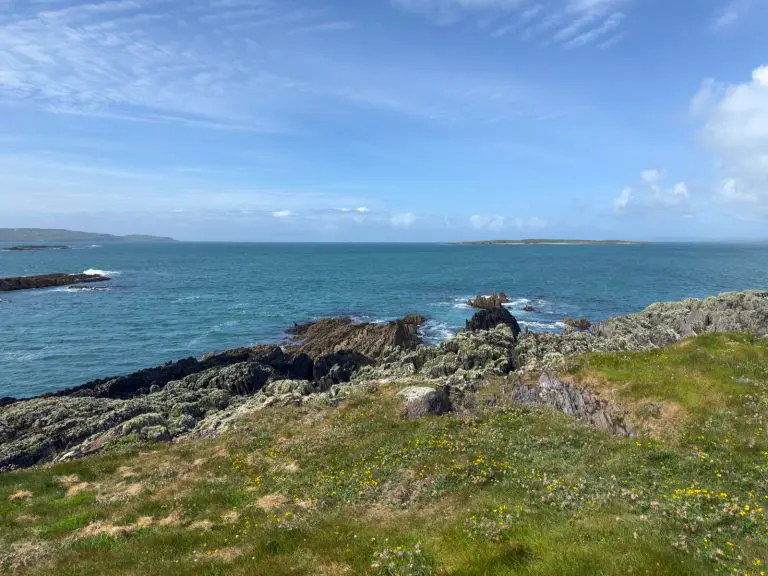
The biggest islands in Carbery Islands
By area (acres)
- 1 Cléire 1,362
- 2 Sherkin Island 1,236
- 3 Ringarogy Island 963
- 4 Long Island (Cork) 445
- 5 Heir Island 371
- 6 Skeam East 59
By population (people)
- 1 Cléire 124
- 2 Heir Island 27
Every island in Carbery Islands
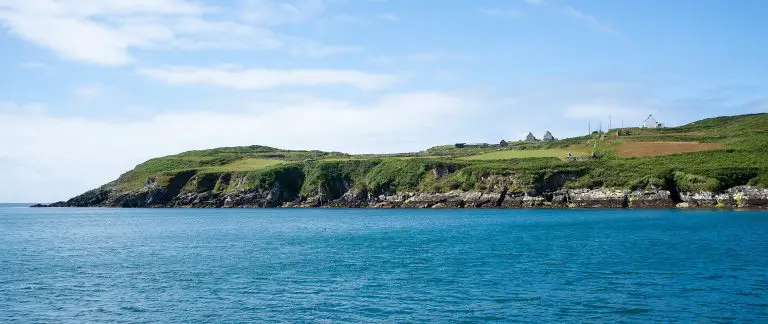 Island No.
298
Not yet collected
Saltwater
Cléire
Carbery Islands
Cape Clear Island, officially known by its Irish name Cléire, lies off the south-west coast of County Cork, Ireland, and is the…
Island No.
820
Not yet collected
Saltwater
Heir Island
Carbery Islands
Heir Island, also known as Hare Island or Inishodriscol, lies in southwest County Cork, Ireland, and is home to a year-round population…
 Island No.
822
Not yet collected
Saltwater
Long Island (Cork)
Carbery Islands
Long Island , historically known as Inishfada, lies south of the village of Schull in County Cork, Ireland, and takes its name…
 Island No.
369
Not yet collected
Saltwater
Ringarogy Island
Carbery Islands
Ringarogy Island, in Irish Rinn Ghearróige, is a former island in Roaringwater Bay, West Cork, just north of Baltimore. Part of Carbery’s…
Island No.
836
Not yet collected
Saltwater
Sherkin Island
Carbery Islands
Sherkin Island, historically known as Inisherkin, lies off the coast of County Cork, Ireland, within Roaringwater Bay alongside several other inhabited and…
 Island No.
561
Not yet collected
Saltwater
Skeam East
Carbery Islands
Skeam East is a small island in Roaringwater Bay off the coast of County Cork, Ireland, near the village of Schull, forming…
