


Devon
5 islands · England
Island Passport
How many of the 5 islands in Devon can you collect?
0 of them collected by explorers so far
Devon stretches across South West England with coastlines on both the Bristol Channel to the north and the English Channel to the south, its varied and often dramatic shoreline studded with small islands and distinctive rock formations that reflect the county’s long relationship with the sea.
Visiting
Along the south Devon coast lies Burgh Island, a tidal island near Bigbury-on-Sea famous for its Art Deco hotel, once a favoured retreat of Agatha Christie who wrote parts of two novels there, and for its unusual sea tractor, a huge-wheeled vehicle that ferries visitors across the sands when the rising tide cuts the island off from the mainland. Some historians have even proposed Burgh Island as a candidate for Ictis, the semi-legendary tin-trading island described by classical writers, placing it in the same rarefied company as St Michael’s Mount and Looe Island further west in Cornwall.
History
Drake’s Island sits within Plymouth Sound, named for Sir Francis Drake and long fortified to guard the approaches to one of Britain’s most important naval ports; its gun batteries and magazines, built up over several centuries, once formed a key part of Plymouth’s coastal defences, and the island has more recently been the focus of redevelopment proposals aiming to open it more fully to public visitors. Plymouth Sound itself remains one of the busiest natural harbours in the South West, home to the Royal Navy’s Devonport base and a maritime heritage stretching back through Drake’s own Elizabethan voyages against the Spanish Armada to the modern warships still built and serviced there today.
Landscape
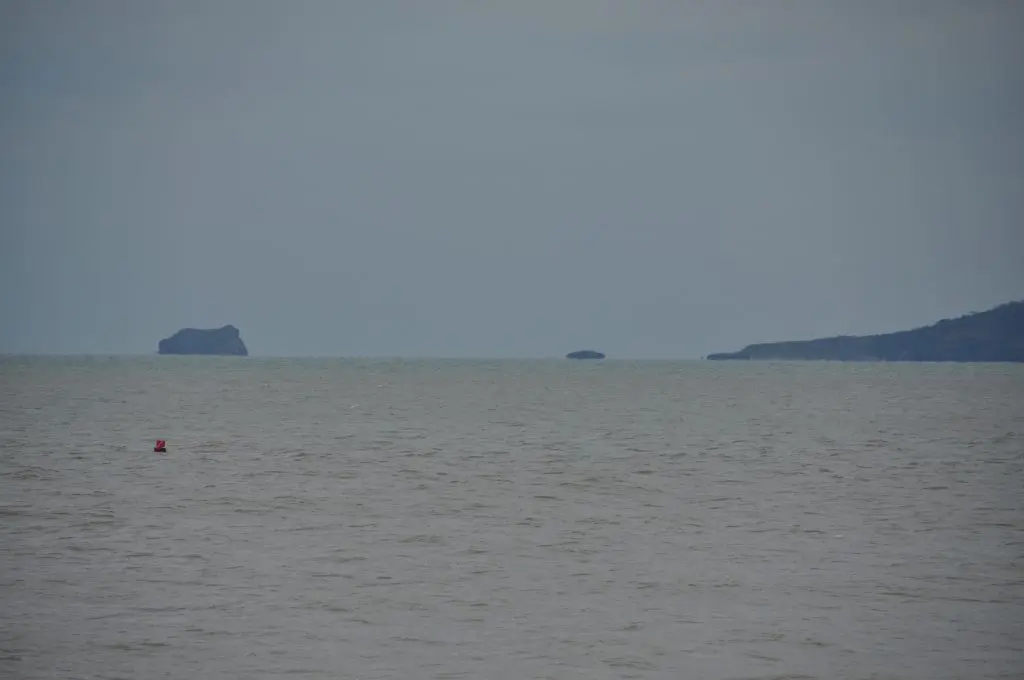
Nearby, Thatcher Rock, the Great Mew Stone, and Ore Stone punctuate the waters of Torbay, an area nicknamed the “English Riviera” for its mild climate and red sandstone cliffs, popular with holidaymakers, sailors, and divers exploring its rocky islets. The Great Mew Stone, standing just off Wembury at the mouth of the River Yealm, was once even inhabited by a single hermit-like family in the early 19th century, reputedly banished there after a poaching offence, while Thatcher Rock off Torquay has long been a favoured haunt of local seabirds and a familiar landmark for sailors navigating the bay.

Devon’s coastline as a whole is renowned for its geological diversity, with the county lending its name to the Devonian geological period, first defined by 19th-century geologists studying the distinctive rock sequences exposed along this stretch of coast. This scientific legacy sits alongside a long maritime heritage stretching from Drake’s Elizabethan voyages through to the modern naval and fishing industries still centred on Plymouth and other coastal towns such as Brixham and Dartmouth, where fishing fleets continue to land catches much as they have for centuries.
The county’s small islands and offshore rocks, though modest in scale compared with the tidal causeways of Cornwall or the harbour clusters of Dorset and Hampshire, punctuate almost every stretch of the Devon coastline, from the sheltered waters of the Exe Estuary in the east to the wilder, more exposed cliffs around Hartland Point in the north. Together they form a quieter, less crowded counterpart to the busier island clusters found elsewhere along the south coast, their combination of dramatic tidal islands, naval history, and scenic variety making Devon’s coastline one of the most varied and historically rich in the whole of South West England, a landscape equally shaped by Elizabethan seafarers, Victorian holidaymakers, and the geologists who gave the county’s name to an entire period of Earth’s history.
Further east, the Exe Estuary and the beaches around Exmouth and Sidmouth mark the beginning of the Jurassic Coast World Heritage Site, which continues on into neighbouring Dorset, its red sandstone cliffs giving way gradually to the pale limestone and chalk formations further along the coast. Devon’s north coast, facing the Bristol Channel around Ilfracombe, Lynton and Lynmouth, presents a rockier, more exposed character shaped by Atlantic swells, with small offshore rocks and reefs adding further hazards for shipping along this less sheltered stretch of coastline, a stark contrast to the calmer waters and busier tourist beaches of the county’s southern shore.
The biggest islands in Devon
By area (acres)
- 1 Burgh Island 35
- 2 Great Mew Stone 8
- 3 Drake’s Island 6
- 4 Thatcher Rock 3
By population (people)
- 1 Burgh Island 12
Every island in Devon
 Island No.
24
Not yet collected
Tidal
Burgh Island
Devon
Burgh Island is a tidal island on the coast of South Devon, England, near the small seaside village of Bigbury-on-Sea, connected to…
 Island No.
25
Not yet collected
Saltwater
Drake’s Island
Devon
Drake’s Island is a small but highly distinctive island in Plymouth Sound, just off the coast of Plymouth, Devon. Covering about 6.5…
 Island No.
76
Not yet collected
Saltwater
Great Mew Stone
Devon
The Great Mewstone lies at the entrance to Plymouth Sound off Wembury, Devon, and together with the smaller Little Mewstone forms a…
Island No.
892
Not yet collected
Saltwater
Ore Stone
Devon
Ore Stone is a small rocky island off the coast of Torquay, in Torbay, Devon, England, standing offshore within the wider bay…
 Island No.
209
Not yet collected
Saltwater
Thatcher Rock
Devon
Thatcher Rock is a striking, uninhabited rocky island located off the coast of Torquay in South Devon, England. This prominent feature in…
