




Reptiles
9 species on the islands
Britain and Ireland have only a handful of native reptiles, and the islands have fewer still. Reptiles need warmth, and most crossed into Britain over the land bridge from the Continent after the last Ice Age, before rising seas cut it off; many never reached the outer islands, and Ireland, cut off even earlier, has just one native land reptile.
Lizards

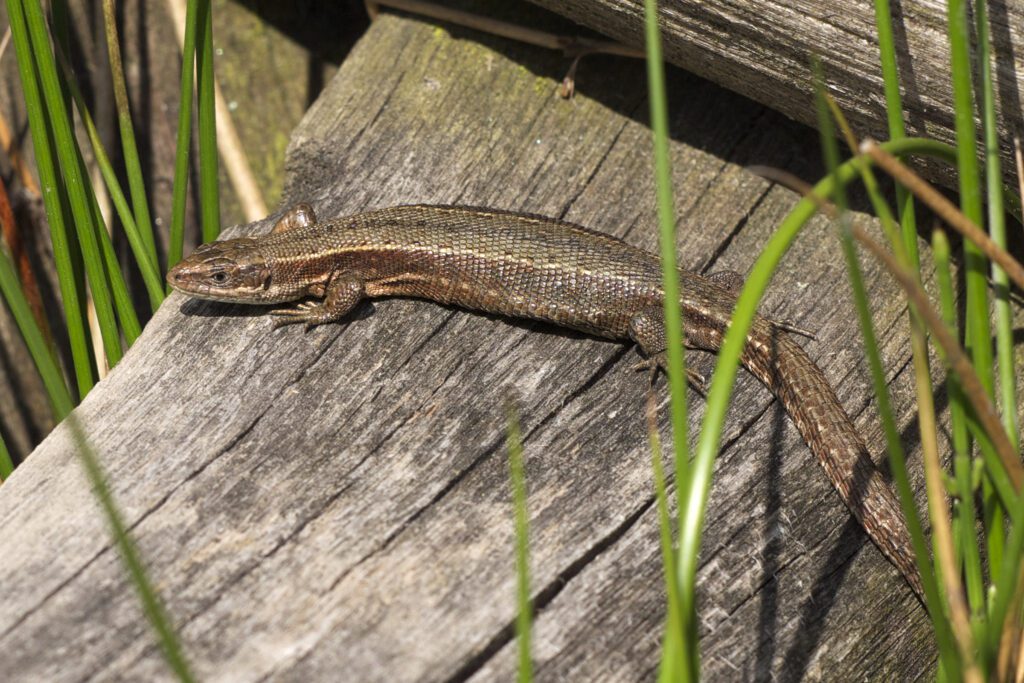
The Common Lizard is the most widespread reptile in these islands, and the only one native to Ireland. The legless Slow Worm, often mistaken for a snake, lives in gardens and grassland across Britain. The Sand Lizard is one of Britain’s rarest animals, found on a few southern heaths and dunes.
Snakes
Britain has three snakes: the Adder, the only venomous one, the Grass Snake, the largest, and the rare Smooth Snake of the southern heaths. Ireland famously has none, a fact legend credits to Saint Patrick, though in truth snakes never reached it after the Ice Age.
Other sea turtles turn up only rarely, usually young ones carried north by storms and too cold to survive without help.
The Channel Islands

The Channel Islands, much closer to France, are warmer and were joined to the Continent for longer, and they have reptiles found nowhere else in the British Isles. The Green Lizard, bright green and up to 40 centimetres long, lives on Jersey, and the Wall Lizard is native there too, with introduced colonies on cliffs and old walls in southern England.
Turtles at sea
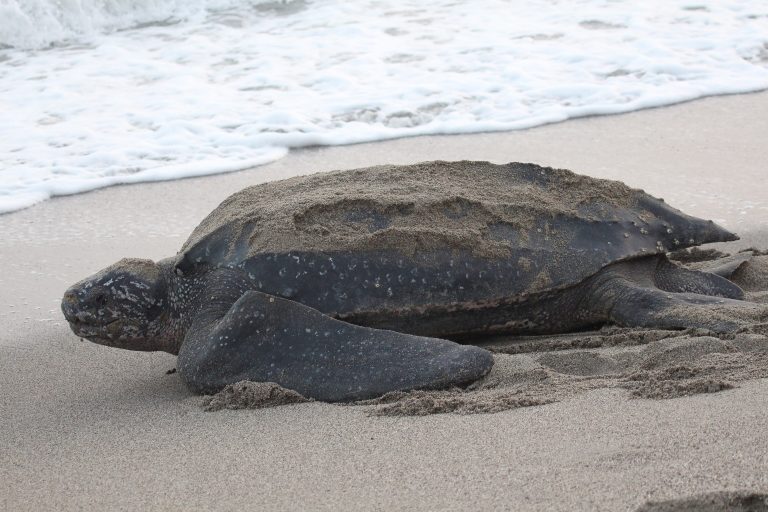
At sea, the Leatherback Turtle, the largest turtle in the world, follows the jellyfish north into British and Irish waters in summer, and is sometimes seen off the western coasts and islands. Other sea turtles turn up only rarely, usually young ones carried north by storms and too cold to survive without help.
Seeing reptiles
Reptiles are easiest to see on warm, still mornings in spring, when they bask in the sun to warm up before they can move quickly. Walk slowly and look along sunny banks, walls and paths, and never pick them up: all native reptiles are protected by law, and lizards can shed their tails if handled.
Amphibians too
Reptiles share the warm, damp corners of the islands with a few amphibians: common frogs and common toads are found on many islands, and the natterjack toad, which runs rather than hops, lives on a few coastal dunes in England, Wales and Ireland. Like reptiles, amphibians never reached many of the outer islands after the Ice Age.
A warming climate
As the climate warms, reptiles may find more of the islands suitable, but they cannot cross the sea on their own, and their heathland and dune homes are under pressure from development, fires and overgrowth. Careful management of heaths, with grazing and controlled cutting, helps keep the open, sunny ground they need.
Kinds of reptiles
Every species ↓Every species: Reptiles
9 Snakes
Adder
Vipera berus
The adder (Vipera berus) is a stout snake with a distinctive dark zigzag down its back. Males are grey or cream with black markings,…
Lizards
Common Lizard
Zootoca vivipara
The common lizard (Zootoca vivipara), also called the viviparous lizard, is the most widespread reptile in Britain and Ireland, a small brown lizard about…
 Snakes
Grass Snake
Natrix helvetica
The grass snake (Natrix helvetica) is Britain's longest snake, olive-green with a distinctive yellow and black collar behind the head.On the islandsGrass snakes live…
Lizards
Green Lizard
Lacerta bilineata
The western green lizard (Lacerta bilineata) is a large, bright green lizard up to forty centimetres long. In spring the males have a blue…
 Turtles
Leatherback Turtle
Dermochelys coriacea
The leatherback turtle (Dermochelys coriacea) is the world's largest turtle, up to two metres long, with a ridged, leathery shell instead of hard plates.Around…
 Lizards
Sand Lizard
Lacerta agilis
The sand lizard (Lacerta agilis) is a stocky lizard with dark-edged spots along its back. In spring the males have bright green flanks.On the…
 Lizards
Slow Worm
Anguis fragilis
The slow worm (Anguis fragilis) looks like a small snake but is actually a legless lizard, with a smooth, shiny, golden-brown or grey body.…
 Snakes
Smooth Snake
Coronella austriaca
The smooth snake (Coronella austriaca) is a slender, grey-brown snake with small dark spots and a dark stripe through the eye.On the islandsSmooth snakes…
 Lizards
Wall Lizard
Podarcis muralis
The common wall lizard (Podarcis muralis) is a slender, agile lizard, brown or greenish with variable dark markings.On the islandsWall lizards are native to…
