
Bristol Channel
2 islands · Wales
Island Passport
How many of the 2 islands in Bristol Channel can you collect?
0 of them collected by explorers so far
The Bristol Channel forms the entire southern boundary of Wales, its waters separating the Welsh coast from Devon and Somerset in South West England and marking one of the widest and most tidally extreme estuaries in the world, its tidal range at Avonmouth exceeded only by Canada’s Bay of Fundy.
Visiting
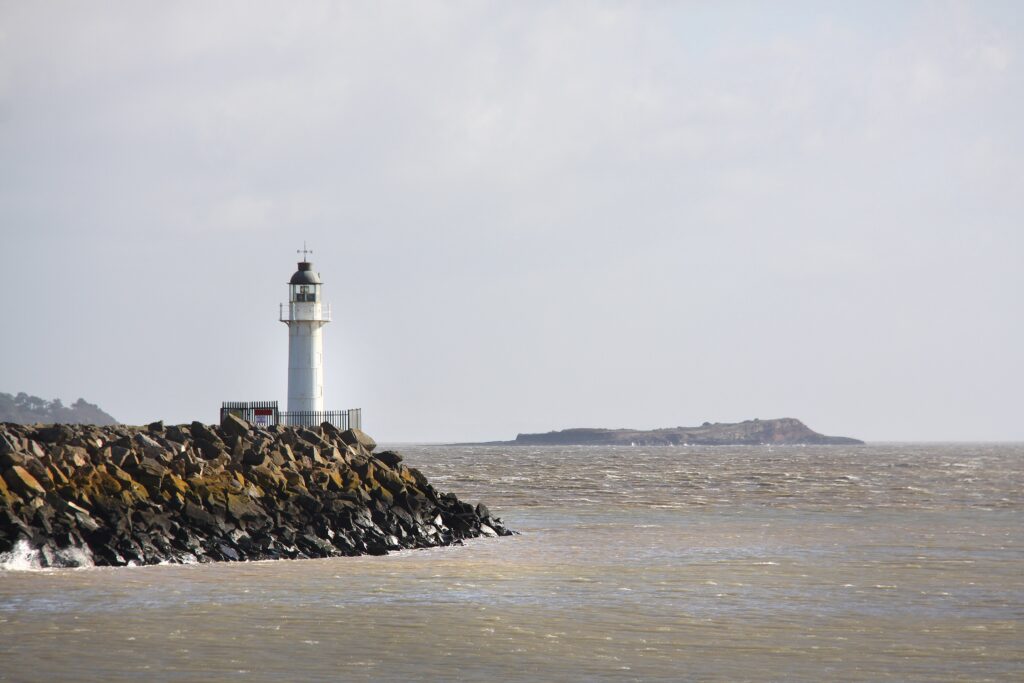
Along its Welsh shore, the channel shapes the coastline of Glamorgan and Monmouthshire, including the resort town of Barry, whose former island, Barry Island, was joined to the mainland in the 1870s as the town’s docks expanded to export coal from the South Wales valleys, and Sully Island, a small tidal islet accessible on foot at low tide near Penarth, its exposed causeway a popular but genuinely hazardous crossing that has required rescue of stranded walkers on numerous occasions.

Wildlife
The channel’s exceptional tidal range, driven by its funnel-like shape narrowing towards the Severn, creates extensive mudflats and sandbanks close to the Welsh coast, important for wading birds and wildfowl throughout the year, with the Severn Estuary designated a Special Protection Area in recognition of the internationally significant numbers of dunlin, redshank, and shelduck that depend on its rich intertidal feeding grounds each winter.
History
Historically the Bristol Channel has been of major economic significance to Wales, carrying coal, iron, and steel exports from the industrial valleys through ports including Cardiff, Barry, and Newport during the nineteenth and early twentieth centuries, a trade so intense that Barry Docks briefly became the busiest coal-exporting port in the entire world during the early 20th century, its rise driven directly by the exhaustion of Cardiff’s own dock capacity to handle the sheer volume of Welsh steam coal demanded by industries and navies across the globe.
More about Bristol Channel
Today the channel remains an important shipping route and a popular area for sailing, fishing, and coastal walking along the Wales Coast Path, a long-distance route completed in 2012 that made Wales the first country in the world to offer a continuous, waymarked path around its entire coastline. Its distinctive brown, sediment-laden waters, carrying vast quantities of fine silt stirred up by the exceptional tidal currents, and dramatic tidal bore on the upper reaches of the Severn, a single wave of water that can be surfed by experienced river surfers on the largest spring tides, make it one of the most recognisable and scientifically significant tidal environments anywhere around the coast of Wales.

Barry Island, though no longer a true island since the enclosure of its channel by the docks in the 1880s, became one of Wales’s best-loved seaside resorts through the twentieth century, its funfair and beaches at Whitmore Bay drawing generations of day-trippers from the South Wales valleys by train, a tradition that found a new audience in the twenty-first century when the town’s harbour and streets provided several of the principal filming locations for the BBC sitcom Gavin and Stacey, whose popularity helped revive tourism to the area.
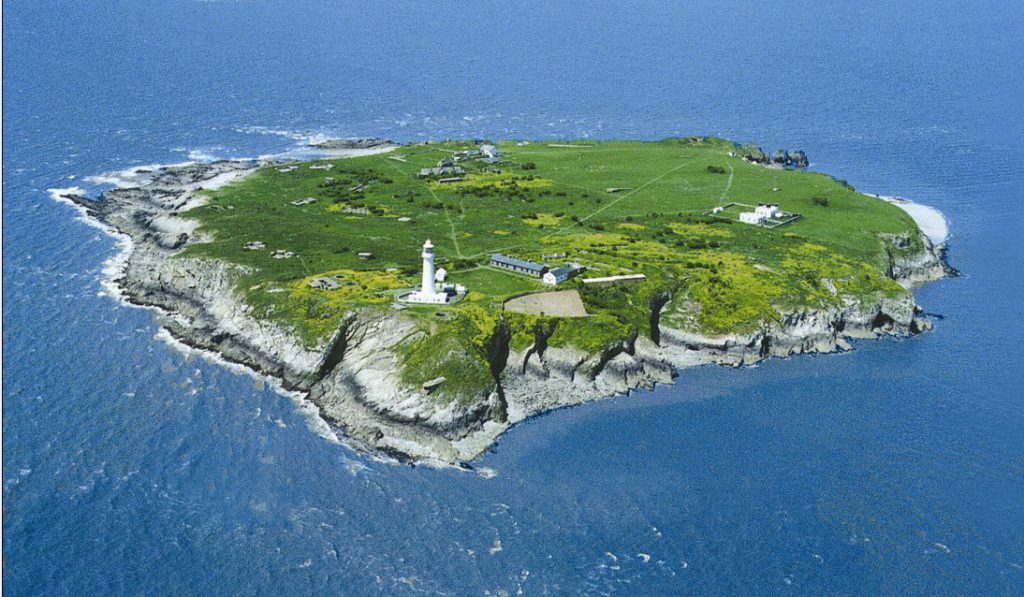
Further along the coast, the low-lying limestone cliffs of the Glamorgan Heritage Coast, stretching west from Barry towards Southerndown and Ogmore-by-Sea, expose a dramatic sequence of Jurassic-era Lias rock rich in fossils, a landscape quite different in character from the older, harder rocks of Anglesey and North Wales, and one that continues to erode steadily under the channel’s powerful tidal currents, periodically revealing new fossil finds along the foreshore. Flat Holm, reached by boat from Cardiff or Weston-super-Mare, is managed today as a nature reserve valued for its breeding gulls and its long-established population of feral goats, and remains formally part of the city of Cardiff despite lying several miles out in the channel.
Cardiff itself, at the channel’s Welsh apex, transformed its old coal-exporting docklands into Cardiff Bay through the construction of a barrage completed in 1999, creating a freshwater lake and waterfront now lined with cultural venues including the Wales Millennium Centre, a striking modern counterpart to the channel’s much older maritime and industrial heritage. Further west, where the channel opens into Carmarthen Bay, the Gower Peninsula’s cockle beds at Penclawdd carry a long tradition of hand-raking shellfish from the sands, a practice that continues today much as it has for generations among the small local fleets still working this part of the South Wales coast.
The biggest islands in Bristol Channel
By area (acres)
- 1 Flat Holm 86
- 2 Sully Island 14
Every island in Bristol Channel
 Island No.
81
Not yet collected
Saltwater
Flat Holm
Bristol Channel
Flat Holm ( Welsh : Ynys Echni ) is a Welsh island lying in the Bristol Channel approximately 6 km (4 mi)…
Island No.
768
Not yet collected
Tidal
Sully Island
Bristol Channel
Sully Island is a small tidal island of around 14.5 acres by the hamlet of Swanbridge in the Vale of Glamorgan, Wales,…
