


Freshwater
47 islands · Scotland
Island Passport
How many of the 47 islands in Freshwater can you collect?
0 of them collected by explorers so far
Scotland’s lochs hold hundreds of islands, from the crannogs and castle-topped islets of its larger freshwater lochs to tiny wooded refuges barely large enough for a single tree.
Unlike the sea lochs of the west coast, these are genuinely inland, freshwater bodies of water, and their islands have a correspondingly different character, often linked to defence, farming, or ancient settlement rather than fishing and the sea, reflecting centuries in which a well-placed loch island offered a naturally defensible refuge for chieftains, monks, and farming communities alike across the Scottish landscape.
Landscape
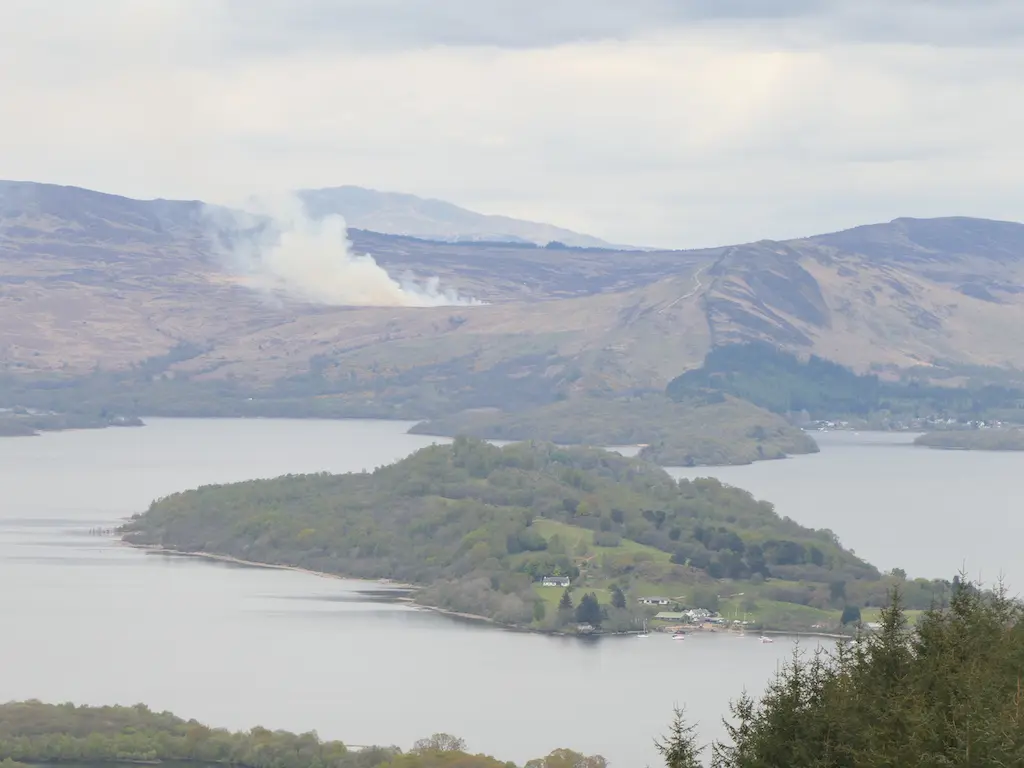
Loch Lomond, Britain’s largest freshwater loch by surface area, alone holds more than twenty named islands, ranging from the substantial and long-inhabited Inchmurrin to tiny wooded islets scattered across its southern basin, their sheer number and variety reflecting the loch’s origins as a drowned glacial valley subsequently shaped by rising post-glacial water levels. Loch Awe and Loch Maree each hold their own scattering of ancient island sites, some linked to early Christian hermitages and others to the ruined strongholds of local clan chiefs who once controlled these strategically valuable inland waterways.

More about Freshwater
The Lake of Menteith, the only “lake” rather than “loch” in Scotland, a naming quirk generally attributed to a mapping error by English surveyors unfamiliar with Scottish terminology, is home to Inchmahome Priory, where the infant Mary, Queen of Scots was famously sheltered in 1547 to protect her from English forces during the conflict known as the “Rough Wooing”, a formative episode in the young queen’s turbulent early life. Further north the River Tay and River Conon carry their own river islands, smaller and less celebrated than their loch counterparts but no less a part of Scotland’s rich freshwater island heritage.

This very different, inland side of Scotland’s island geography, shaped as much by defensive strategy, monastic retreat, and Victorian landscaping as by the sea, demonstrates that Scotland’s remarkable island wealth extends far beyond its famous coastal archipelagos, reaching deep into the country’s interior lochs and rivers, where islands both ancient and ornamental continue to shape the landscape and history of the Scottish mainland.
Loch Katrine, further east in the Trossachs, has supplied fresh drinking water to Glasgow since 1859, its Victorian aqueduct scheme one of the great feats of nineteenth-century civil engineering, drawing water more than thirty miles by gravity alone into the city’s supply network, a system still in use today largely unchanged in principle from its original opening. The loch’s islands and wooded shoreline, protected in part because of this ongoing role as a water source, have retained an unusually unspoiled character as a result.
Loch Tay, further north, is ringed by the remains of numerous ancient crannogs, artificial or part-artificial islands built on wooden piles in the shallows, some dating back more than 2,500 years to the Iron Age, evidence of a long tradition of loch-dwelling that once extended across many of Scotland’s freshwater lochs. Archaeological investigation of these submerged and semi-submerged structures has revealed remarkably well-preserved timber, tools, and other organic material, protected for millennia by the loch’s cold, low-oxygen water in a way rarely possible on dry land.
Loch Awe, meanwhile, is overlooked by the dramatic ruin of Kilchurn Castle, once a seat of the Campbells of Glenorchy, and its loch-side setting, along with the islands of Innis Chonnell and Fraoch Eilean, reflects a wider pattern across the Scottish Highlands in which lochs functioned as natural highways and defensive boundaries, their islands offering a security that the surrounding hills and glens alone could not.
History
Elsewhere, Cherry Island in Loch Ness is thought to be an artificial crannog dating back many centuries, one of several such constructed islands found across Scotland’s lochs, built by hand from timber, stone and rubble in shallow water to create a defensible dwelling place long before the age of castles, while the Ness Islands in the city of Inverness offer a rather different, more genteel character, a series of small wooded islands within the city itself, connected by ornamental Victorian footbridges and laid out as a public park in the 19th century, now one of Inverness’s most cherished green spaces.
The biggest islands in Freshwater
By area (acres)
- 1 Inchmurrin 297
- 2 Eilean Sùbhainn 292
- 3 Inchlonaig 198
- 4 Inchtavannach 173
- 5 Inchcailloch 124
- 6 Moncreiffe Island 117
- 7 Inchmoan 115
- 8 Garbh Eilean (Loch Maree) 106
- 9 Eilean Ruairidh Mòr 104
- 10 St Serf’s Inch 99
By population (people)
- 1 Innis Chonan 5
- 2 Inchtavannach 3
Explore Freshwater
5 areas-
Argyll & Bute
3 islands · 1 area
-
Dumfries & Galloway
1 island · 1 area
-
Highland
5 islands · 2 areas
-
Perth & Kinross
10 islands · 3 areas
-
Stirling & the Trossachs
26 islands · 3 areas