Kames Castle
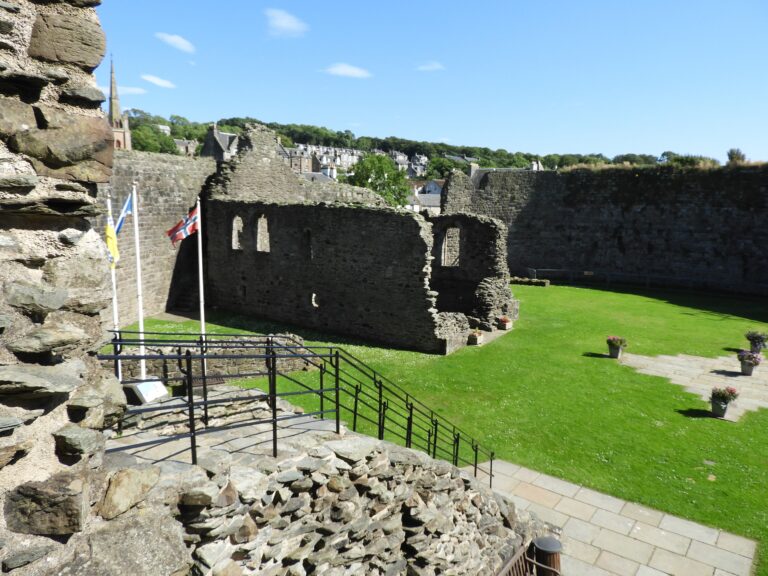
Kames Castle stands at the head of Kames Bay, near the village of Port Bannatyne on the Isle of Bute. Its tall, white-harled tower house, set among trees and gardens close to the shore, is often said to be one of the oldest continuously inhabited houses in Scotland, and it has been lived in by lairds, judges, writers and holidaymakers over the centuries.
History
The lands of Kames were granted to the Bannatyne family by Robert the Bruce in the fourteenth century, and the family held them for around five hundred years, giving their name to the nearby village of Port Bannatyne. Although the tower looks as if it could be of the fourteenth century, the present building is thought to date from the sixteenth.
The last of the Bannatyne lairds was Sir William Macleod Bannatyne, a distinguished Edinburgh lawyer and judge who took the title Lord Bannatyne when he joined the Court of Session in 1799. In the late eighteenth and early nineteenth centuries he laid out a walled garden and built a mansion beside the old tower. But he preferred the social life of Edinburgh, and around 1810 he sold the estate to James Hamilton, an Edinburgh lawyer.
Kames was the birthplace and early home of the critic and essayist John Sterling, born in 1806. His friend Thomas Carlyle, in his biography of Sterling, described the castle as ‘a kind of dilapidated baronial residence to which a small farm was then attached’.
In 1863 Kames became part of the Marquess of Bute’s estate, and the tower was altered later in the nineteenth century. Around 1900 the mansion was demolished and replaced by a group of cottages around a courtyard, intended to make Kames a hunting lodge. In the middle and later twentieth century the castle was used as a children’s holiday home by the Scottish Council for Spastics, the charity now known as Capability Scotland.
The castle today
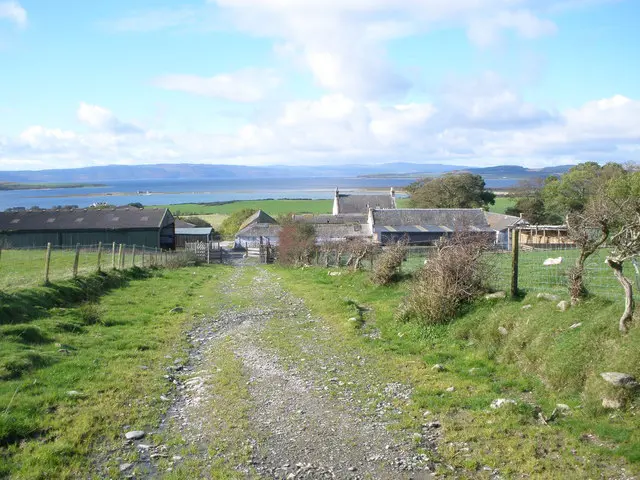
Kames is now privately owned, and several of its cottages are available as holiday lets. The castle stands in about twenty acres of planted grounds, including a two-acre walled garden from the eighteenth century. The castle, cottages, walled garden and other estate buildings are all listed buildings. Close by stands Wester Kames, a smaller tower house rebuilt in the 1890s by the Marquess of Bute.
Bute
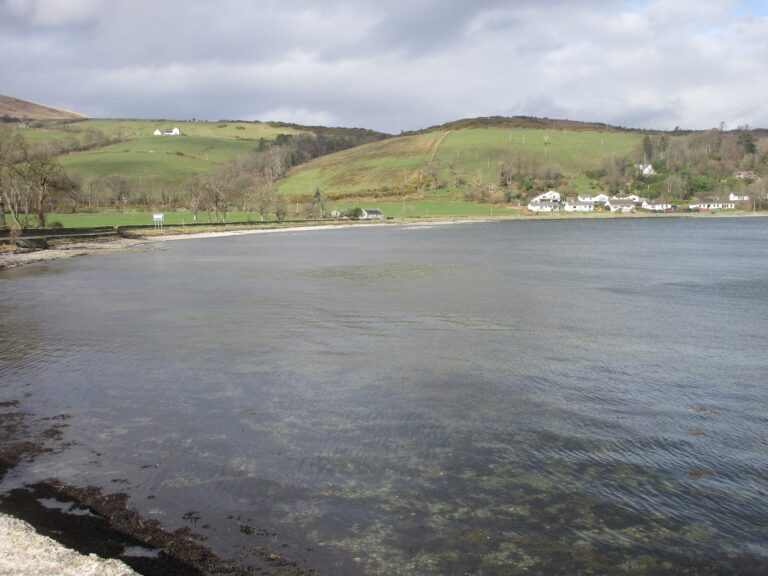
Bute is divided by the Highland Boundary Fault into a rugged, heather-clad north and a gentler, more fertile south. About 6,000 people live on the island, most in Rothesay, with its great circular castle. Kames Bay lies on the east side of the island, a short distance north of Rothesay, and looks across to the hills of Cowal and the entrance to the Kyles of Bute, one of the most beautiful stretches of water in the Firth of Clyde.
Visiting
Port Bannatyne is a short bus ride or drive from Rothesay, which is reached by ferry from Wemyss Bay. Kames Castle is private, but holiday guests can stay in the cottages, and the castle can be seen from nearby roads. The village has a marina and a waterfront, and walks lead into the hills of north Bute and across the island to Ettrick Bay.
Wildlife
The shore of Kames Bay is good for wading birds, including oystercatchers and curlews, and eiders and seals are often seen in the bay. Buzzards circle over the woods and farmland around the castle.
About island castles
All castles →For centuries islands were not remote but at the centre of things, on the sea roads that carried kings, clans and armies, and many were guarded by castles. Here you will find the castles on the islands we cover, from the strongholds of the Lords of the Isles and the tower houses of Highland clans…