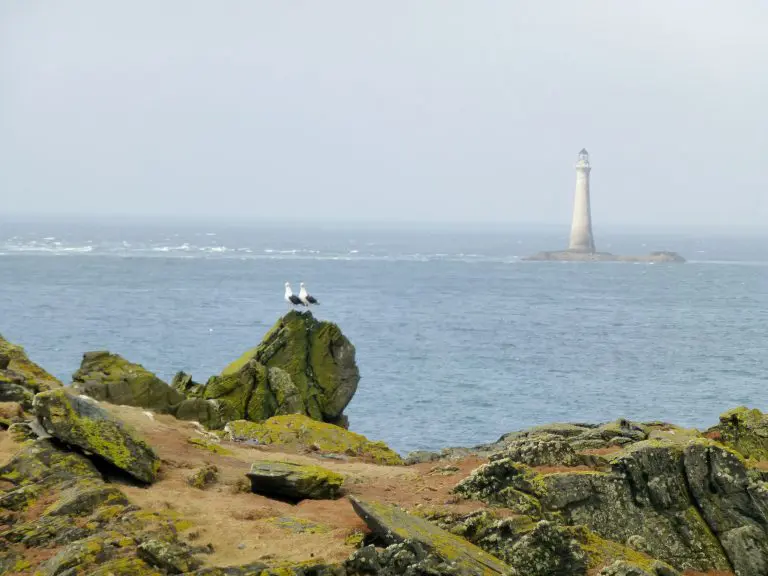
Calf of Man
Island Passport
Collect Calf of Man
Be the first to collect it
This island is a protected nature reserve, so only sightings are stamped. Please do not land.
The Calf of Man, in Manx Yn Cholloo, is an island of about 618 acres off the south-west tip of the Isle of Man, separated from it by the narrow, tide-swept Calf Sound. It is a nature reserve and bird observatory, owned by Manx National Heritage, and has only two seasonal residents, the wardens. Its name comes from the Old Norse kalfr, a small island lying beside a larger one, the same word found in other “Calf” islands around Britain.
Landscape

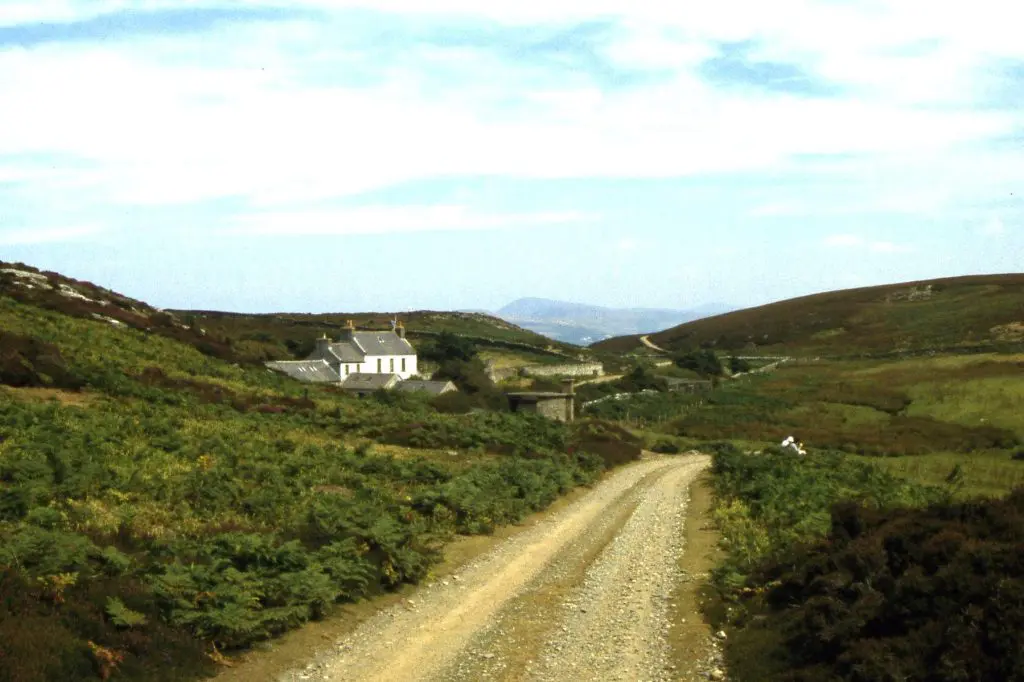
The Calf is a hilly island of heather, bracken and grass, rising to 126 metres at an unnamed summit in the west, with high cliffs on its western and southern sides. It has two short streams and two minor, unfenced roads. In the Calf Sound lies the islet of Kitterland, and close to the Calf’s own shore stand the rocks of The Burroo and The Stack. On the south side a small bay is known as The Puddle, and almost a mile to the south-west lies Chicken Rock, the southernmost point of Manx territory.
History
The Calf has been farmed and lived on for centuries, and the ruins of old farms and a few earlier sites remain. Its most famous find is the Calf of Man Crucifixion, an early Christian carved stone slab showing Christ on the cross, found in the 18th century and now in the Manx Museum. Until 1939 the island belonged to the Keig family, until it was bought by F. J. Dickens of Silverdale in Lancashire, who gave it to the National Trust to become a bird sanctuary. From 1951 Manx National Heritage rented it for a nominal £1 a year, and in 1986 ownership passed to Manx National Heritage; since 2006 the Manx Wildlife Trust has run the warden service.
The waters around the Calf are notoriously dangerous. In 1818 Robert Stevenson built two lighthouses on the island to warn ships of Chicken Rock; they were replaced in 1875 by the lighthouse on the rock itself, and in 1968 a new light was built on the Calf after a fire put the Chicken Rock lighthouse out of action. Altogether the Calf and its rocks have had four lighthouses.
The island has been a bird observatory since 1959, recording the seabirds and the many migrants that pass along the Irish Sea.
More about the Calf of Man

The Manx shearwater takes its name from these waters, and the Calf was once home to a great colony. It was largely lost after rats came ashore, but the birds have been recovering since a rat eradication project in the early 2010s, a conservation success the wardens continue to monitor. The island has been a bird observatory since 1959, recording the seabirds and the many migrants that pass along the Irish Sea.
Visiting
Boats sail to the Calf in summer from Port Erin and Port St Mary, landing at Cow Harbour or South Harbour, and the trip around the island is a good way to see the seals and seabirds. Volunteers and birdwatchers can stay in the observatory, which sleeps up to eight in basic self-catering rooms bookable through Manx National Heritage. The Calf Sound can also be watched from the visitor centre and café at the Sound, on the Isle of Man side. You can collect the Calf of Man as a landing or a sighting in your Island Passport.
Wildlife and area
A large colony of grey seals lives and breeds around the Calf’s rocky coast, and choughs, puffins and other seabirds nest on its cliffs.
Wildlife to look for here includes Chough, Grey Seal and Hedgehog.
Tides
Now
—
Next high water
—
Next low water
—
Heights in metres relative to mean sea level; times are UK time. Not for navigation. Tide model: Open-Meteo (CC BY 4.0).
How to get to Calf of Man
You can reach Calf of Man by ferry.
By ferry
Calf of Man has a ferry service. Timetables change with the seasons and the weather, so check sailings with the operator before you travel, and book ahead in summer if you are taking a car.
Plan your trip
Timetables change, so always check with the operator before you travel. We may earn a commission if you book through some of these links, at no extra cost to you.
Wildlife
154 species recorded on the island
Highlights



All wildlife
Loading all 154 species…
Nothing on the list is usually seen this month.
Recordings from Wikimedia Commons, under Creative Commons licences; hover a Listen button for the recordist. Sightings are records shared with GBIF since 2000.
Watching wildlife responsibly. Keep your distance from seals, seabird colonies and cetaceans, stay quiet, and never feed or chase wildlife. See the WiSe Scheme guidance for watching marine wildlife.