Kelspoke Castle
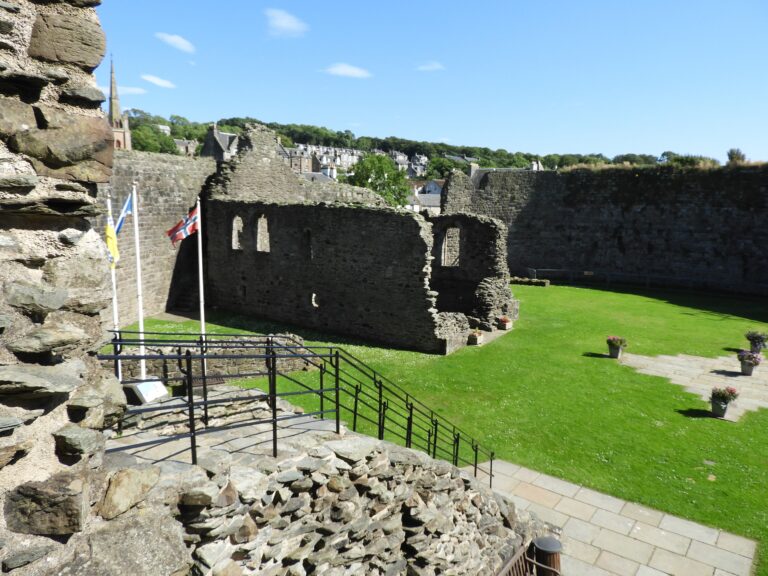
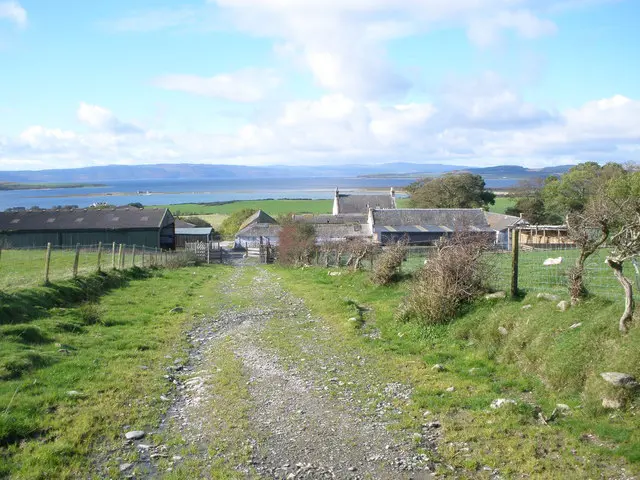
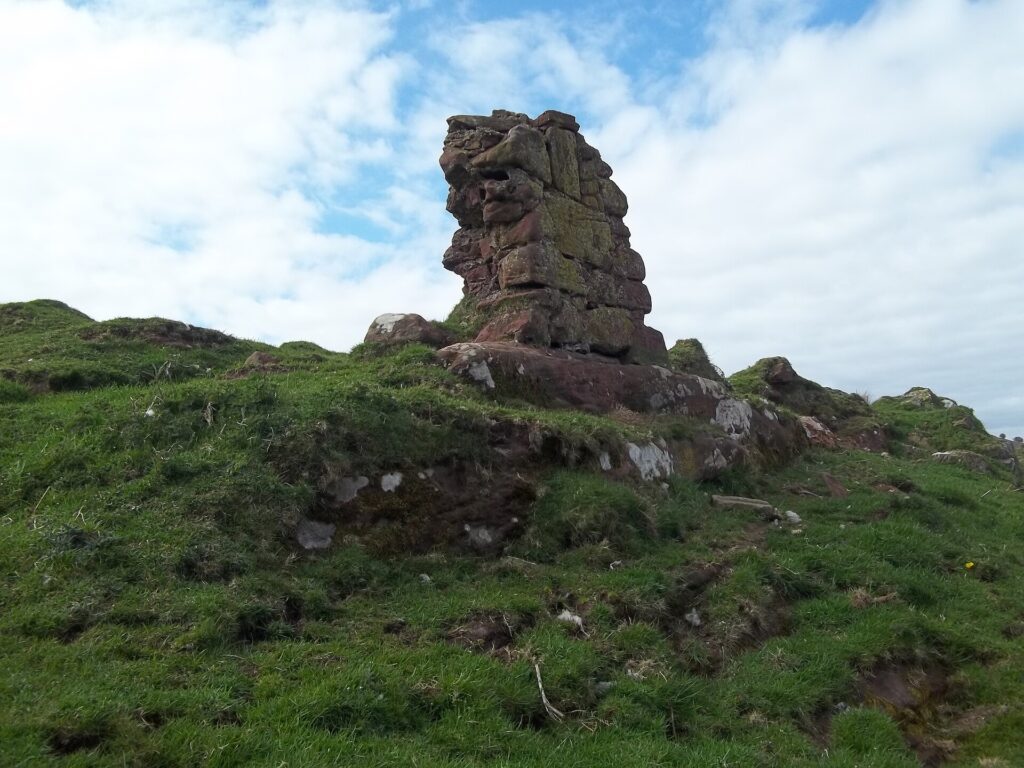
Kelspoke Castle is a ruined castle overlooking Kilchattan Bay, near the southern end of the Isle of Bute in the Firth of Clyde. Very little of it survives above ground, and it is easy to walk past the low, grassed-over remains without noticing them, but its position, on rising ground above one of the island’s most sheltered bays, shows why someone once chose to build a stronghold here.
The castle
Only fragments of the castle’s walls can still be traced, much of the stone having been robbed out over the centuries for farm buildings and dykes, as happened to many small castles in the west of Scotland once they were no longer needed. No written history of any length survives for Kelspoke, and its builders and the date it was abandoned are not well recorded. What remains is best understood as one of the many small fortified houses that local landholding families built across Bute and the neighbouring islands in the later Middle Ages, when power in the Clyde was shared between the Crown, the Stewarts and a patchwork of lesser lairds.
Like other minor ruins on the island, it is a reminder that Bute’s history was not only made at Rothesay Castle, the great royal stronghold in the island’s main town, but also in quieter places like this, where families farmed, fished and kept watch over the waters of the Clyde.
Bute’s history
Bute was under Norse control during the Viking era and was formally ceded to Scotland in 1266 by the Treaty of Perth, which ended Norwegian rule in the Hebrides and the Clyde islands. The island became closely tied to the Stewart family, hereditary High Stewards of Scotland, whose descendants became the royal house of Stewart. Rothesay Castle, built about eight hundred years ago, still stands in the middle of the island’s main town, and the title Duke of Rothesay is still held by the heir to the throne.
Kilchattan Bay
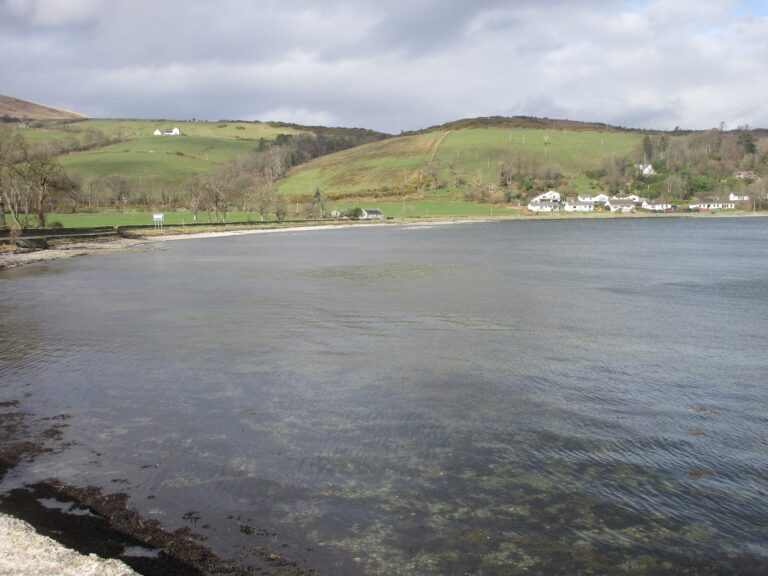
The castle looks down over Kilchattan Bay, a wide, sandy bay on the south-east coast of Bute, with a small village of stone houses along the shore and an old pier where Clyde steamers once called. The southern part of the island lies south of the Highland Boundary Fault and is gentler and more fertile than the rugged north, with farmland running down to the sea. To the south, the coast leads round towards Glencallum Bay and the southern tip of the island, with views across the Firth to Great and Little Cumbrae and the Ayrshire coast.
Visiting
Kilchattan Bay is reached by road from Rothesay, about eight miles to the north, and is the starting point of the West Island Way, a long-distance walking route that runs the length of Bute. The castle site lies on private farmland, so visitors should respect crops and livestock and view the remains from nearby paths where possible. A walk in this corner of the island can easily be combined with a visit to St Blane’s Chapel, the atmospheric ruin of a twelfth-century church on the site of an early Christian monastery, set in woodland a short distance to the south-west.
Wildlife
The shores around Kilchattan Bay are good for wading birds and seabirds, and eiders, oystercatchers and curlews are common. Common seals are often seen on the rocks, and porpoises in the waters of the Firth.
About island castles
All castles →For centuries islands were not remote but at the centre of things, on the sea roads that carried kings, clans and armies, and many were guarded by castles. Here you will find the castles on the islands we cover, from the strongholds of the Lords of the Isles and the tower houses of Highland clans…