



Dolphins and Porpoises
6 species on the islands
The seas around Britain and Ireland are some of the best in Europe for dolphins and porpoises, and boat trips from the islands, and even headlands on them, give a good chance of seeing them, especially on calm days from spring to autumn.
The harbour porpoise

The Harbour Porpoise is the smallest and most common, only about one and a half metres long, a shy animal usually seen briefly as a small dark back and fin rolling at the surface. It lives close to coasts all around the islands, and is often seen from ferries and headlands on calm days.
Bottlenose dolphins
The Bottlenose Dolphin, the largest and most familiar dolphin, has resident groups in the Moray Firth, Cardigan Bay and the Shannon Estuary, where they can be watched from the shore and on licensed boat trips. The Moray Firth dolphins are among the largest bottlenose dolphins in the world, their size helping them to keep warm in northern waters.
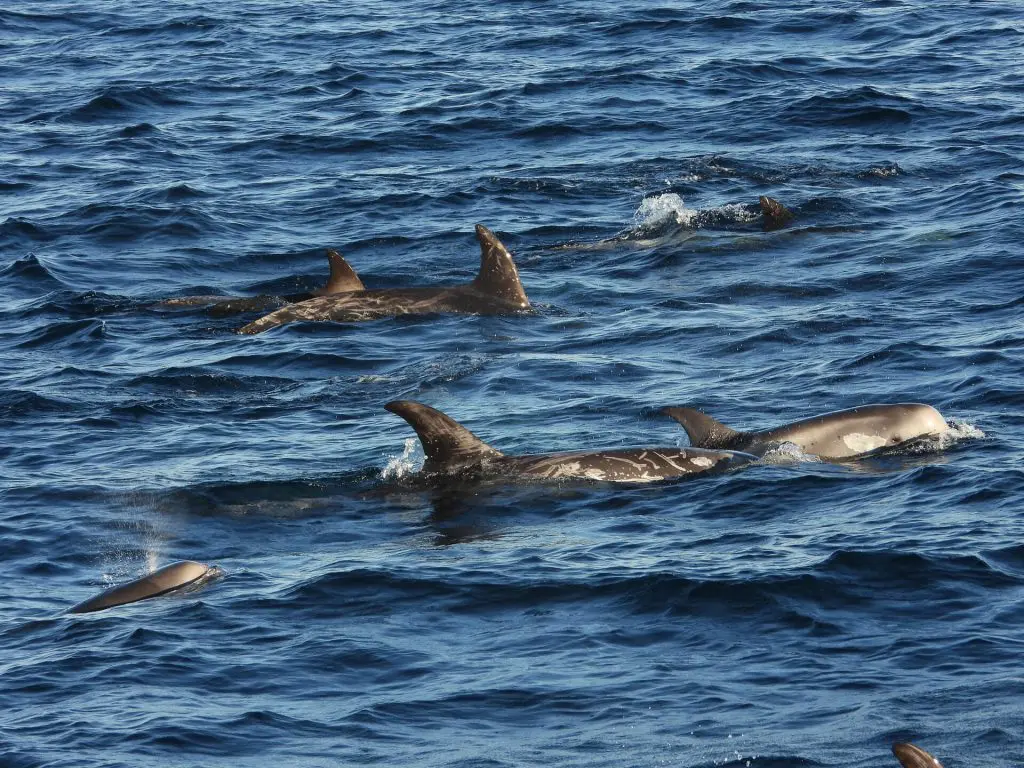
Risso’s Dolphin, grey and often scarred white from fights and squid, is seen around the Hebrides, the Isle of Man and Bardsey.
Common and Risso’s dolphins

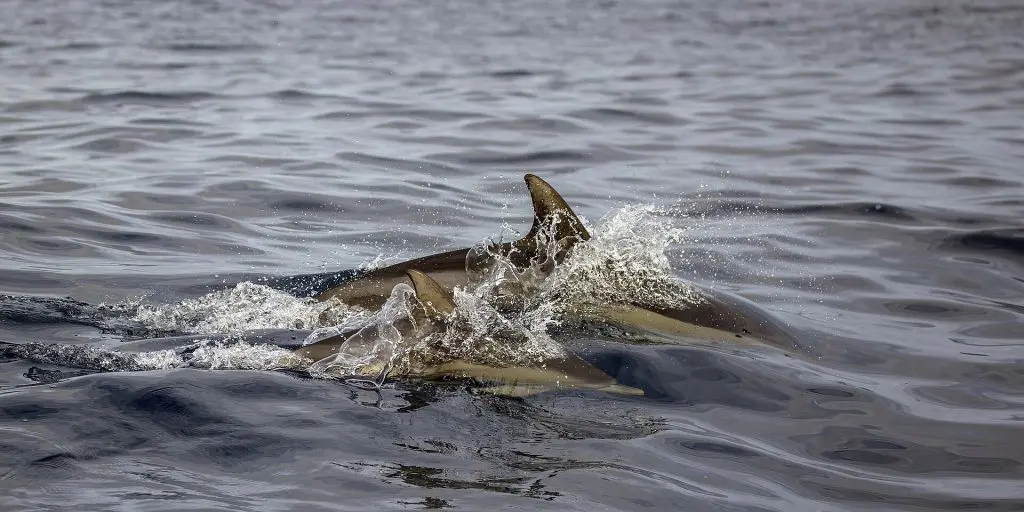
The Common Dolphin travels in fast, lively groups, sometimes of hundreds, often bow-riding beside boats, especially off the south-west and west coasts and around the Hebrides in summer. Risso’s Dolphin, grey and often scarred white from fights and squid, is seen around the Hebrides, the Isle of Man and Bardsey.
Northern dolphins
In the north, the White-beaked Dolphin and Atlantic White-sided Dolphin live in the colder, deeper waters off Scotland and the Northern Isles, and are seen more often from ferries and offshore boat trips than from land.
Watching responsibly
Dolphins and porpoises are protected by law. On boats, let them come to you, keep a steady speed and course, and never chase or drive through a group. Records of sightings help scientists to understand where they live and how their numbers are changing.
Dolphin life
Dolphins live in social groups called pods, communicate with clicks and whistles, and find their food by echolocation, sending out sounds and listening for the echoes. Porpoises are quieter and shyer, usually alone or in small groups, and rarely leap. Calves are born in summer and stay with their mothers for a year or more.
Threats
Dolphins and porpoises are at risk of being caught in fishing nets, of underwater noise from shipping and construction, and of pollution. Strandings on beaches are recorded by volunteers, and anyone who finds a stranded dolphin or porpoise should report it rather than try to push it back into the sea.
Every species: Dolphins and Porpoises
6 Dolphins and Porpoises
Atlantic White-sided Dolphin
Lagenorhynchus acutus
The Atlantic white-sided dolphin (Lagenorhynchus acutus) is a robust dolphin with a white and yellow patch on its flank.Around the islandsIt is seen in…
 Dolphins and Porpoises
Bottlenose Dolphin
Tursiops truncatus
The common bottlenose dolphin (Tursiops truncatus) is probably the most instantly recognisable cetacean in the world, its short, stubby beak, curved dorsal fin and…
Dolphins and Porpoises
Common Dolphin
Delphinus delphis
The common dolphin (Delphinus delphis) is, despite its name, not the dolphin most people picture first, that honour tends to go to the bottlenose,…
Dolphins and Porpoises
Harbour Porpoise
Phocoena phocoena
The harbour porpoise (Phocoena phocoena) is the smallest and by far the most frequently encountered cetacean in British and Irish coastal waters, a shy,…
 Dolphins and Porpoises
Risso’s Dolphin
Grampus griseus
Risso's dolphin (Grampus griseus) is one of the more distinctive and unusual-looking dolphins found in British and Irish waters, a robust, blunt-headed animal that…
 Dolphins and Porpoises
White-beaked Dolphin
Lagenorhynchus albirostris
The white-beaked dolphin (Lagenorhynchus albirostris) is a robust, powerfully built dolphin adapted specifically to the cold, temperate and subarctic waters of the North Atlantic,…
