

Skerryvore
Skerryvore, from the Gaelic An Sgeir Mhòr, “the great skerry”, is a remote reef 11 nautical miles south-west of Tiree, out in the open Atlantic. It is crowned by Skerryvore Lighthouse, which at 48 metres is the tallest lighthouse in Scotland and one of the most graceful ever built.
Landscape
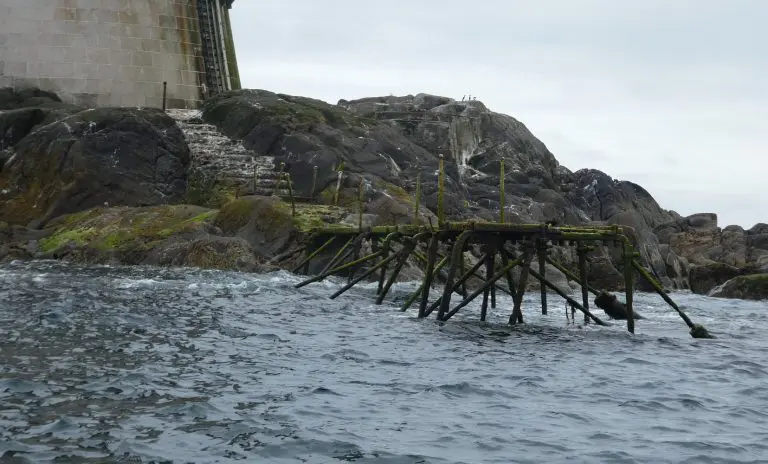
The reef is part of a barrier of rocks that stretches for about eight miles to the south-west. A survey in 1834 listed more than 130 main rocks, with names such as Am Bonn Sligheach, “the deceitful bottom”, and Am Bogha Ruadh, “the red submerged rock”. They are made of Lewisian gneiss, among the oldest rocks in Europe, worn smooth by the waves. The lighthouse’s builder, Alan Stevenson, described the spray as “a snow-white and opaque pillar”, with rainbows forming in the sunshine. A magnetic anomaly in the area adds to the dangers for shipping.
History
More than thirty ships were wrecked here between 1790 and 1844. Robert Stevenson landed on the reef in 1804, and in 1814 he returned with Sir Walter Scott, who wrote that it would be “a most desolate position for a lighthouse, the Bell Rock and Eddystone a joke to it”. Construction finally began in 1838 under Robert’s son, Alan Stevenson, and the light was completed in 1844 after years of extraordinary effort in one of the most exposed places in Britain.
The light shone without a break from 1844 until a fire in 1954 put it out of action for five years, and it was automated in 1994.
More about Skerryvore
The shore station was at Hynish on Tiree, where the old buildings now house the Skerryvore Lighthouse Museum; operations later moved to Erraid, off Mull. The keepers were paid extra in recognition of the remoteness. The light shone without a break from 1844 until a fire in 1954 put it out of action for five years, and it was automated in 1994.
Visiting

There is no landing for visitors, but on a clear day the tower can be seen far out to sea from the south-west of Tiree. The museum at Hynish tells the story of how it was built, and there is a signal tower there that was used to communicate with the keepers. Spotting Skerryvore counts as a sighting in your Island Passport.
Wildlife and area
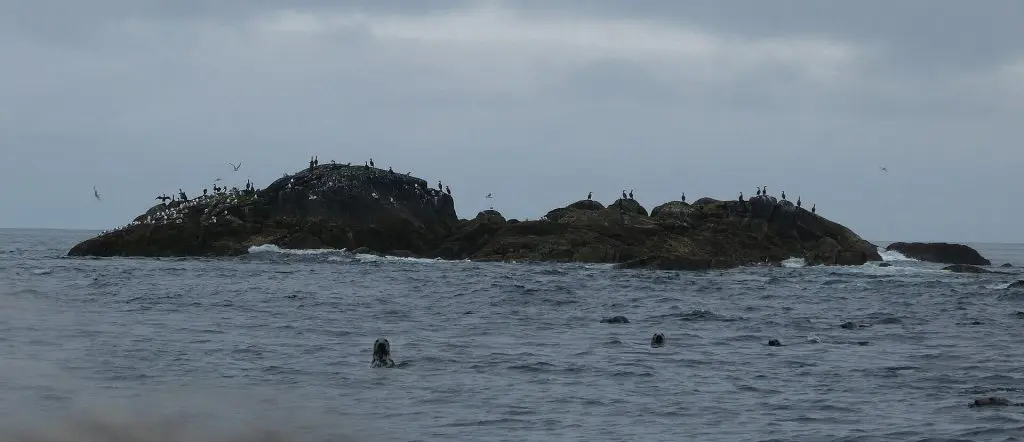
The seas around Skerryvore are rich in life. Look out for Gannet, Fulmar and Manx shearwaters, and for Minke Whale, Common Dolphin and Grey Seal. Other islands nearby include Tiree, Gunna and Dubh Artach.
Tides
Now
—
Next high water
—
Next low water
—
Heights in metres relative to mean sea level; times are UK time. Not for navigation. Tide model: Open-Meteo (CC BY 4.0).
Wildlife
10 species recorded on the island
Highlights

All wildlife
Loading all 10 species…
Nothing on the list is usually seen this month.
Recordings from Wikimedia Commons, under Creative Commons licences; hover a Listen button for the recordist. Sightings are records shared with GBIF since 2000.
Watching wildlife responsibly. Keep your distance from seals, seabird colonies and cetaceans, stay quiet, and never feed or chase wildlife. See the Scottish Marine Wildlife Watching Code.


