
South Ronaldsay
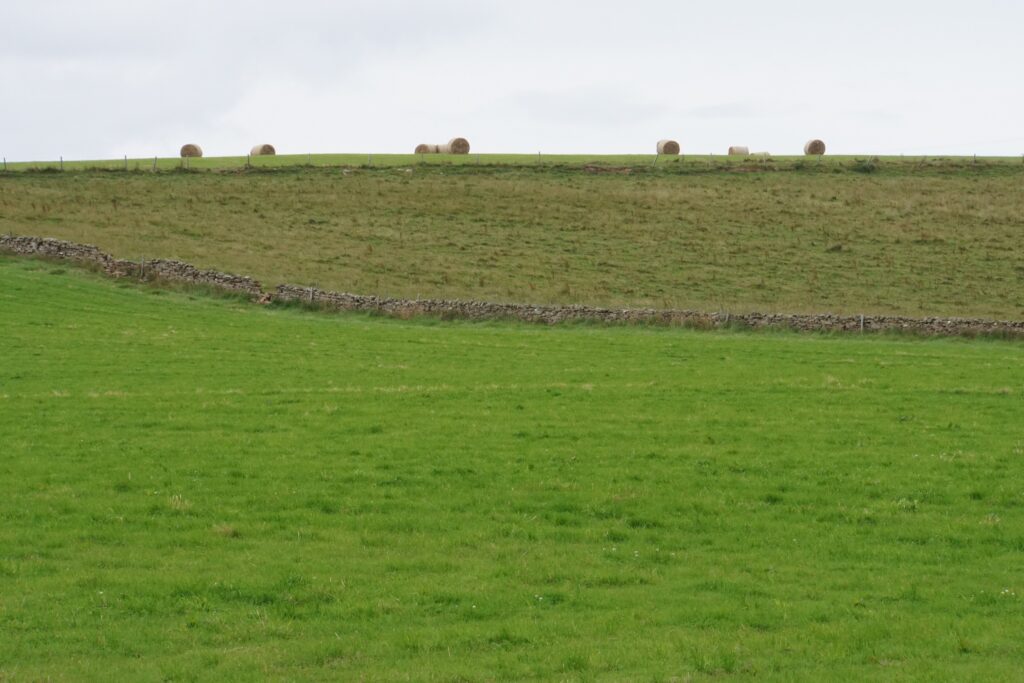
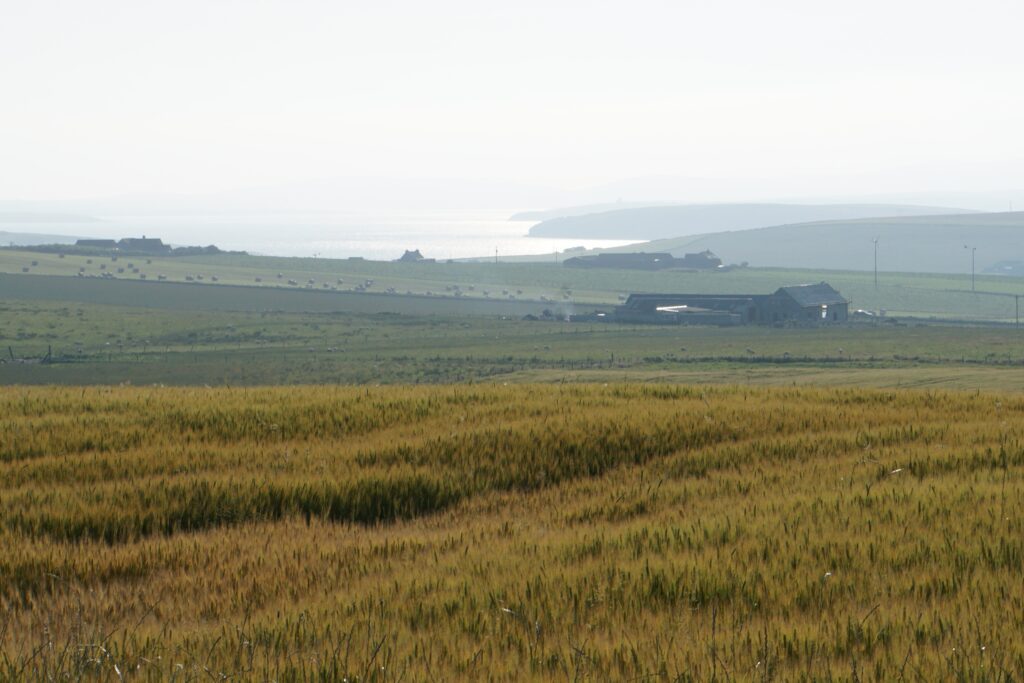
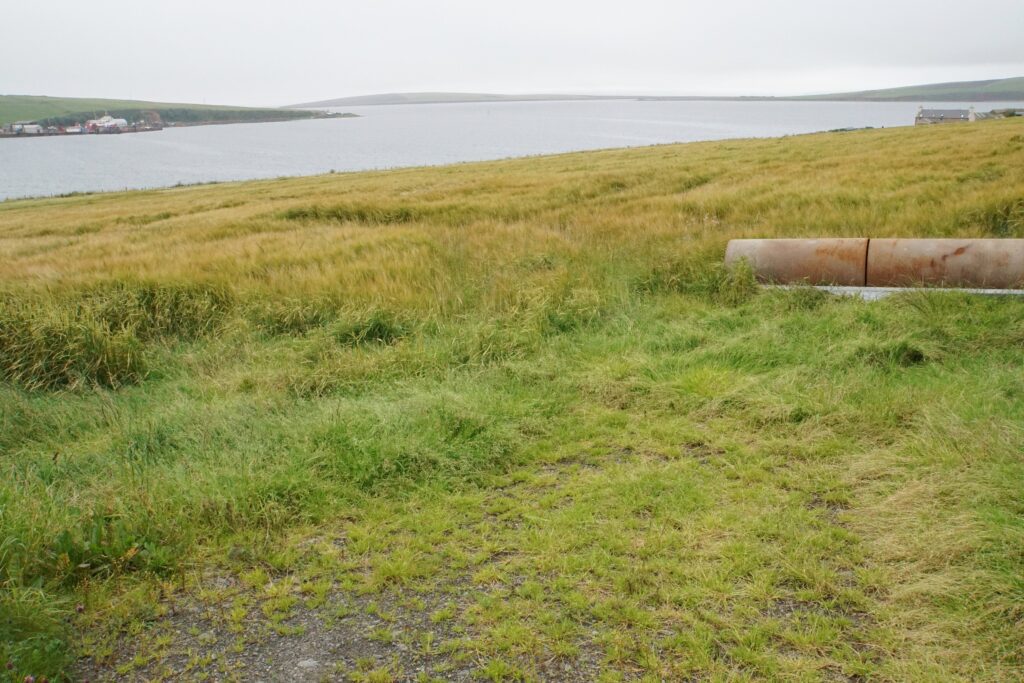
South Ronaldsay is the southernmost of the main Orkney islands, a green, gently rolling island of farms and fishing villages joined to the Orkney Mainland by the Churchill Barriers. Covering about 12,360 acres, it is the fourth-largest island in Orkney and home to around 900 people. Its name comes from the Old Norse Rǫgnvaldsey, “Ronald’s island”, and it was renamed South Ronaldsay to distinguish it from North Ronaldsay at the other end of the archipelago.
Landscape
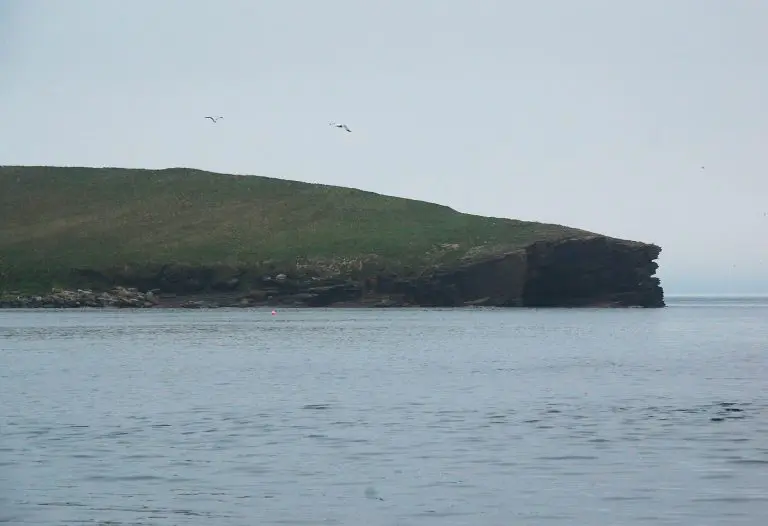
The island is mostly low and fertile, rising to 118 metres at Ward Hill, a common Orkney name for hills once used for warning beacons. The coast varies from sandy bays such as the Sands of Wright to the cliffs of the south-east, where seabirds nest and seals haul out. Hoxa Head, in the west, looks across Scapa Flow and was fortified in both World Wars. From the southern tip at Burwick, the hills of Caithness are only a few miles away across the Pentland Firth.
History

South Ronaldsay is best known for the Isbister Chambered Cairn, the “Tomb of the Eagles”, discovered by the farmer Ronald Simison in 1958. Inside were around 16,000 human bones and the remains of white-tailed sea eagles, suggesting that the eagle had special meaning for the Neolithic people who built it some 5,000 years ago. Nearby, the Banks Chambered Tomb, the “Tomb of the Otters”, was found in 2010.
The island’s main village, St Margaret’s Hope, is named after either the young Margaret, Maid of Norway, who died in Orkney in 1290, or Saint Margaret of Scotland. During the Second World War, after a German U-boat slipped into Scapa Flow and sank HMS Royal Oak in 1939, Winston Churchill ordered the building of the barriers that now carry the road from South Ronaldsay through Burray to the Mainland. Italian prisoners of war helped build them, and their beautiful Italian Chapel stands on Lamb Holm along the way.
Italian prisoners of war helped build them, and their beautiful Italian Chapel stands on Lamb Holm along the way.
Visiting
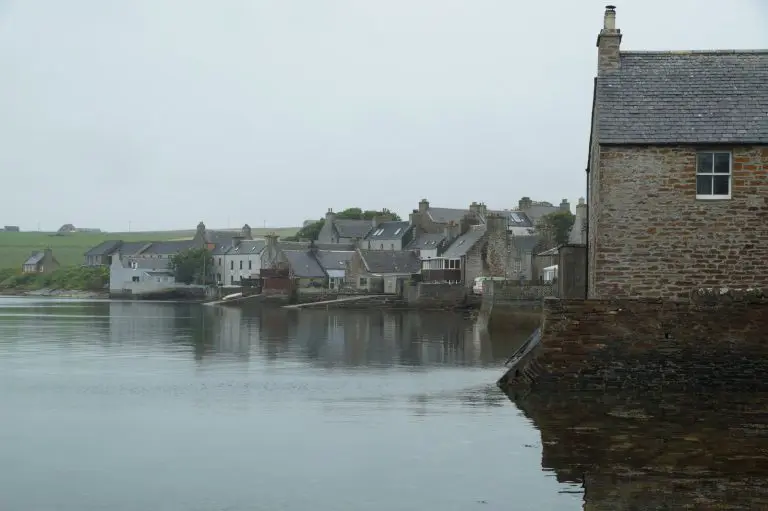
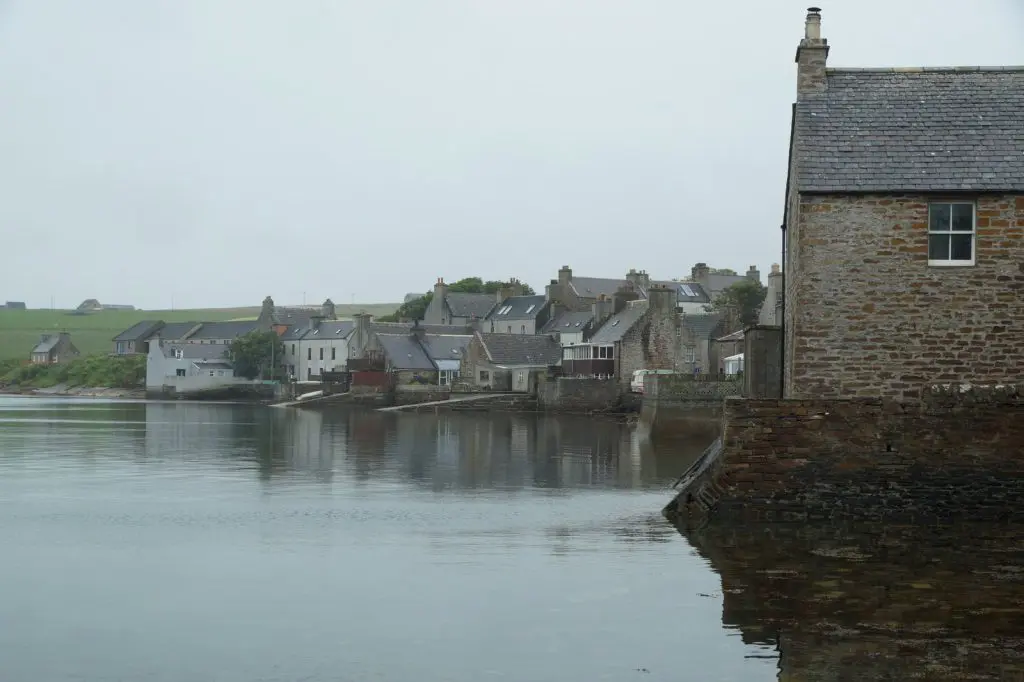
St Margaret’s Hope is one of the prettiest villages in Orkney, with its harbour, old stone houses, cafés and the Old Smiddy museum. Every August it holds the Boys’ Ploughing Match, in which boys compete with miniature ploughs on the sands while girls dressed as horses parade in elaborate costumes. The Tomb of the Eagles can be visited in the south-east, with a cliff-top walk nearby. Ferries cross from St Margaret’s Hope to Gills Bay in Caithness in about an hour, and in summer a passenger ferry runs from Burwick to John o’ Groats, making the island the shortest way into Orkney from the Scottish mainland. Kirkwall is about twenty minutes’ drive away over the barriers.
Wildlife
Among the wildlife most often recorded on South Ronaldsay are House Mouse, Stoat, Brown Rat, Risso’s Dolphin, Eurasian Pygmy Shrew and Orkney Vole. See the Wildlife tab for the full list of 110 species and when to see them.
Tides
Now
—
Next high water
—
Next low water
—
Heights in metres relative to mean sea level; times are UK time. Not for navigation. Tide model: Open-Meteo (CC BY 4.0).
How to get to South Ronaldsay
You can reach South Ronaldsay by ferry and by road.
By ferry
South Ronaldsay has a ferry service. Timetables change with the seasons and the weather, so check sailings with the operator before you travel, and book ahead in summer if you are taking a car.
By road
You can drive to South Ronaldsay, which is joined to the mainland by road.
Plan your trip
Timetables change, so always check with the operator before you travel. We may earn a commission if you book through some of these links, at no extra cost to you.
Where to stay on South Ronaldsay
6 places to stay on South Ronaldsay, from hotels and B&Bs to hostels and campsites.
Check dates and prices-
Murray Arms
Hotel · Saint Margaret's Hope
-
1 - 2 The Noust
B&B / guest house · St Margaret's Hope
-
Anchorage aka Corner House
B&B / guest house
-
Backpackers Hostel
Hostel
-
Wheems Campsite
Campsite
-
Wheems Hostel
Campsite
We may earn a commission if you book through some of these links, at no extra cost to you. Places to stay are from OpenStreetMap; if one has closed or is missing, let us know. Data © OpenStreetMap contributors.
Wildlife
111 species recorded on the island
Highlights


Island specials

All wildlife
Loading all 111 species…
Nothing on the list is usually seen this month.
Recordings from Wikimedia Commons, under Creative Commons licences; hover a Listen button for the recordist. Sightings are records shared with GBIF since 2000.
Watching wildlife responsibly. Keep your distance from seals, seabird colonies and cetaceans, stay quiet, and never feed or chase wildlife. See the Scottish Marine Wildlife Watching Code.