

Inis na Bró
Inis na Bró, known in English as Inishnabro, is one of the southern Blasket Islands off the Dingle Peninsula in County Kerry. Its name means “island of the quern”, after the stones once used to grind grain. Steep, jagged and uninhabited, it rises sheer from the Atlantic just north of Inishvickillane.
Landscape
The island covers about 49 hectares, roughly 120 acres, and climbs to 229 metres, making it one of the highest of the Blaskets for its size. A narrow sound only about 200 metres wide separates it from Inishvickillane. Seen from the sea, its saw-toothed ridge and sea stacks are among the most dramatic sights in the group, and its cliffs and grassy ledges are left almost entirely to seabirds.
History

Unlike the Great Blasket, Inis na Bró never had a lasting community, though islanders from the Great Blasket and the mainland are thought to have used it for grazing and for gathering seabirds and eggs. Its oddest moment came in 1973, when an American, Gary Hudson, approached the Irish authorities with a proposal to use the island as a launch site for a commercial space shuttle. Officials concluded that the scheme belonged “mainly to the realms of science fiction” and might be “a gigantic leg-pull”, and the story only became public when the state papers were released in 2004.
Visiting

There is no landing for visitors. Boat trips around the Blaskets from Dingle, Ventry and Dunquin give views of the island in calm weather. You can collect Inis na Bró as a sighting in your Island Passport.
Wildlife and area
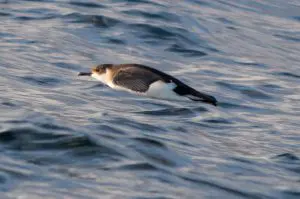
Its cliffs and slopes hold breeding Manx shearwaters, storm petrels, puffins and fulmars, and grey seals and common dolphins are often seen in the sound below. Nearby islands include Inishvickillane, Tearaght Island and Great Blasket Island.
Tides
Now
—
Next high water
—
Next low water
—
Heights in metres relative to mean sea level; times are UK time. Not for navigation. Tide model: Open-Meteo (CC BY 4.0).
Wildlife
6 species recorded on the island
Highlights



All wildlife
Loading all 6 species…
Nothing on the list is usually seen this month.
Recordings from Wikimedia Commons, under Creative Commons licences; hover a Listen button for the recordist. Sightings are records shared with GBIF since 2000.
Watching wildlife responsibly. Keep your distance from seals, seabird colonies and cetaceans, stay quiet, and never feed or chase wildlife. See the NPWS Code of Conduct for Responsible Marine Wildlife Watching.


