

Dun Ringill
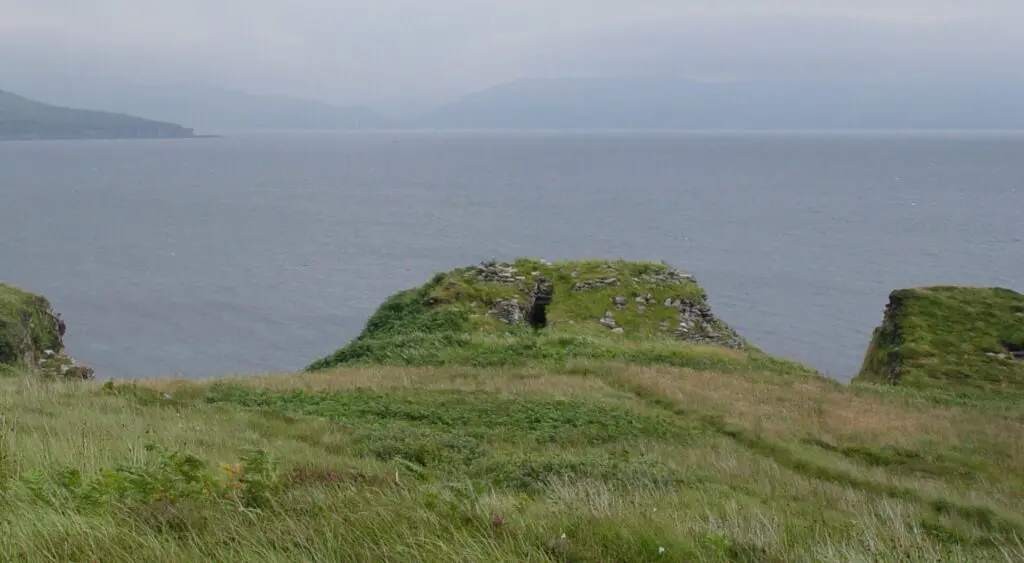
Dun Ringill stands on the western shore of Loch Slapin, on the Strathaird peninsula in the south of the Isle of Skye, a little east of the township of Kirkibost. Its stone walls, built on a rocky headland above the sea, began life around two thousand years ago as an Iron Age broch, and in the Middle Ages they became, according to tradition, the seat of the chiefs of Clan Mackinnon.
An Iron Age fort
The name comes from the Gaelic dùn, a fort, and Ringill, ‘point of the ravine’. The original building appears to have been a broch, one of the round, thick-walled stone towers built across northern and western Scotland in the late Iron Age, around the first centuries of the common era. Brochs were the most impressive buildings of their time, probably the homes of important families and a statement of their power. The broch at Dun Ringill was later modified and reused, and buildings on the site were occupied, on and off, until the nineteenth century.
The Mackinnons
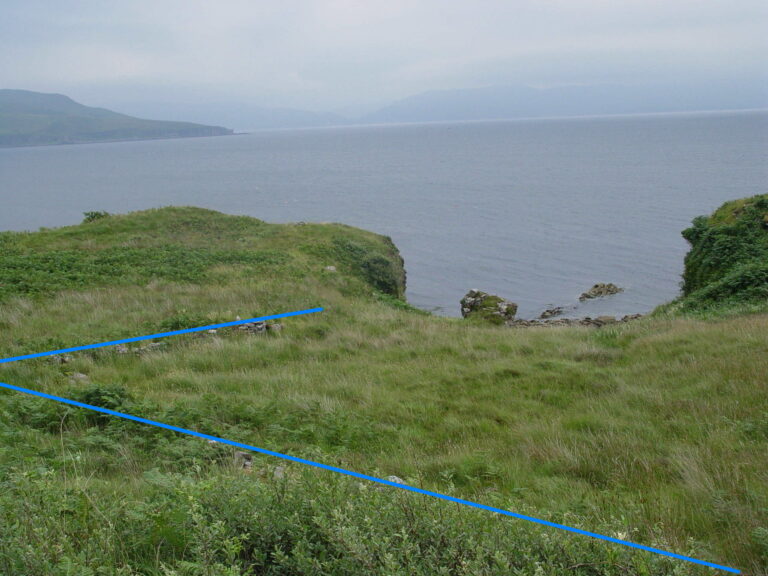
In the Middle Ages the old fort was strengthened, and tradition holds that it was the seat of Clan Mackinnon for several centuries, probably from before 1360. It was also known as Castle Findanus, after a legendary Mackinnon chief, and the clan established a small farming township just to the north. By the sixteenth century the Mackinnons had moved their seat to Dunakin, the castle now known as Caisteal Maol, at Kyleakin, where they could control the busy strait between Skye and the mainland.
The ruins
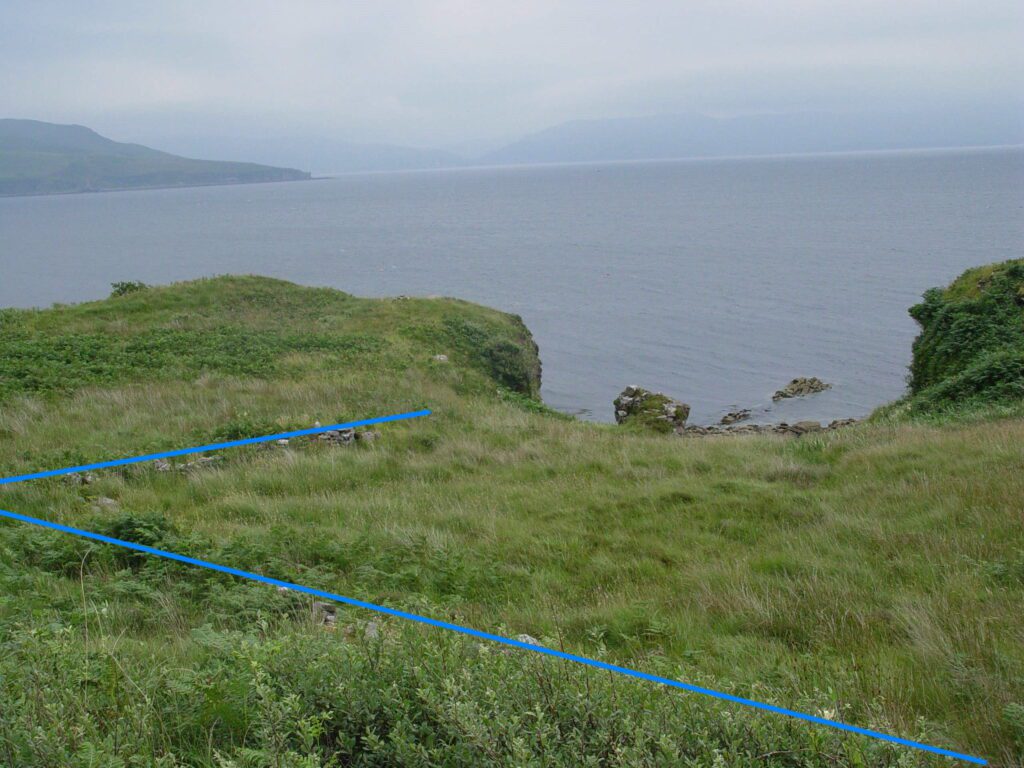
Dun Ringill today is a ruin of stacked stone, about four metres high and about sixteen metres across, with a ditch along the outside of the wall. Its most striking feature is a narrow entrance passage, about 1.8 metres high, that leads through the thick wall into the interior, where the outlines of two later rectangular buildings can be seen. Around the fort, the remains of a stone wall probably enclosed a defended area and space for livestock, and there are traces of other buildings nearby. On either side of the headland, ramps of earth and stone lead down to the shore, where boats could be drawn up. In the days before roads, the sea was the main highway of Skye, and the fort’s position on the water was essential.
Visiting

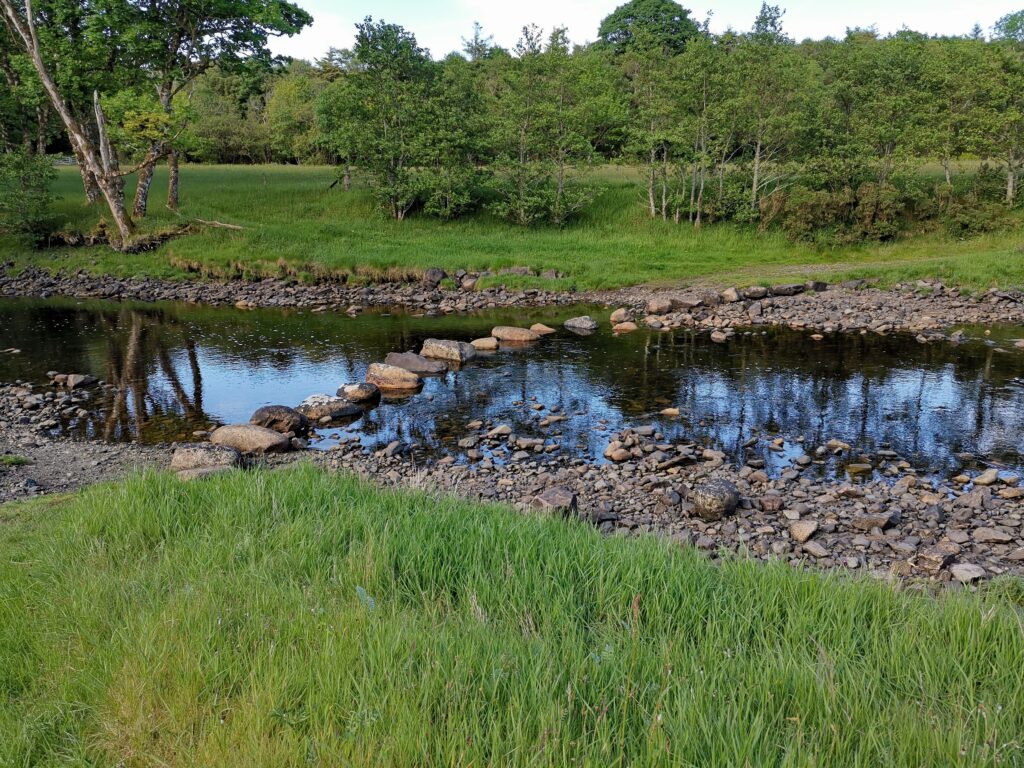
Dun Ringill is reached from the road to Elgol, which runs along the Strathaird peninsula from Broadford. A path from near Kilmarie leads across a footbridge and along the coast through woodland to the fort, a walk of about twenty minutes. The ruins are fragile and should not be climbed. The views across Loch Slapin to the great mountain of Bla Bheinn and the Red Cuillin are magnificent.
In music

The rock band Jethro Tull recorded a song called ‘Dun Ringill’ on their 1979 album Stormwatch; the band’s leader, Ian Anderson, owned the Strathaird estate at the time.
Wildlife
Loch Slapin is good for otters, seals and seabirds, and golden and white-tailed eagles are often seen over the mountains and coast of Strathaird.
About island castles
All castles →For centuries islands were not remote but at the centre of things, on the sea roads that carried kings, clans and armies, and many were guarded by castles. Here you will find the castles on the islands we cover, from the strongholds of the Lords of the Isles and the tower houses of Highland clans…