
Duntulm Castle
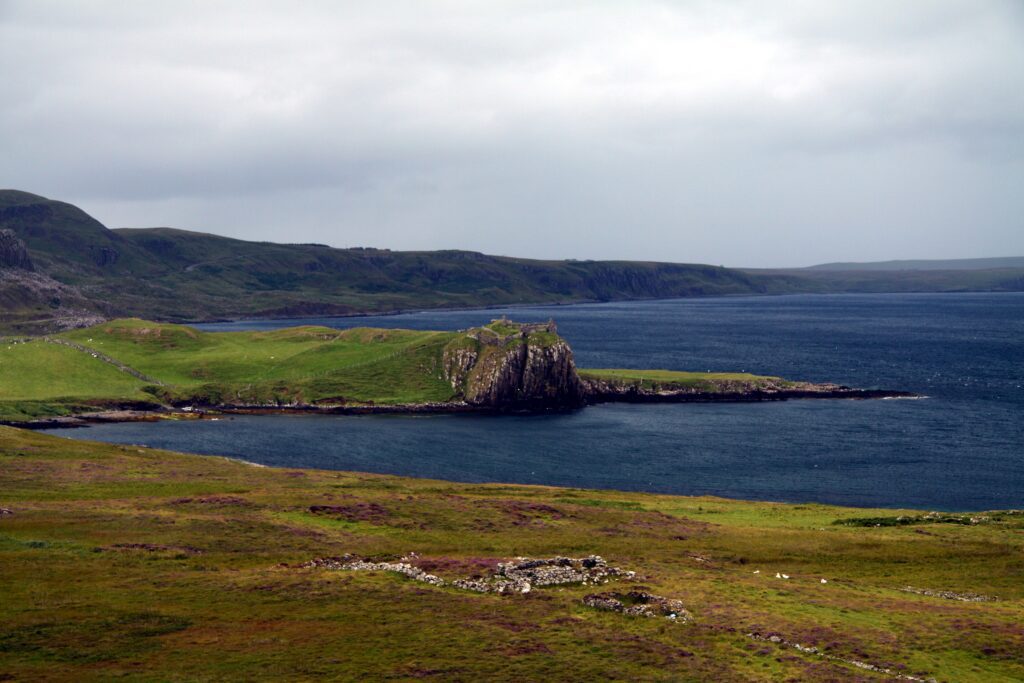
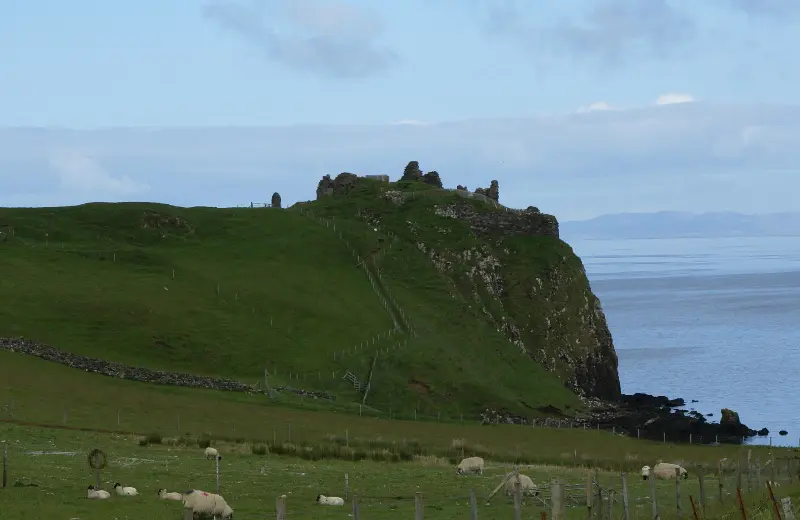
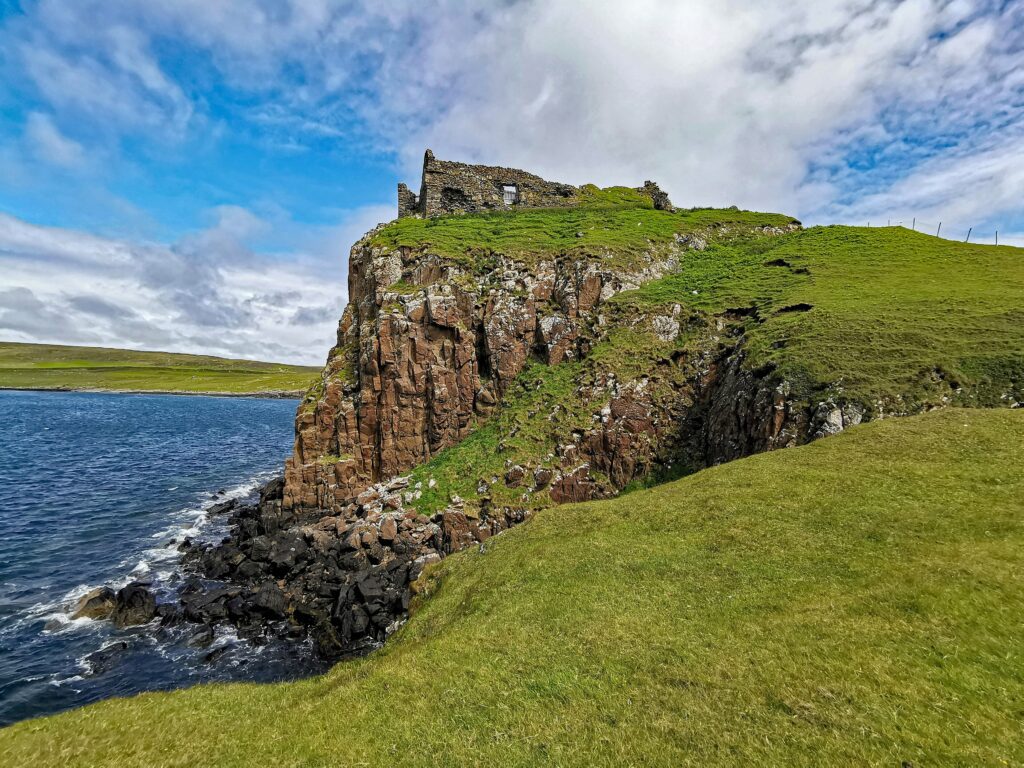
Duntulm Castle stands on a basalt headland on the north coast of the Trotternish peninsula, near the northern tip of the Isle of Skye. Its broken walls, perched above the sea with views across the Minch to the Outer Hebrides, are all that remain of the seventeenth-century seat of the chiefs of the MacDonalds of Sleat.
History
It is believed that a prehistoric broch or dun, known as Dùn Dhaibhidh, once stood on the site, although no archaeological evidence has been found. The castle itself was built in the fourteenth and fifteenth centuries, at a time when this part of Skye was fought over by the rival MacLeod and MacDonald clans. Its defences were strengthened in the sixteenth century, and by the early seventeenth century the MacDonalds had finally gained the upper hand in Trotternish.
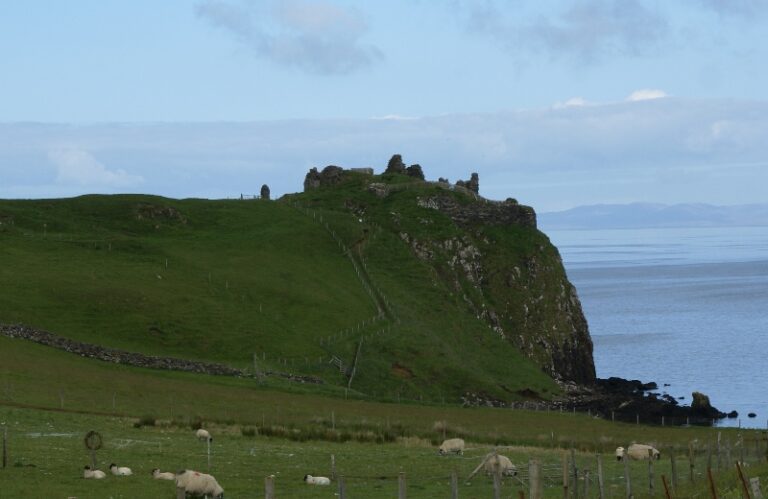
In 1618 the Privy Council signed a charter with Sir Donald MacDonald of Sleat, known as Donald Gorm Òg, the ninth chief, requiring him to repair Duntulm and make it his residence. This was done, and a second tower was added. The castle reached its height around 1650, when further improvements were made and a rectangular house was built within the walls.

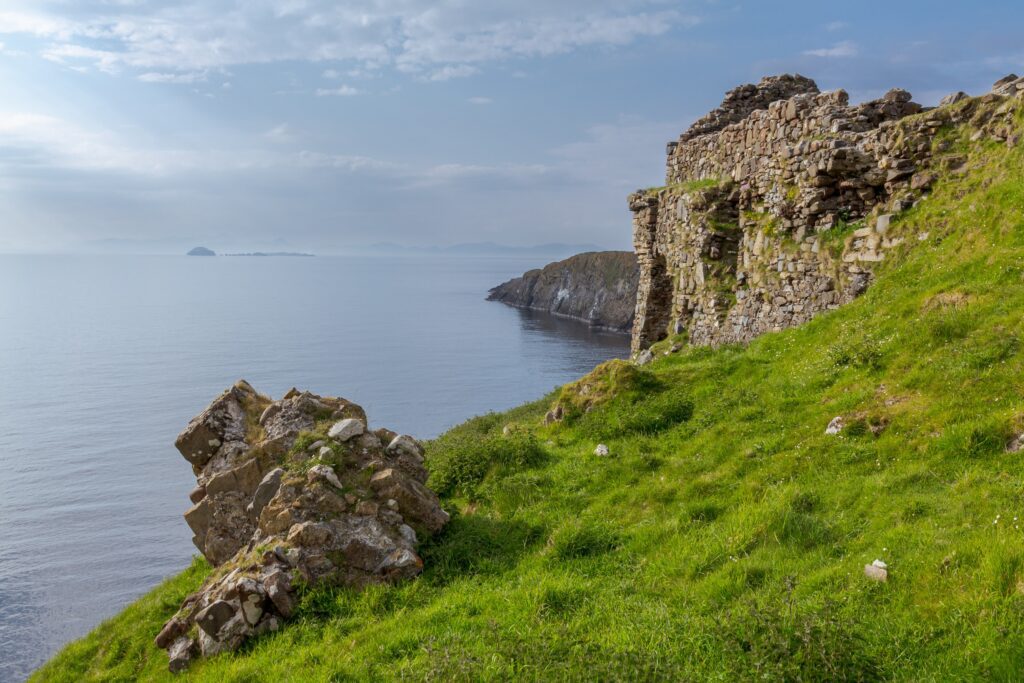
Around 1732 the castle was abandoned when Sir Alexander MacDonald built a new house, Monkstadt House, about five miles to the south. Much of the castle’s stone was taken to build it, and the ruins have decayed steadily since; major falls of masonry took place as recently as 1990.
The castle
The main structure measures about 25 by 9 metres and stands on a promontory protected by cliffs on three sides and a ditch on the landward side. It includes the vaults of a tower that once stood four storeys high, surrounded by an irregular curtain wall, and the later house within. The only entrance was through a narrow cleft in the sea cliff, making the castle very difficult to attack. The ruins are a scheduled monument.
Legend
Duntulm has many legends. One of the best known tells that the castle was abandoned after the chief’s infant son fell from a window onto the rocks below while in the care of a nursemaid. As a punishment, the nursemaid was set adrift on the Atlantic in a small boat. The castle is also said to be haunted by several ghosts.
Visiting

Duntulm lies on the A855 road around Trotternish, about 25 miles north of Portree. A short path leads from the roadside to the castle, but the ruins are in a dangerous condition and fenced off, so visitors should keep to the path and view them from outside. Nearby is the Skye Museum of Island Life at Kilmuir, with its thatched cottages, and the grave of Flora MacDonald, who helped Bonnie Prince Charlie escape after Culloden.
Trotternish
Trotternish is the northernmost peninsula of Skye, famous for the strange rock formations of the Quiraing and the Old Man of Storr, created by ancient landslips along its basalt ridge. Duntulm lies at its quiet northern end, where the road turns along the coast.
Wildlife
The waters off Duntulm are good for seeing seabirds, seals and, in summer, minke whales and dolphins in the Minch. White-tailed eagles are often seen along this coast.
About island castles
All castles →For centuries islands were not remote but at the centre of things, on the sea roads that carried kings, clans and armies, and many were guarded by castles. Here you will find the castles on the islands we cover, from the strongholds of the Lords of the Isles and the tower houses of Highland clans…