

Copinsay
Island Passport
Collect Copinsay
Be the first to collect it
This island is a protected nature reserve, so only sightings are stamped. Please do not land.
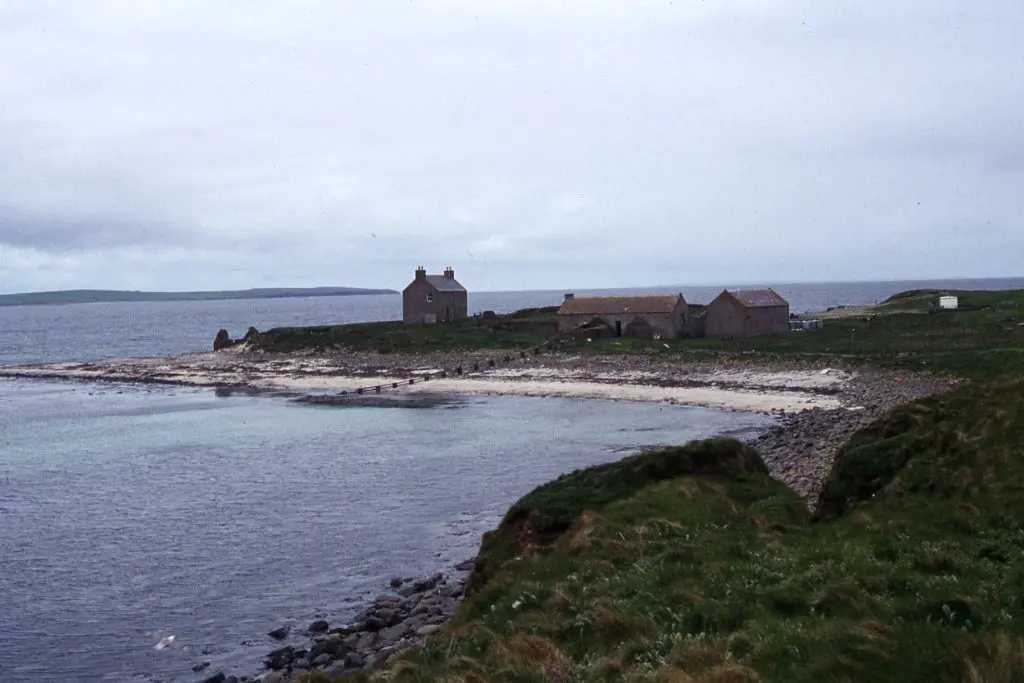
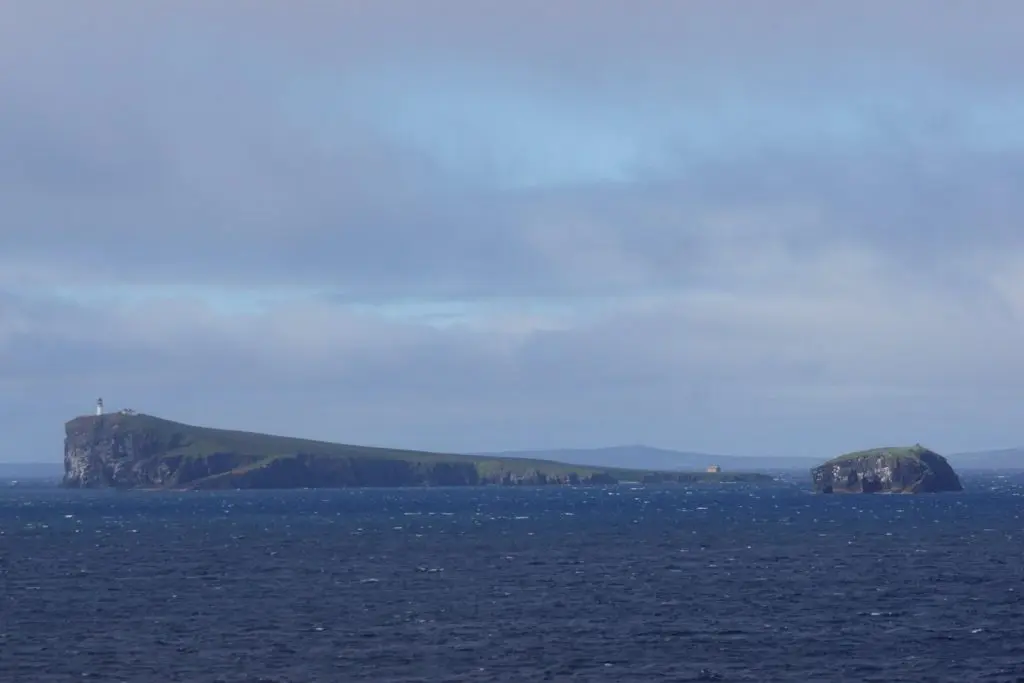
Copinsay is an island of around 180 acres off the east coast of the Orkney Mainland, with towering cliffs facing the North Sea and a lighthouse on its highest point. Its name comes from the Old Norse Kolbeinsey, “Kolbein’s island”. Once home to a farming family, lighthouse keepers and even a school, it is now an RSPB nature reserve, famous for its seabirds.
Landscape
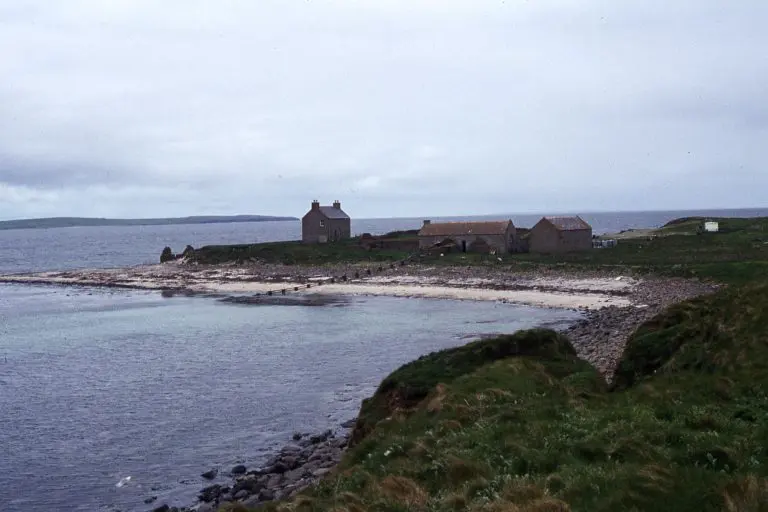
Copinsay’s east side ends in high cliffs packed with nesting birds in summer, while the western side slopes down to farmland and the shore. Its smaller companion, the Horse of Copinsay, lies to the north-east, and to the west a chain of tidal islets, Corn Holm, Black Holm and Ward Holm, are joined to it at low tide. The lighthouse was built in 1915.
Island life
For generations Copinsay was full of life. There was a large two-storey farmhouse and steading, a school with its own teacher, and up to three lighthouse keepers’ families. A weekly post boat linked the island to the Mainland, and there were fortnightly shopping trips to Deerness when the weather allowed. Horses, cattle and sheep all had to be ferried on the “coo boat”. Seabird eggs were a valuable addition to the islanders’ diet: men were lowered over the cliffs on ropes, or rowed out to the Horse, and for many years pigs were let loose on the Horse in spring to feed on the eggs. The last islanders moved to the Mainland in 1958.
In 1972 the RSPB bought Copinsay in memory of the naturalist and broadcaster James Fisher.
More about Copinsay
In 1972 the RSPB bought Copinsay in memory of the naturalist and broadcaster James Fisher. Some of its fields are still farmed to create conditions for the rare corncrake, so a patchwork of old farmland is returning even though the people have gone. Stories of island life, including tales of the Copinsay Brownie, are still told in the Deerness community.
Visiting

There is no regular ferry, but boat trips can sometimes be arranged locally in summer. The island can be seen from the coast of Deerness. You can collect Copinsay as a sighting in your Island Passport.
Wildlife and area
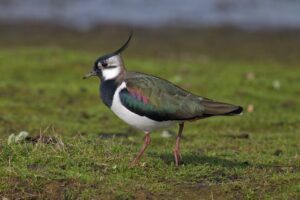
Copinsay’s cliffs hold tens of thousands of seabirds, including guillemots, kittiwakes, Razorbill, Fulmar and Puffin. Grey Seal breed on the shores in autumn, and the RSPB manages fields for the Corncrake. Other islands nearby include Corn Holm, Black Holm and Horse of Copinsay.
Tides
Now
—
Next high water
—
Next low water
—
Heights in metres relative to mean sea level; times are UK time. Not for navigation. Tide model: Open-Meteo (CC BY 4.0).
Wildlife
44 species recorded on the island
Highlights



All wildlife
Loading all 44 species…
Nothing on the list is usually seen this month.
Recordings from Wikimedia Commons, under Creative Commons licences; hover a Listen button for the recordist. Sightings are records shared with GBIF since 2000.
Watching wildlife responsibly. Keep your distance from seals, seabird colonies and cetaceans, stay quiet, and never feed or chase wildlife. See the Scottish Marine Wildlife Watching Code.


