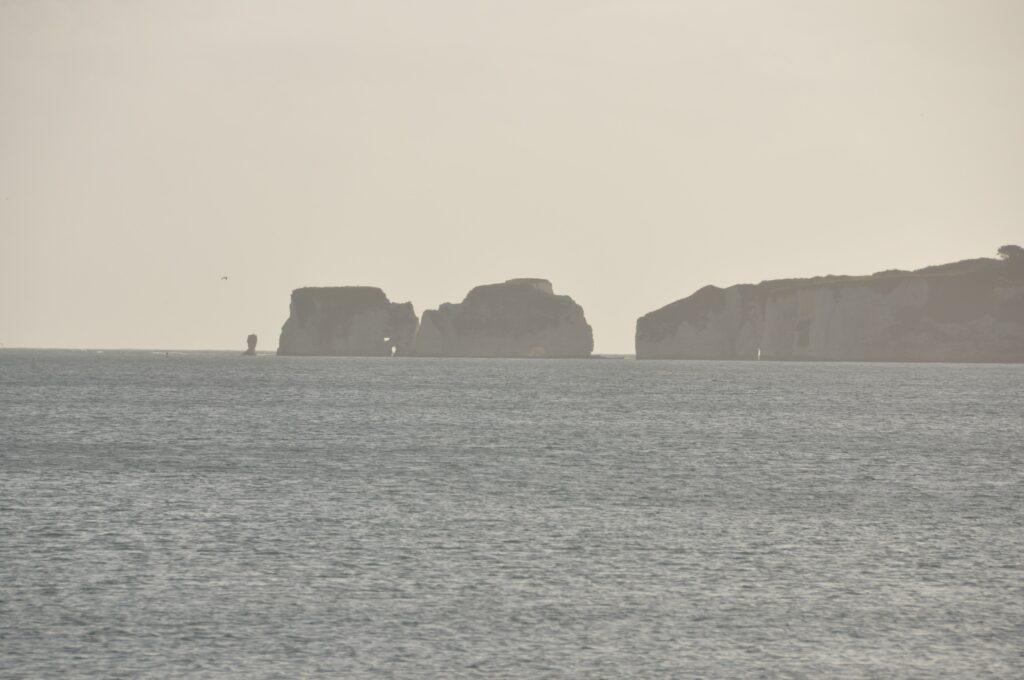


Old Harry Rocks
Island Passport
Collect Old Harry Rocks
Be the first to collect it
There is no safe or permitted landing here, so only sightings are stamped.
Old Harry Rocks stand at Handfast Point on the Isle of Purbeck in Dorset, marking the easternmost point of the UNESCO World Heritage Jurassic Coast, around 2.5 miles north-east of Swanage and roughly five miles south of Poole and Bournemouth.

Three dramatic chalk formations, a stack, a stump and a further outcrop, rise from the sea here, the eroded remnants of a chalk ridge that once connected the Isle of Purbeck all the way across to the Isle of Wight before the intervening rock was worn away entirely.
Landscape
The rocks themselves date to the Late Cretaceous period, formed between 84 and 72 million years ago during the Campanian age, and their current shape is the product of relentless hydraulic action: waves forcing seawater and air into cracks and fissures in the chalk, gradually carving out caves and arches whose roofs eventually collapsed under the combined weight of rain and wind, leaving free-standing stacks disconnected from the mainland cliff. A companion stack, known as Old Harry’s Wife, collapsed into the sea as long ago as 1509, a reminder that this coastline continues to change even on a timescale of centuries.
History

The origin of the name Old Harry has never been definitively settled. Some trace it to an old euphemism for the Devil, “Old Harry” being a folk name for Satan in English tradition; others credit the notorious pirate Harry Paye, said to have used the rocks as a lookout; and a third theory links the name to a 9th-century Viking raider named Earl Harold, said to have drowned near the rocks. The author H.
More about Old Harry Rocks
G. Wells, a keen admirer of this stretch of Dorset coast, had his ashes scattered in the waters just offshore, adding a modern literary footnote to a landscape already rich in folklore.
Wildlife and area
The waters around Old Harry Rocks support Harbour Seal, Oystercatcher, Common Tern and Eurasian Otter, typical of this stretch of the Jurassic Coast, one of the most geologically significant and visually striking coastlines anywhere in southern England.
Tides
Now
—
Next high water
—
Next low water
—
Heights in metres relative to mean sea level; times are UK time. Not for navigation. Tide model: Open-Meteo (CC BY 4.0).
Wildlife
86 species recorded on the island
Highlights
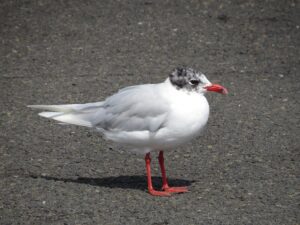

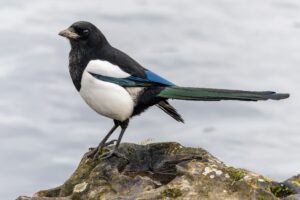
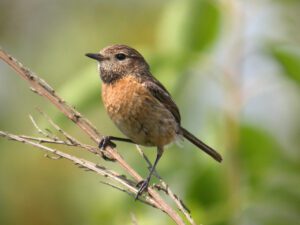
All wildlife
Loading all 86 species…
Nothing on the list is usually seen this month.
Recordings from Wikimedia Commons, under Creative Commons licences; hover a Listen button for the recordist. Sightings are records shared with GBIF since 2000.
Watching wildlife responsibly. Keep your distance from seals, seabird colonies and cetaceans, stay quiet, and never feed or chase wildlife. See the WiSe Scheme guidance for watching marine wildlife.


