

Lochranza Castle
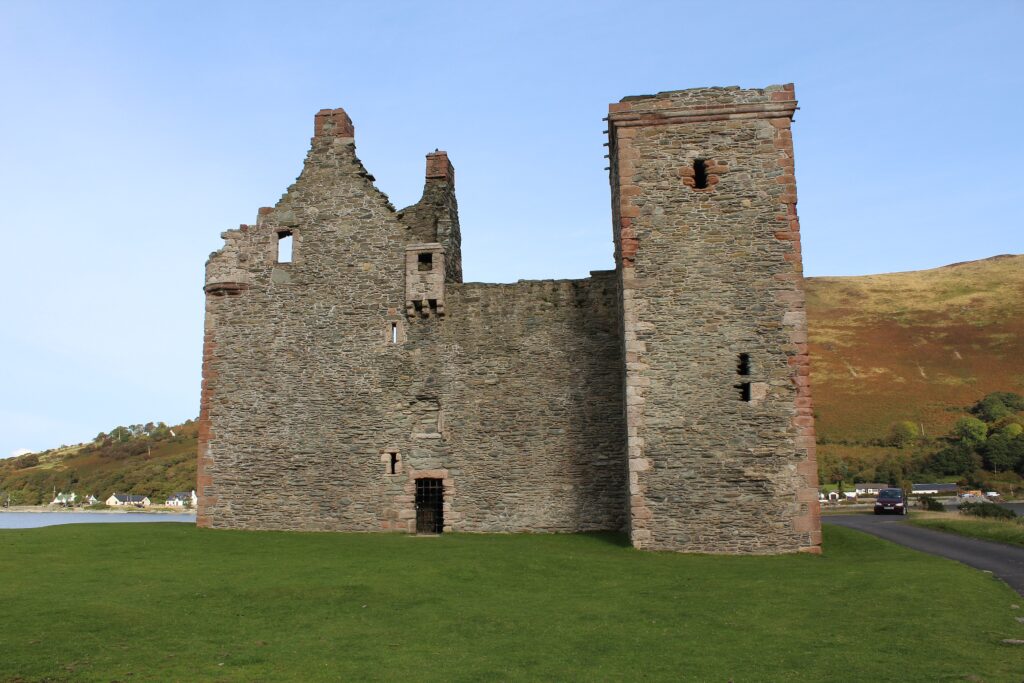
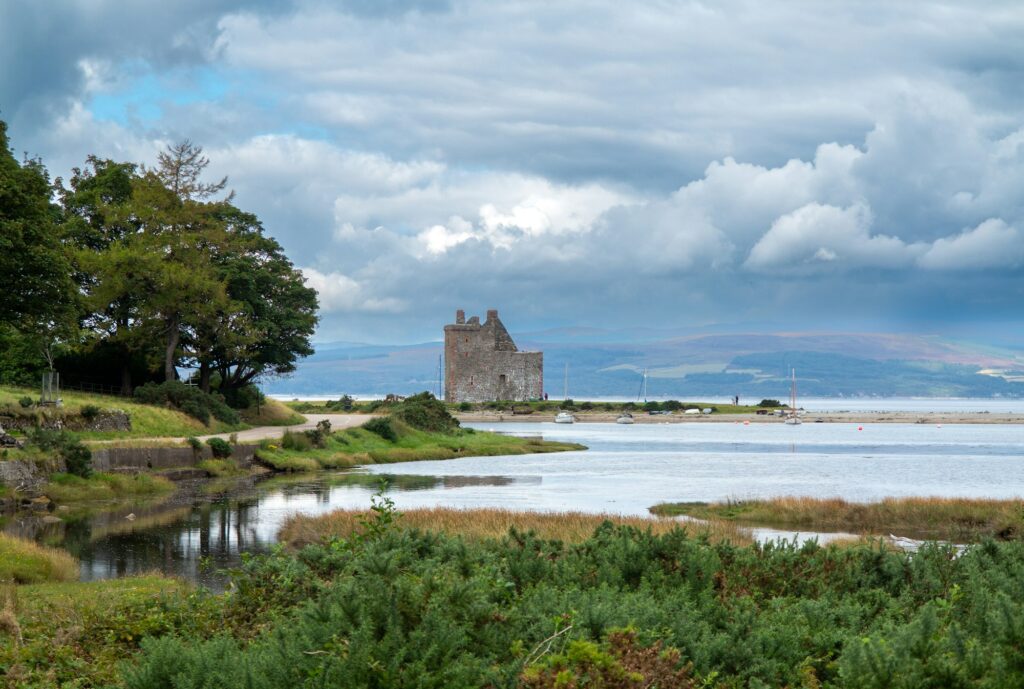
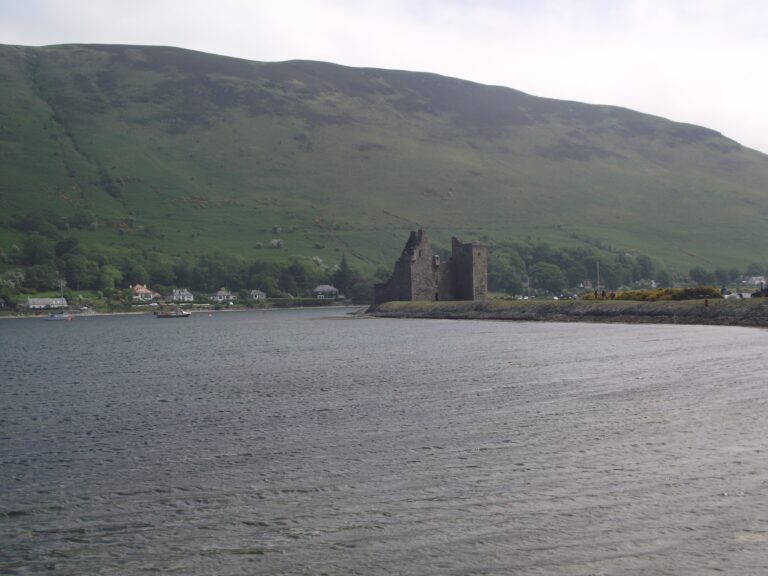
Lochranza Castle stands on a low promontory jutting into Loch Ranza, the sheltered sea loch at the northern tip of the Arran. Surrounded by the steep hills of north Arran, with the village houses scattered around the shore, the grey L-plan tower house is one of the most photographed sights on the island, especially in autumn when red deer wander past its walls.
History
A castle stood here by the thirteenth century, when the lands were held by the MacSweens. In 1262 King Alexander III granted the castle and its lands to Walter Stewart, Earl of Menteith. Tradition holds that Robert the Bruce landed at Lochranza in 1306 on his return from Ireland, at the start of his campaign to win the Scottish throne.
By 1371 the castle belonged to Robert II, the first Stewart king, and it is thought to have been used as a royal hunting lodge, with the hills of north Arran providing excellent deer hunting. In the 1490s James IV used it as a base in his campaign against the Lord of the Isles and Clan Donald, which ended with the forfeiture of the Lordship.

Most of the castle that stands today was built in the sixteenth century, when an older hall-house was remodelled into a stronger tower house. In 1600 Robert Montgomerie of Skelmorlie recovered the castle for the Marquess of Hamilton from Alastair McAlastair and his followers. It was occupied by royal forces in 1614 and used by Oliver Cromwell’s troops in the 1650s. In 1705 it was bought by the Duchess of Hamilton, whose family held much of Arran, and it was later used by the Blackwood-Davidson family. During the eighteenth century the castle fell out of use and was abandoned. It is now in the care of Historic Environment Scotland.
Tintin and television
Lochranza is often said to have inspired the castle in Hergé’s The Black Island, after Hergé’s assistant Bob de Moor visited Arran to draw more realistic backgrounds for a 1966 edition. In fact, according to Studios Hergé, the castle drawn in the book owes more to details of Brodick Castle. In 2010 Lochranza appeared in a Channel 4 programme, standing in for Kisimul Castle on Barra.
Visiting

Lochranza is at the northern end of the island’s coast road, about 14 miles from Brodick. In summer a small ferry crosses from Lochranza to Claonaig on the Kintyre peninsula. The castle is usually open to visitors, who can explore inside the tower. The village also has the Lochranza distillery, a youth hostel and a golf course where deer often graze on the greens. A coastal walk leads north-east from the village to the Cock of Arran, a huge sandstone boulder, and to Hutton’s Unconformity, where the geologist James Hutton found evidence in 1787 for the great age of the Earth.
Wildlife
Red deer are a common sight around Lochranza, especially in autumn, when stags roar in the hills. Seals and otters live along the shore, golden eagles nest in the mountains of north Arran, and in summer basking sharks are sometimes seen in the waters of the Kilbrannan Sound.
About island castles
All castles →For centuries islands were not remote but at the centre of things, on the sea roads that carried kings, clans and armies, and many were guarded by castles. Here you will find the castles on the islands we cover, from the strongholds of the Lords of the Isles and the tower houses of Highland clans…