
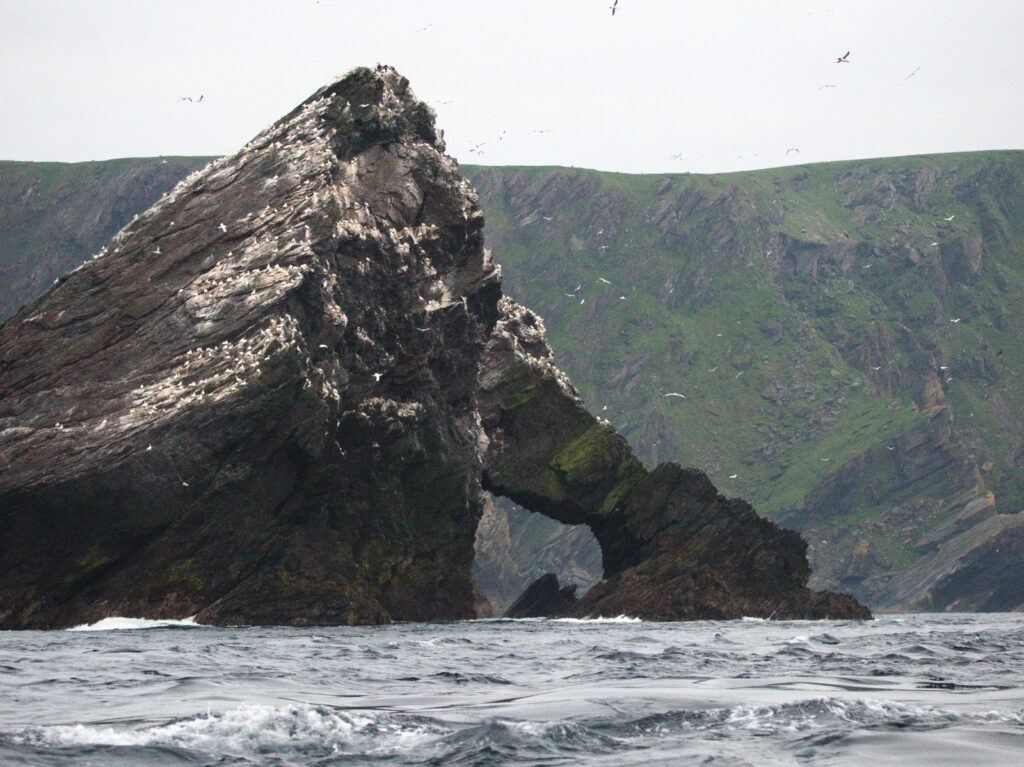


Uyea
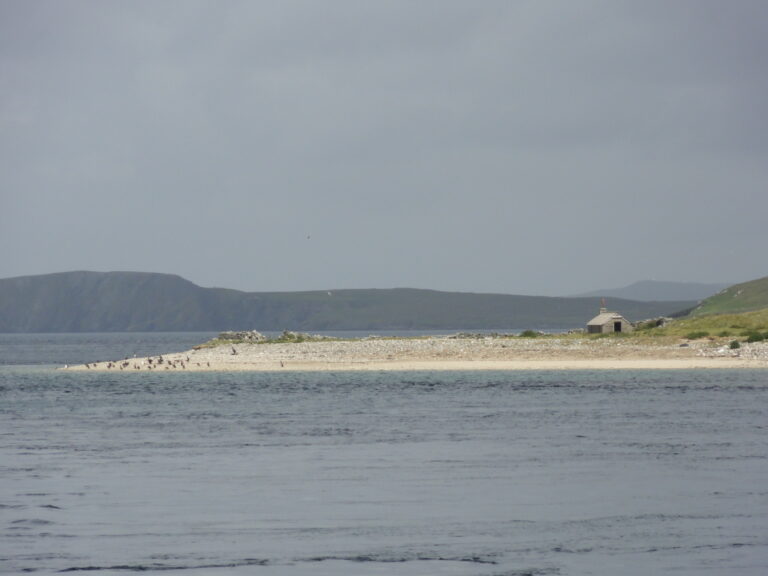
Uyea is an uninhabited island of around 111 acres lying just south of Unst, in Shetland. Its name, pronounced “Øya”, comes from the Norn word for an island, so it simply means “the isle”. The people of southern Unst gave it that name because it was the largest island close to their shores, apart from Yell, and they thought of Unst itself as the mainland. It has a remarkable history, from a Bronze Age cairn to a tale of two girls blown all the way to Norway.
Landscape
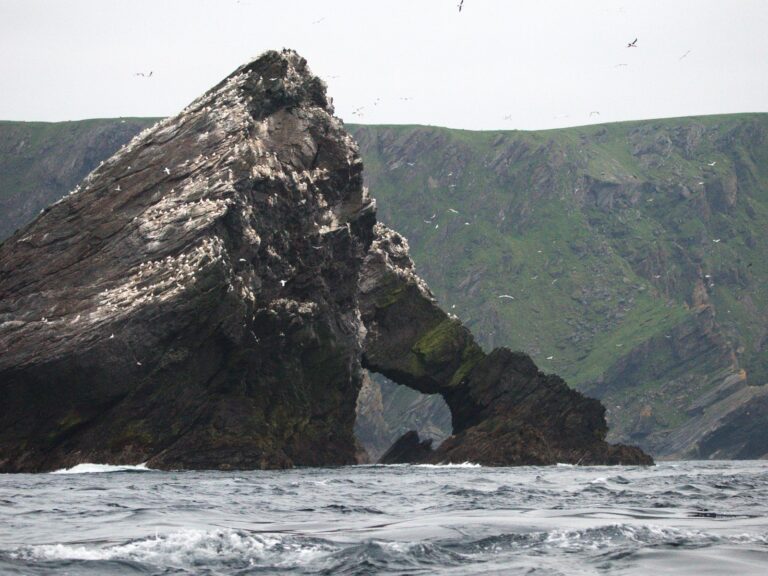
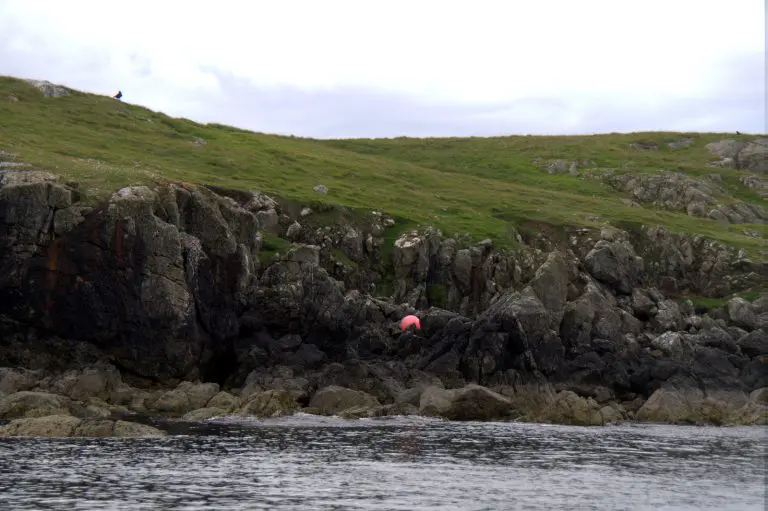
Uyea is a small island lying where Bluemull Sound and Colgrave Sound meet. Its shores are washed by Atlantic tides through Bluemull Sound, water from the Norwegian Sea from the east, and the North Sea from the south. In his memoir of the island during the Second World War, Jack Priest called it “a beachcomber’s dream”.
History
People lived on Uyea as early as the Bronze Age, and a chambered cairn can still be seen. In the 12th century St Olaf’s chapel was built overlooking Brei Wick. In 1745, the story goes, two girls from Uyea rowed to the small island of Haaf Gruney to milk the cows grazing there. On the way back they were caught in a storm and blown across the sea to Karmøy, in south-west Norway. They married Karmøy men, and their descendants are said to still live there.
Uyea was the home of Sir Basil Neven-Spence, the Conservative MP for Orkney and Shetland from 1935 to 1950.
More about Uyea
Uyea was the home of Sir Basil Neven-Spence, the Conservative MP for Orkney and Shetland from 1935 to 1950. He remains the most recent MP for the constituency who was not a Liberal or Liberal Democrat. Unst, to the north, is the most northerly inhabited island in Britain.
Visiting

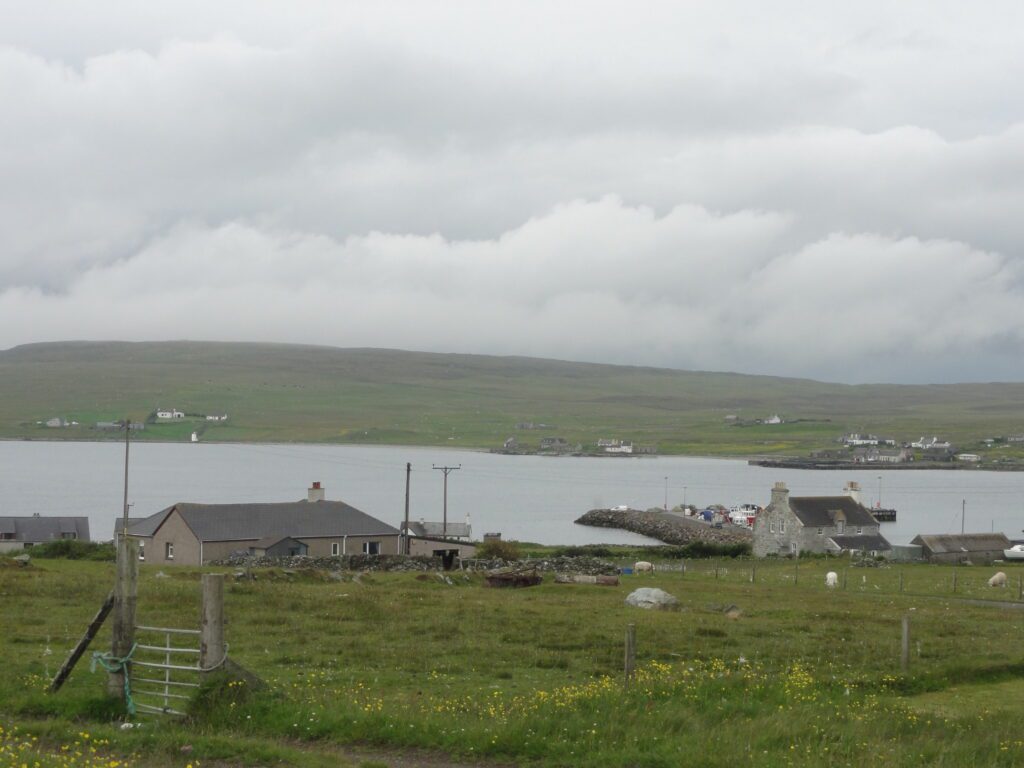
There is no ferry to Uyea. It can be seen from the south coast of Unst, near Uyeasound, and from the ferries between Yell, Unst and Fetlar. You can collect Uyea as a landing or a sighting in your Island Passport.
Wildlife and area
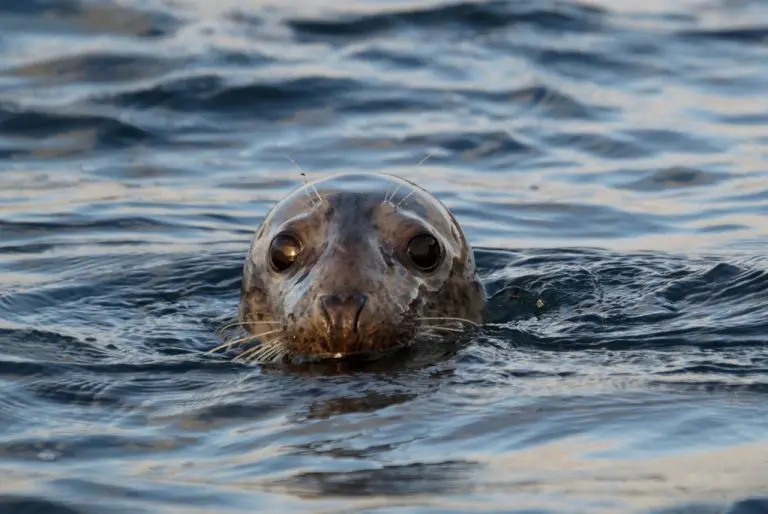
Look out for Eurasian Otter, Grey Seal, Harbour Seal and Harbour Porpoise, and for Black Guillemot, Arctic Tern and great skuas. Other islands nearby include Sound Gruney, Haaf Gruney, Urie Lingey, Linga, Fetlar and Westing.
Tides
Now
—
Next high water
—
Next low water
—
Heights in metres relative to mean sea level; times are UK time. Not for navigation. Tide model: Open-Meteo (CC BY 4.0).
Wildlife
20 species recorded on the island
Highlights


All wildlife
Loading all 20 species…
Nothing on the list is usually seen this month.
Recordings from Wikimedia Commons, under Creative Commons licences; hover a Listen button for the recordist. Sightings are records shared with GBIF since 2000.
Watching wildlife responsibly. Keep your distance from seals, seabird colonies and cetaceans, stay quiet, and never feed or chase wildlife. See the Scottish Marine Wildlife Watching Code.