


Loch Leven Castle
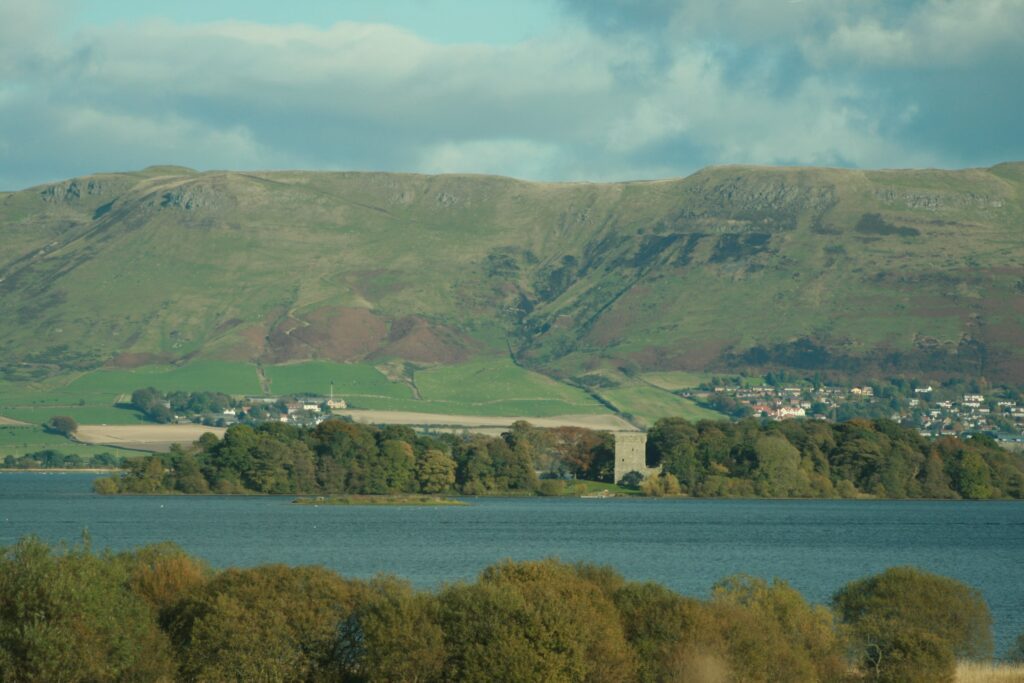
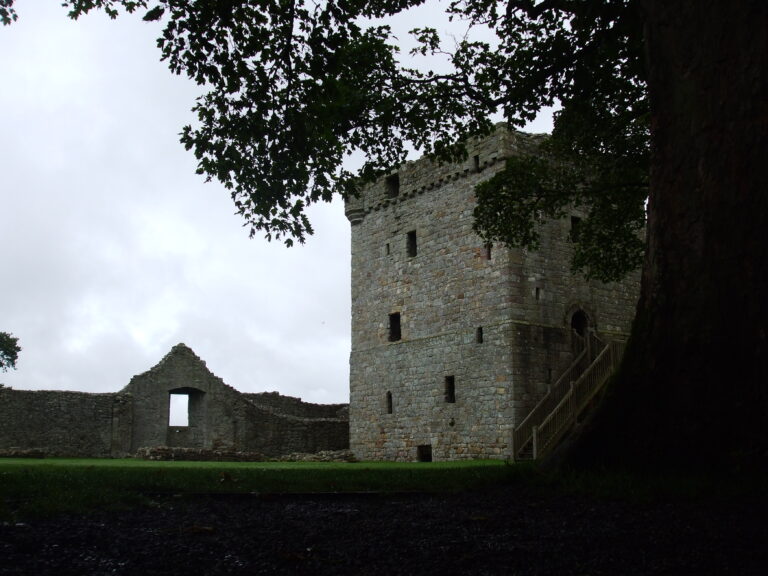
Lochleven Castle stands on Castle Island in Loch Leven, near Kinross, in Perth and Kinross. Its tall tower house and curtain wall, rising from a grassy island in the middle of a broad loch, are famous above all as the prison of Mary, Queen of Scots, who was held here in 1567 and 1568, forced to give up her throne, and made a daring escape across the water.
Early history

A castle may have stood on the island as early as 1257, when the young King Alexander III was brought here by his regents. During the Wars of Independence the castle, standing between Edinburgh, Stirling and Perth, was strategically important. It was held by the English, captured by the Scots, possibly by the forces of William Wallace, and besieged again in 1301. Robert the Bruce visited in 1313 and 1323. In 1335 English forces besieging the castle are said to have dammed the outflow of the loch to flood it, only for the defenders to break the dam and flood the English camp, though historians have doubted the story.
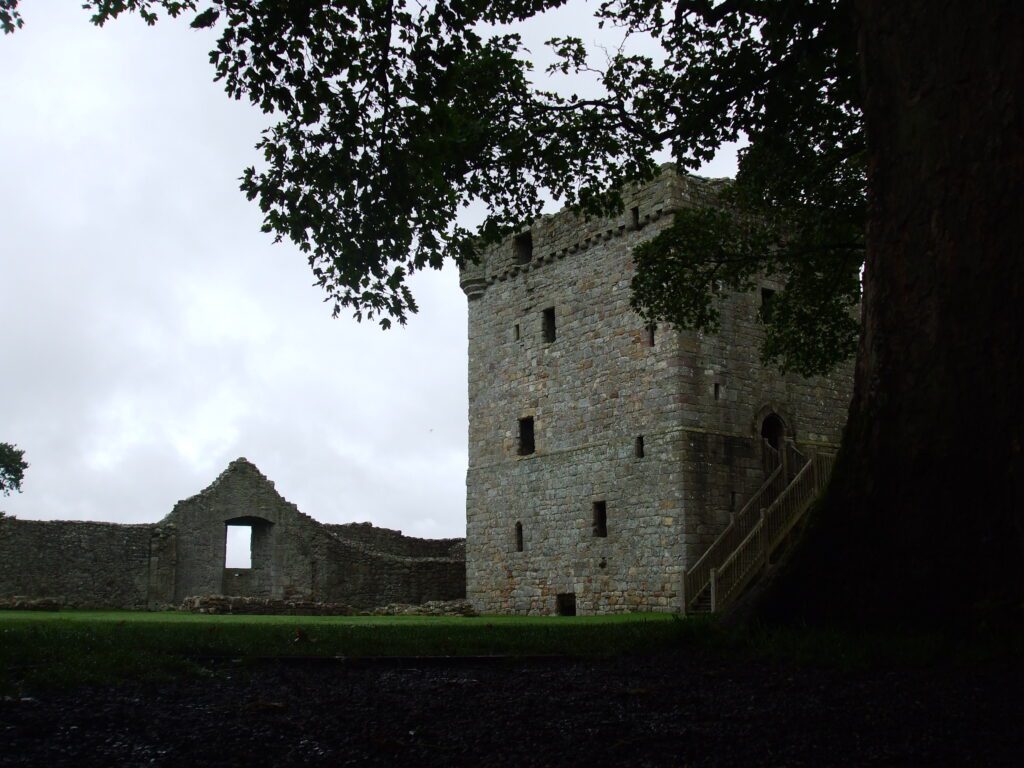
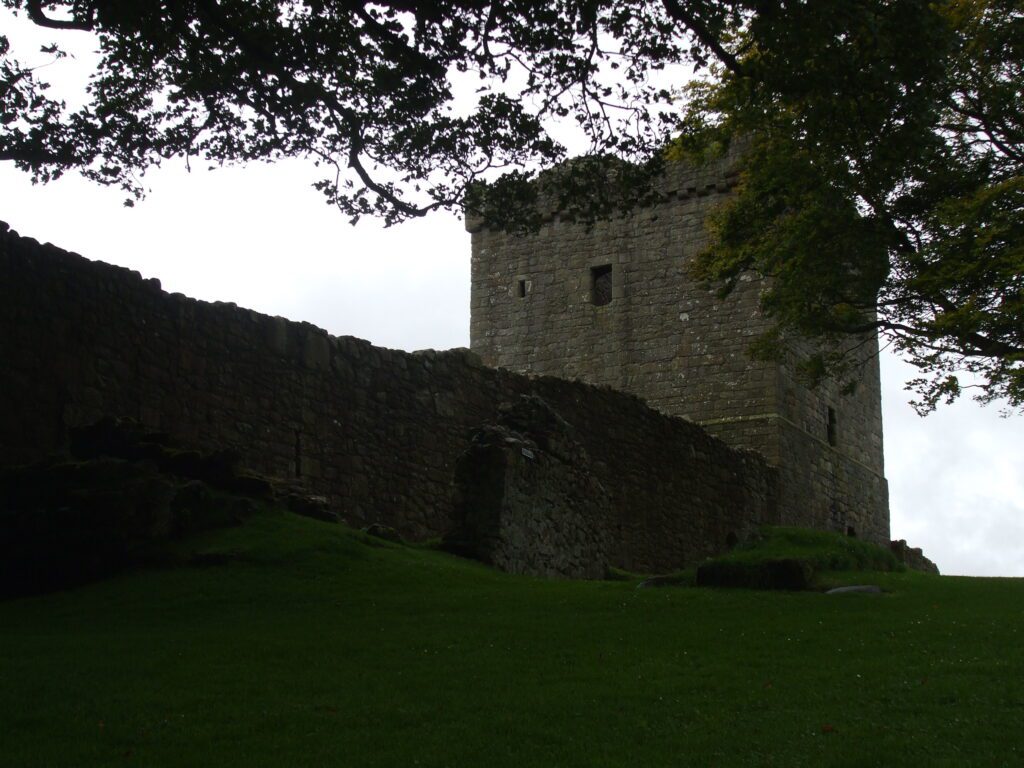
The five-storey tower house was probably built in the fourteenth century, making it one of the oldest surviving tower houses in Scotland. In 1390 the castle was granted to the Douglases of Lochleven, who held it for about three hundred years and used it at times as a state prison.
Mary, Queen of Scots
Mary visited Lochleven as a guest in 1562, recovering from a fall from her horse, and in 1563 met the reformer John Knox here. She returned as a prisoner after surrendering to her nobles at Carberry Hill on 15 June 1567, and was given into the custody of Sir William Douglas. She was held first in the Glassin Tower at the south-east corner of the castle. She fell ill, miscarried twins, and on 24 July 1567 was forced to sign her abdication in favour of her infant son, James VI.

During the following months Mary won over George Douglas, her gaoler’s brother, and with the help of young Willie Douglas, a relative of the family, she escaped on 2 May 1568. Willie stole the castle keys, locked the gates behind them, and rowed her across the loch, throwing the keys into the water. Within days she had gathered an army, but after her defeat at Langside she fled to England, where she spent the rest of her life in captivity.
Later history
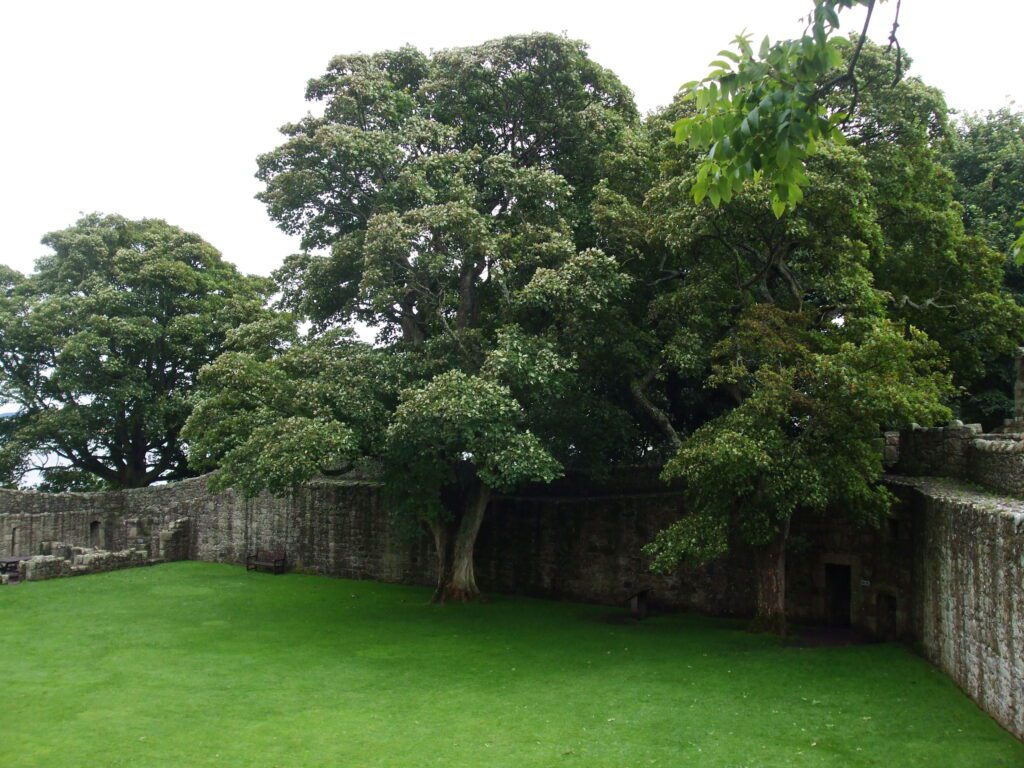
In 1588 Mary’s gaoler inherited the title of Earl of Morton and moved away. In 1675 the architect Sir William Bruce bought the estate and built Kinross House on the shore, using the castle as a picturesque focal point for his garden. It was never lived in again. In the 1830s the level of the loch was lowered, making the island much larger than in Mary’s time.
Visiting
Lochleven Castle is cared for by Historic Environment Scotland and is open in summer, reached by a short ferry trip from the pier at Kinross. The Loch Leven Heritage Trail, a path running right round the loch, is popular with walkers and cyclists.
Wildlife
Loch Leven is a National Nature Reserve and one of the most important places in Britain for wintering wildfowl, with thousands of pink-footed geese, whooper swans and ducks. Ospreys fish the loch in summer.
About island castles
All castles →For centuries islands were not remote but at the centre of things, on the sea roads that carried kings, clans and armies, and many were guarded by castles. Here you will find the castles on the islands we cover, from the strongholds of the Lords of the Isles and the tower houses of Highland clans…
