Inch Garvie
Inch Garvie’s early fortifications involved an unusually well-documented cast of characters. King James IV licensed John Dundas of Dundas to build a fort on the island in 1491, though it was the king himself who ordered a proper tower built there in 1513.
History

When William Dundas of Dundas died before the work was finished, his widow Margaret took over managing the project, and from December 1514 the island’s captain, Charles Dennison, oversaw a construction team of ten labourers and eight masons under master mason John of Cumbernauld, supplied with boats by Margaret herself. Two “serpentine” guns and a warning horn were added the following year, along with a chapel, before a French garrison was installed by the Duke of Albany in 1521. The fort did not last: an English raider named Richard Brooke captured it in May 1544 during an attack on Edinburgh, and it was demolished a week later.
From 1519 to 1671, Inch Garvie’s castle served as a prison, and in 1580 the island, together with nearby Inchkeith, was designated by the Privy Council as a place of exile for plague sufferers, complete with its own quarantine hospital. Oliver Cromwell later had the prison buildings demolished. The island’s military usefulness was never quite forgotten, however: its defences were renewed in 1779 in response to raids by the American naval commander John Paul Jones, who harried British shipping in the Forth during the American War of Independence, though these fortifications were never tested in combat, and further gun batteries were added in 1806 during the Napoleonic Wars.
Visiting
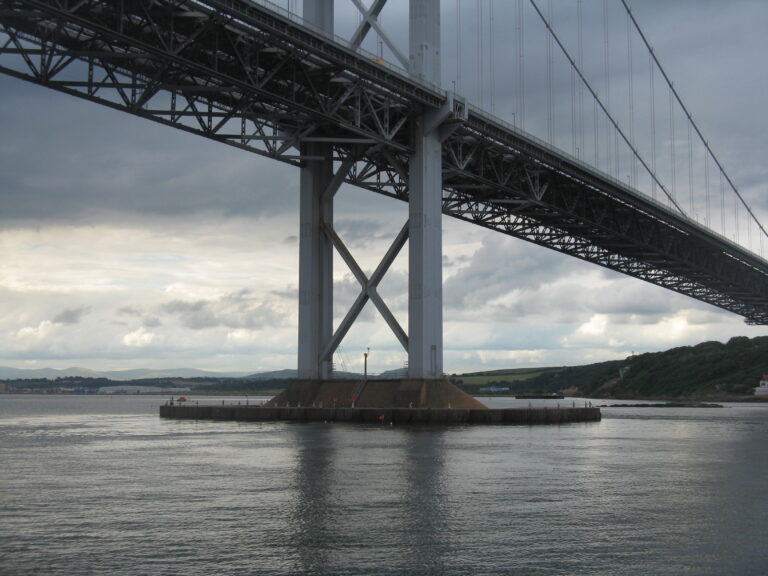
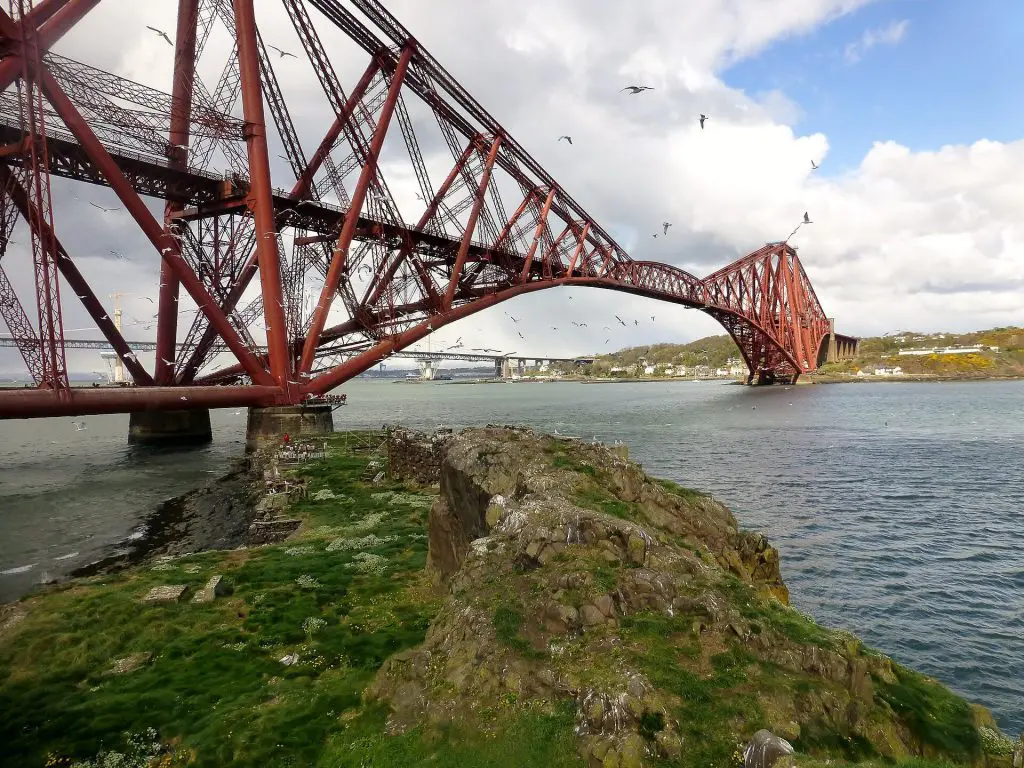
Inch Garvie’s most visible legacy, however, is engineering rather than military. In 1878, the first foundations for Thomas Bouch’s original Forth Bridge design were laid on the island, and some of that brickwork survives today. Those plans were abandoned after the catastrophic collapse of Bouch’s Tay Bridge in December 1879, but when construction of the present Forth Bridge began under different engineers, the western end of Inch Garvie was extended with a new pier and became the foundation for one of the bridge’s three great cantilevers. The island’s old castle buildings were re-roofed to house construction workers, and some of the original fortress stone was reused in building the bridge’s caissons, a direct physical link between the island’s military past and its present role as an anchor point for one of Scotland’s most famous structures.
More about Inch Garvie

The name Inch Garvie is generally thought to come from the Gaelic innis garbh, “rough island”, though an older theory connects it instead to the Scots word garvie, meaning sprat, recalling a once-thriving inner Forth sprat fishery that was not banned until 1983. Whichever origin is correct, few of the Firth’s islands can claim quite so direct a role in both Scotland’s military history and its modern transport infrastructure as this small rock beneath the Forth Bridge.
Tides
Now
—
Next high water
—
Next low water
—
Heights in metres relative to mean sea level; times are UK time. Not for navigation. Tide model: Open-Meteo (CC BY 4.0).
Wildlife
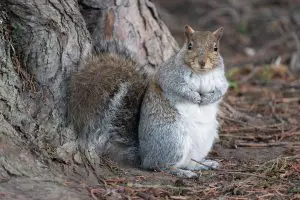
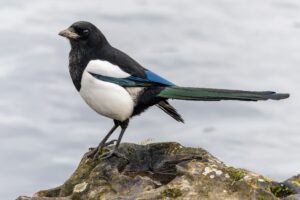
96 species recorded on the island
Highlights

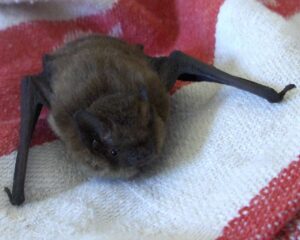
All wildlife
Loading all 96 species…
Nothing on the list is usually seen this month.
Recordings from Wikimedia Commons, under Creative Commons licences; hover a Listen button for the recordist. Sightings are records shared with GBIF since 2000.
Watching wildlife responsibly. Keep your distance from seals, seabird colonies and cetaceans, stay quiet, and never feed or chase wildlife. See the Scottish Marine Wildlife Watching Code.