

Great Innisvouls
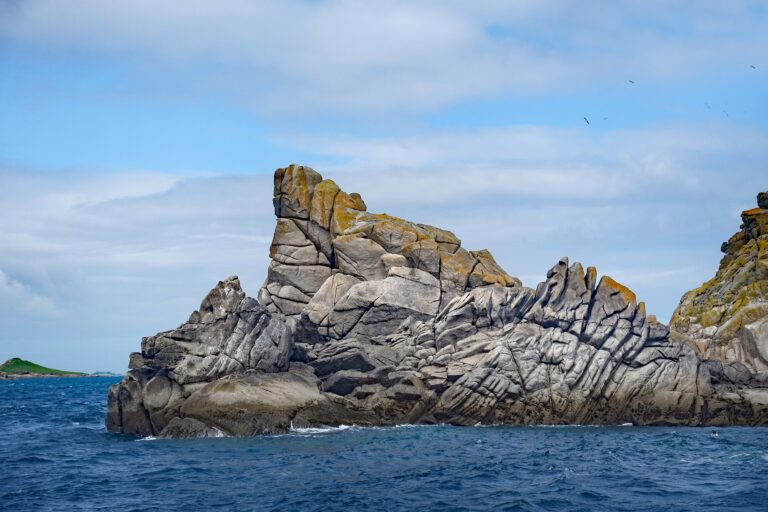
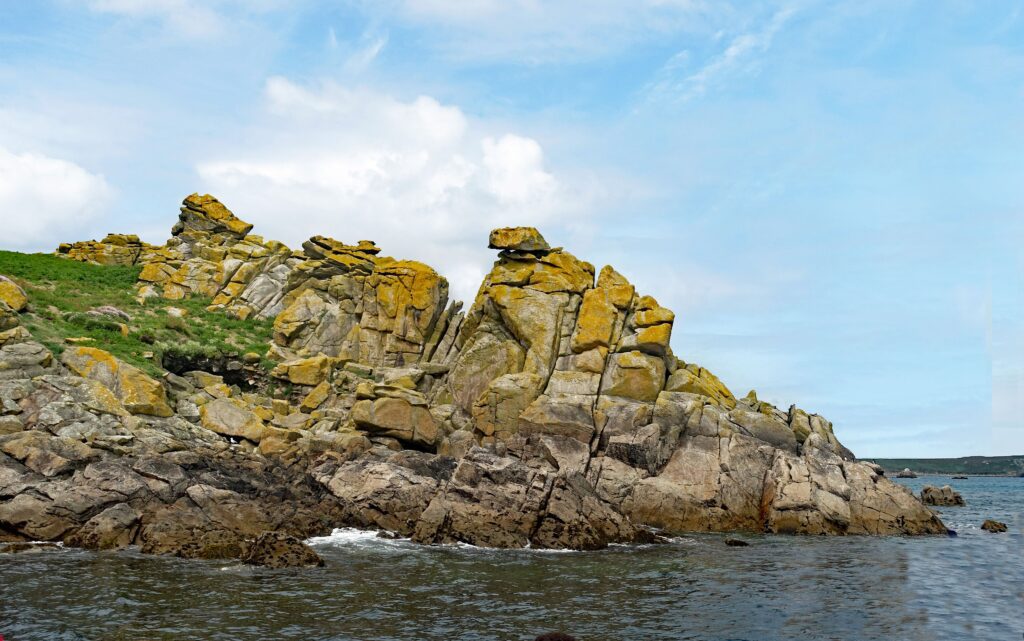
Great Innisvouls is one of the Eastern Isles of the Isles of Scilly, an islet of about four and a half acres on the eastern side of the group, beside Little Innisvouls. Uninhabited and owned by the Duchy of Cornwall, it is part of a protected group famous for its seals and seabirds.
Landscape
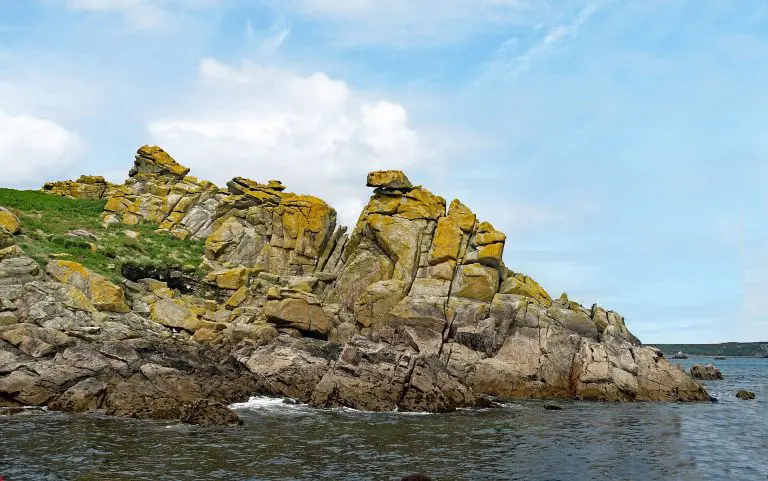
Its Cornish name, Enys Vols Meur, means “great island of the wethers”, suggesting that sheep were once grazed here. In May 1887 a naturalist found twelve pairs of shags nesting on the island, and the Scilly shrew has been recorded here. The Eastern Isles are a group of twelve small, uninhabited islands south-east of St Martin’s: Great Ganilly, Great, Middle and Little Arthur, Menawethan, Little Ganilly, Great and Little Innisvouls, Great and Little Ganinick, Nornour, Ragged Island, Guther’s and Hanjague. They are made of coarse-grained granite topped with wind-blown sand, and some are joined by boulder ridges and sandbars, so that at low tide they can look like a single island.
History
During the Roman period the area was a low-lying plain between St Mary’s and St Martin’s, and today’s islands were its hills. People lived and farmed here from the Bronze Age, leaving cairns, entrance graves and field walls, and on Nornour excavations found more than 300 Roman brooches, probably offerings at a shrine.
During the Roman period the area was a low-lying plain between St Mary’s and St Martin’s, and today’s islands were its hills.
Wildlife
The Eastern Isles have been a Site of Special Scientific Interest since 1971 and are owned by the Duchy of Cornwall. Sheltered from the worst of the westerly gales, they keep patches of coastal grassland and maritime heath, and they hold eight breeding seabird species and three of Scilly’s most important grey seal pupping sites.
Visiting

There is no regular landing on the Eastern Isles, but seal and seabird trips from St Mary’s and St Martin’s cruise among them in summer. You can collect Great Innisvouls as a sighting in your Island Passport.
Wildlife and area
Look for grey seals hauled out on the ledges, puffins, shags, razorbills and cormorants around the islands, and terns fishing the sounds. Nearby islands include Little Innisvouls, Menawethan and Eastern Isles.
Tides
Now
—
Next high water
—
Next low water
—
Heights in metres relative to mean sea level; times are UK time. Not for navigation. Tide model: Open-Meteo (CC BY 4.0).
Wildlife
6 species recorded on the island
Highlights


All wildlife
Loading all 6 species…
Nothing on the list is usually seen this month.
Recordings from Wikimedia Commons, under Creative Commons licences; hover a Listen button for the recordist. Sightings are records shared with GBIF since 2000.
Watching wildlife responsibly. Keep your distance from seals, seabird colonies and cetaceans, stay quiet, and never feed or chase wildlife. See the WiSe Scheme guidance for watching marine wildlife.