
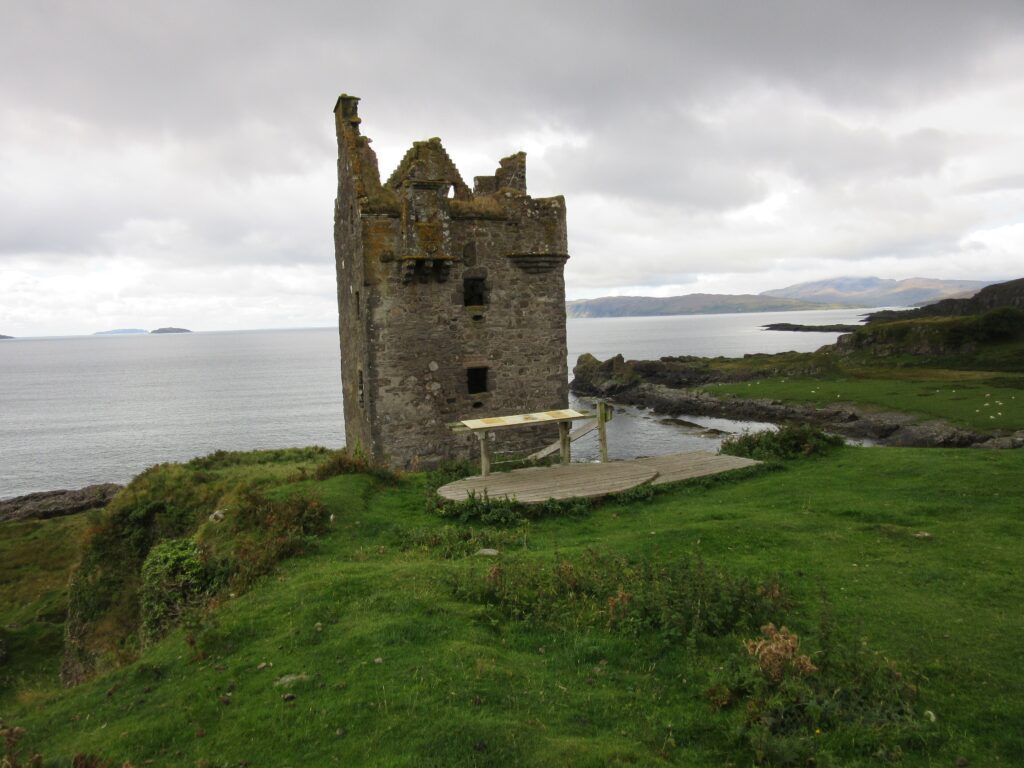
Gylen Castle
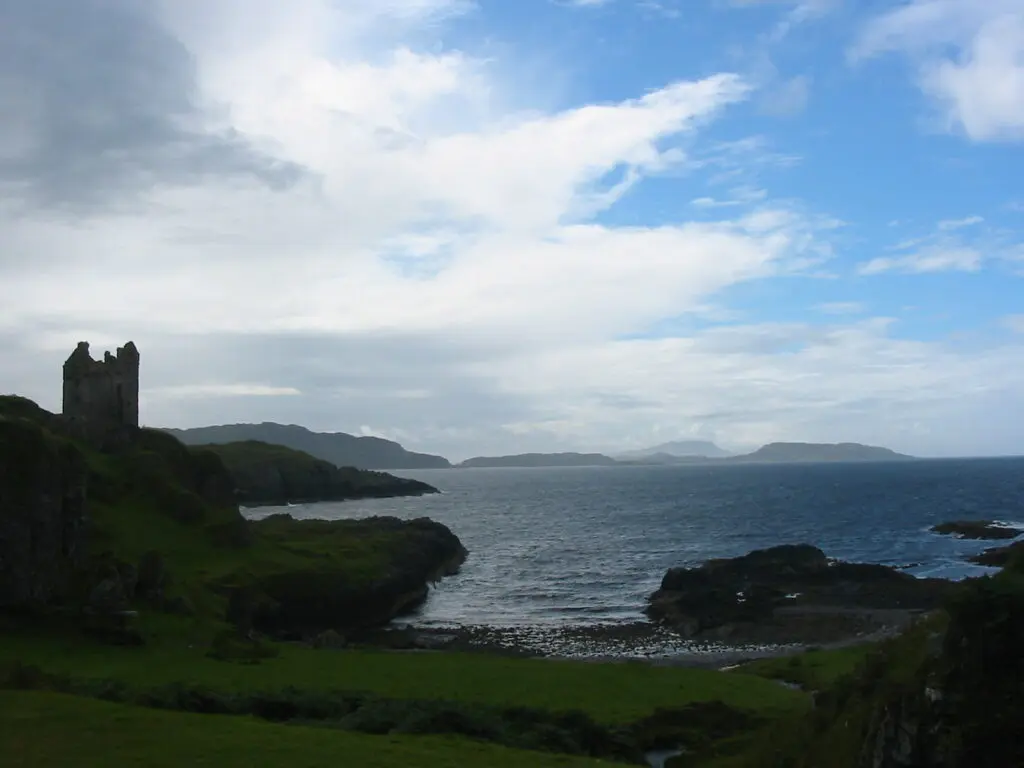
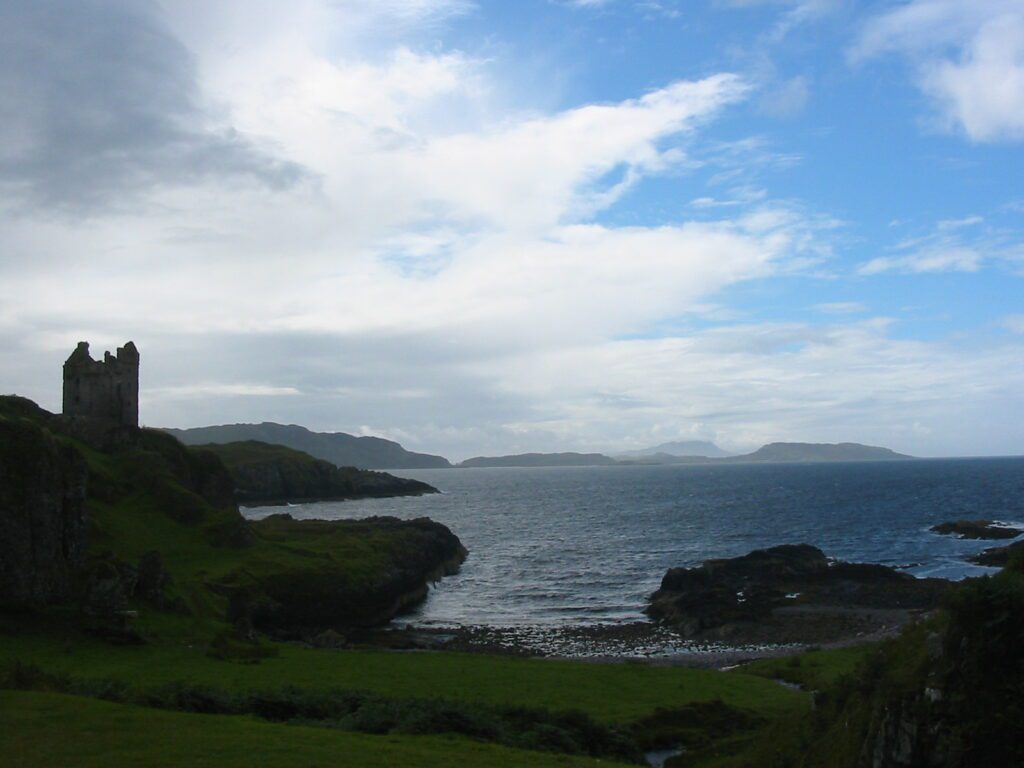
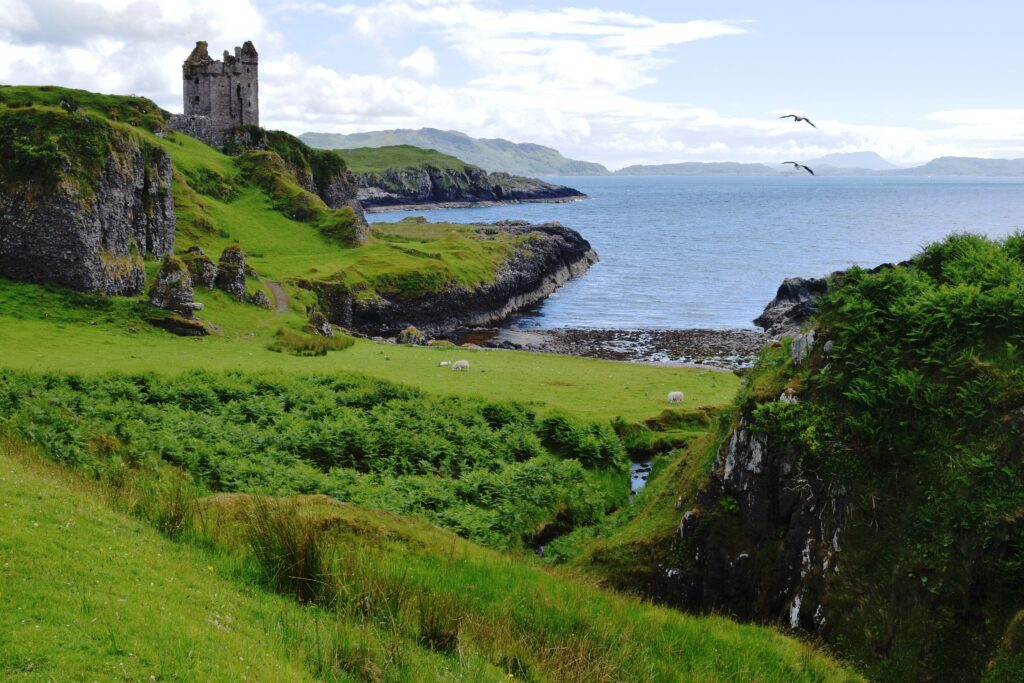
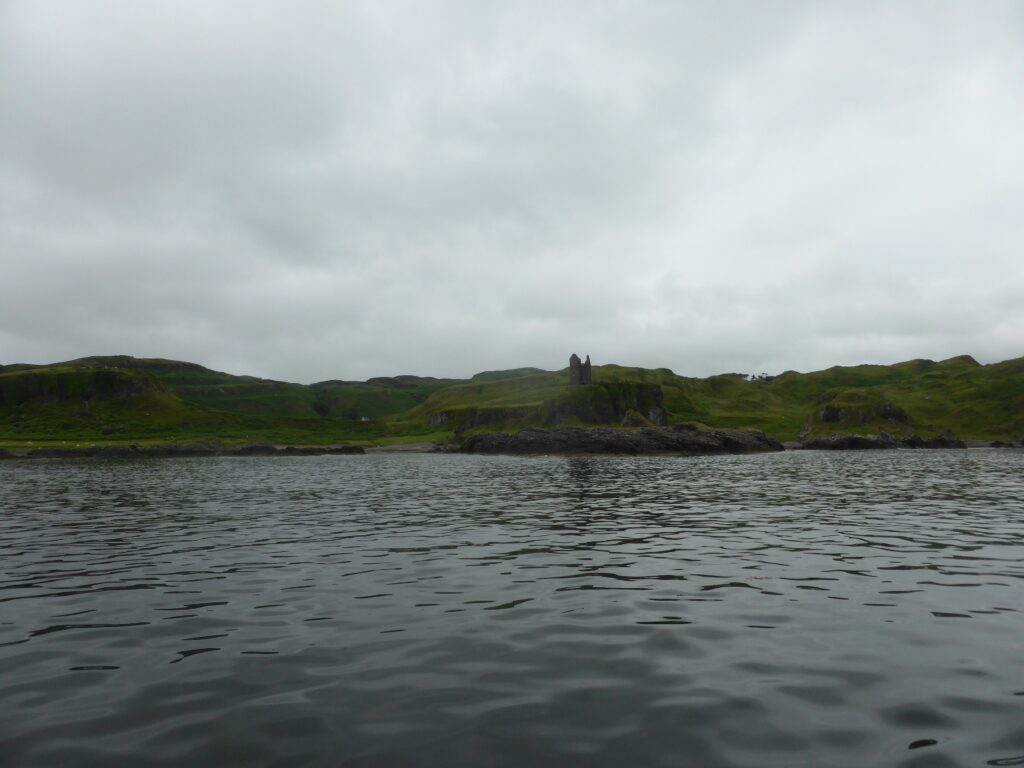
Gylen Castle stands on a rocky promontory at the southern end of Kerrera, the island that shelters Oban’s harbour, looking out over the Firth of Lorn. The small, tall tower house perched on the edge of the cliff is one of the most picturesque castles in the west of Scotland, and the walk to reach it is one of the best short island walks near Oban.
History
Gylen was built in 1582 by the MacDougalls, the clan descended from Dugald, son of Somerled, who had once ruled much of Argyll and the islands from their stronghold at Dunollie, on the mainland just north of Oban. The castle is a compact tower house of several storeys, designed as much to display the status of its owners as to defend them, with fine carved details including oriel windows and decorative stonework.

It was occupied for only a short time. During the Wars of the Three Kingdoms, in 1647, a Covenanter army under General David Leslie, campaigning against royalist supporters in Argyll, besieged the castle. The garrison eventually surrendered, and the castle was burned. According to tradition, the Brooch of Lorn, a famous MacDougall heirloom said to have been taken from Robert the Bruce in battle, was looted from Gylen at this time; it was later returned to the clan. After the siege the castle was left as a roofless ruin.
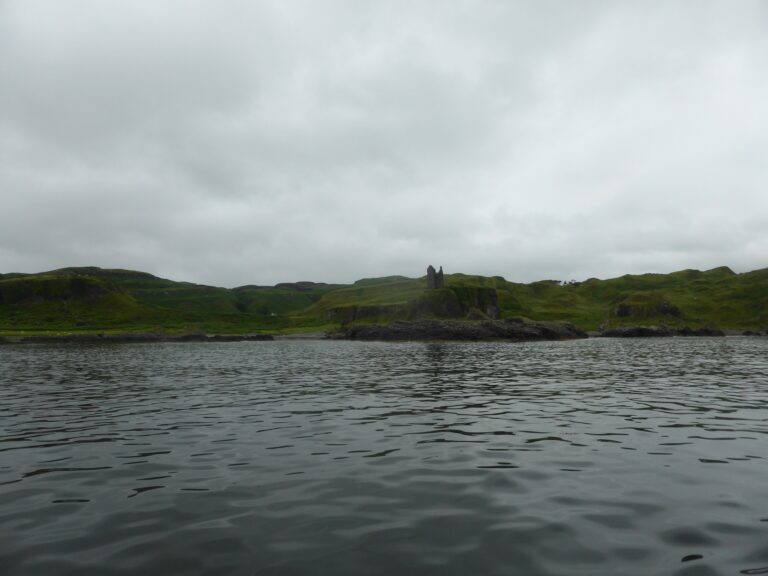
The ruins were made a scheduled monument in 1931. By the end of the twentieth century they were in danger of collapse, and in 2006 a major conservation project was completed, paid for by a £300,000 grant from Historic Scotland and £200,000 raised by members of Clan MacDougall around the world, a sign of how strongly the clan’s descendants still feel about their ancestral home.
Kerrera
Kerrera is about seven kilometres long and two wide, with around sixty people living mainly in a handful of farms and houses. It has a remarkable place in Scottish history: in 1249 King Alexander II died on the island while leading a naval expedition to win the Hebrides from Norway, and in 1263 King Haakon of Norway gathered his fleet in the sound beside Kerrera before the campaign that ended at the Battle of Largs. Within a few years the western isles had passed to Scotland.
Visiting
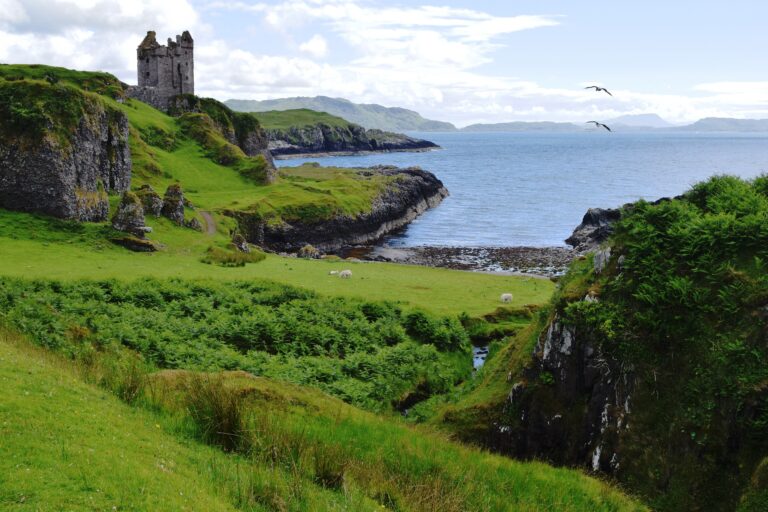
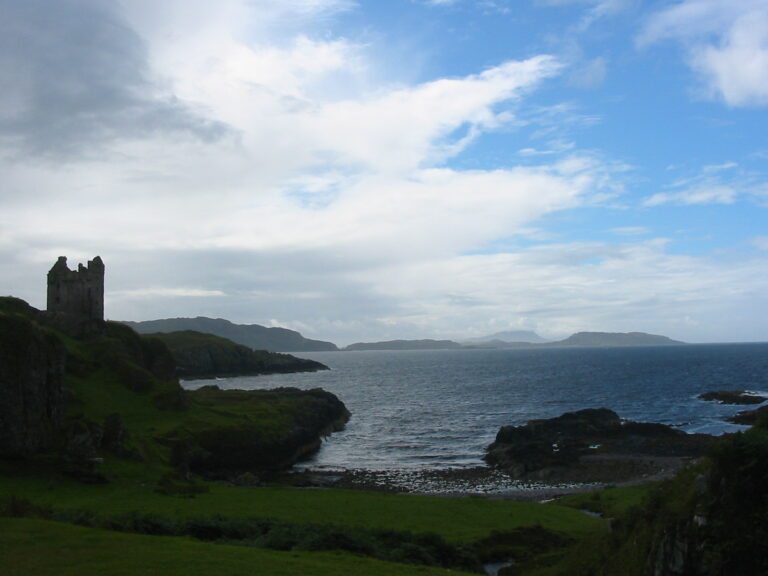
A small passenger ferry crosses to Kerrera from Gallanach, a short drive south of Oban. From the ferry slip, a track leads south around the island, past farms and along the coast, to Gylen Castle, a walk of about two miles each way. The route can be extended into a circuit of the southern half of the island. The castle is open to explore, with a stair leading up inside the tower, and there are wonderful views from the promontory across the Firth of Lorn to Mull, Lismore and the hills of Morvern.
The Kerrera Tea Garden and bunkhouse, at Lower Gylen near the castle, makes a welcome stop for walkers, though it is worth checking opening times in advance, as it is seasonal.
Wildlife
Kerrera’s rough grazing and rocky shores are home to feral goats, and otters and seals are often seen along the coast. White-tailed and golden eagles hunt over the island, and in summer porpoises and dolphins are seen in the Firth of Lorn.
About island castles
All castles →For centuries islands were not remote but at the centre of things, on the sea roads that carried kings, clans and armies, and many were guarded by castles. Here you will find the castles on the islands we cover, from the strongholds of the Lords of the Isles and the tower houses of Highland clans…
